

A culvert is usually one of those yard features people barely notice. It’s there, water flows through it, and that’s about it. But honestly? With a little landscaping, it can turn into a really charming part of your outdoor space instead of something you try to hide.
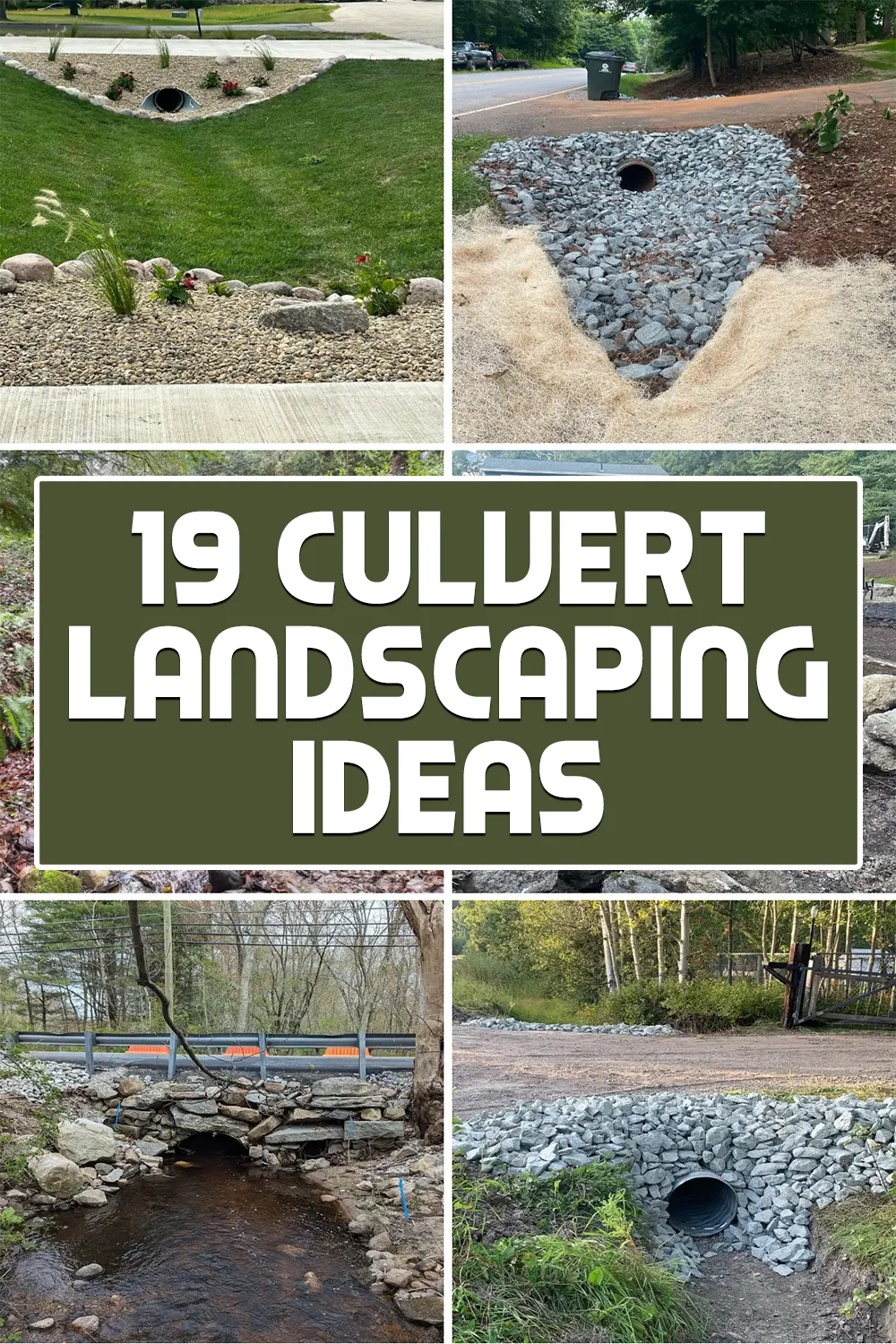
Maybe your culvert sits under the driveway, along the edge of the yard, or right out front where everyone sees it first. Either way, there are plenty of simple ways to make it feel more intentional.
Think stacked stone, soft greenery, tiny bridge details, wildflowers spilling over the sides… those little touches make a bigger difference than you’d expect.
These 19 culvert landscaping ideas are full of easy inspiration to help that awkward spot blend beautifully into the rest of your yard.
Also Read: 23 Brick Walkway Ideas
Limestone Terrace With Flowering Bed
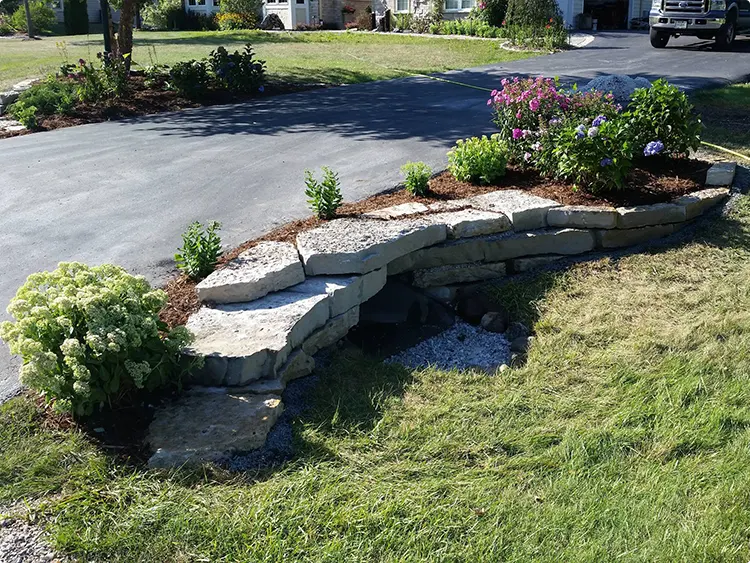
Large flat limestone slabs curve around the front of this driveway culvert, creating a low retaining wall that doubles as a planting bed.
The wall holds back dark mulch, and the plants — hydrangeas, shrubs, and small trees — spill over the top in the best way.
It feels polished but natural at the same time, like it just grew that way. If you have a culvert right at your driveway entrance, this kind of layered stone border is a really smart move.
Stepping Stone Path Through a Garden Valley
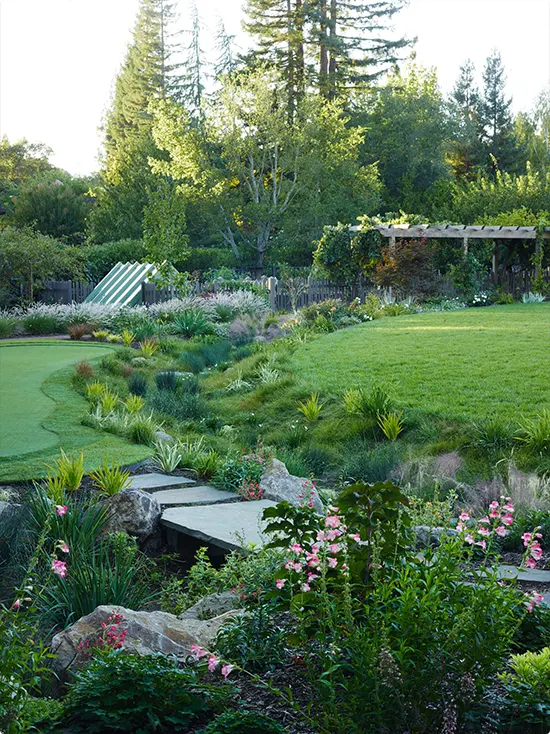
Flat stone pavers laid end to end create a pathway that bridges over a culvert tucked between two lush garden beds.
Pink flowers, ornamental grasses, and sprawling shrubs fill every inch around the path. The result looks like something out of a countryside estate.
What makes this work is that the culvert is basically hidden under all that greenery. You barely notice the drainage function — you’re too busy admiring the garden.
Arched Stone Bridge Over a Culvert
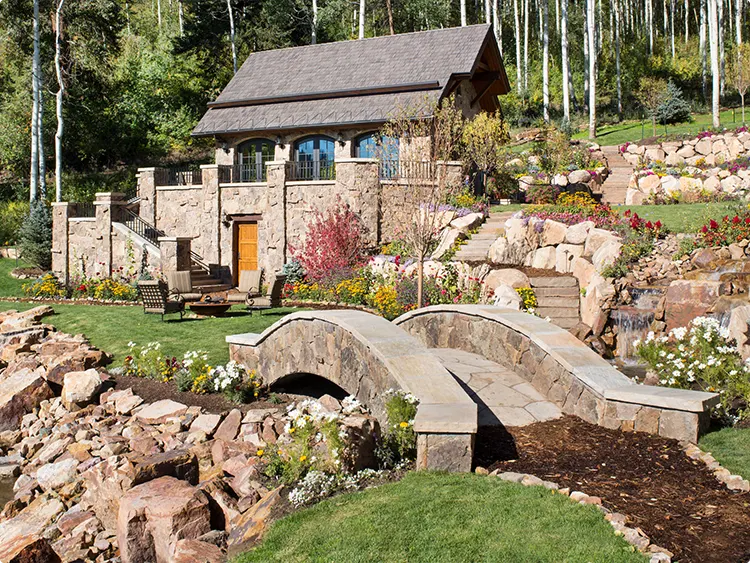
This one is straight-up stunning. A stone arch bridge sits in front of a mountain cabin, with colorful flowering plants cascading down the terraced hillside behind it.
The bridge is made with flat stone slabs set on stone pillars, and it arches gracefully over the culvert below. It matches the stone walls and steps nearby perfectly.
If you have property with a stream or drainage channel, building a little stone bridge like this turns the culvert into a focal point instead of an eyesore.
Twilight Garden With a Wooden Bridge
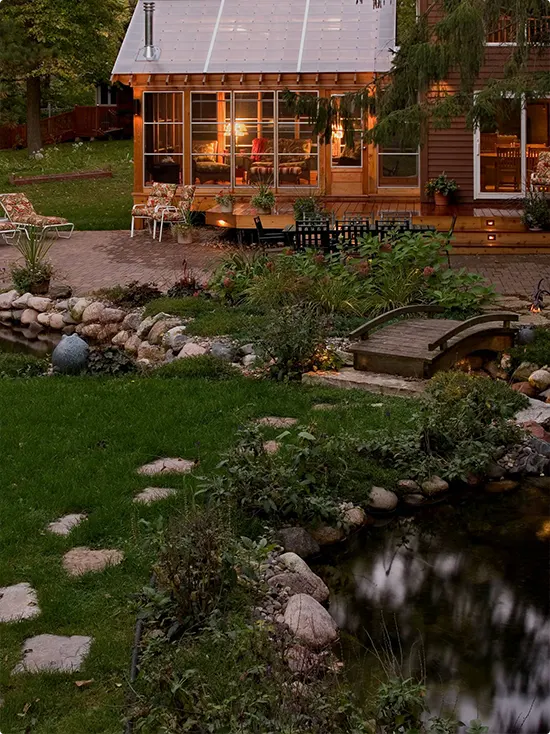
At dusk, this backyard transforms into something magical. A small wooden arched bridge crosses over a culvert that leads into a pond edged with rounded river rocks.
Lush plantings surround the whole thing — big-leafed plants, tall grasses, and garden beds full of texture. The warm glow from the greenhouse-style sunroom in the background adds to the whole dreamy vibe.
The wooden bridge is simple but it does a lot of work here. It ties the culvert into the overall garden design and makes it feel like a natural part of the landscape.
Boulder Wall With Tunnel for Kids
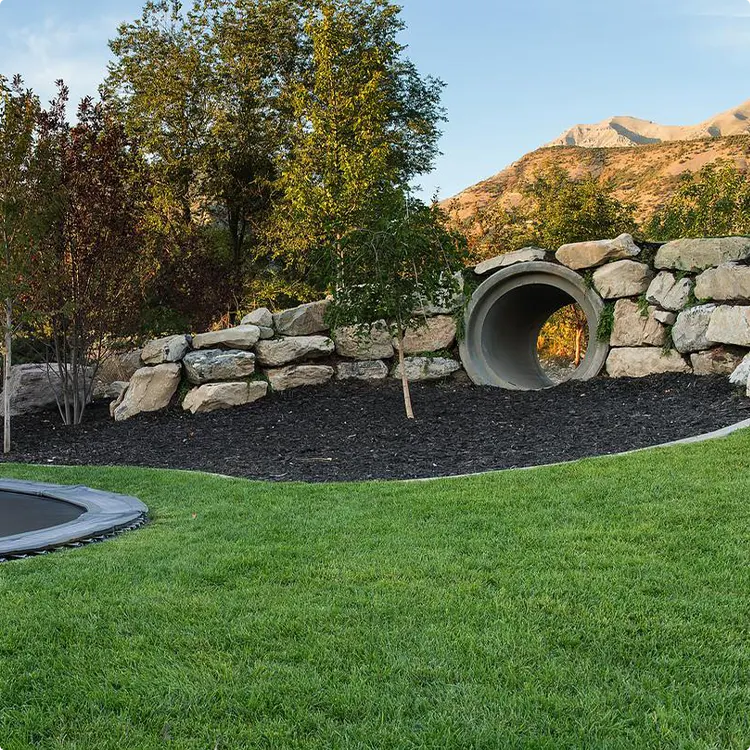
Here’s one that’s more about fun than fancy. A large round concrete culvert pipe is set into a stacked boulder wall, creating what looks like a secret tunnel through the landscape.
Dark mulch fills the bed in front, young trees are planted on either side, and a flush-mount trampoline sits nearby in the lawn. This setup is clearly designed with kids in mind.
It’s a great example of how a culvert can serve double duty — managing drainage AND adding a play element to the backyard. Kids love crawling through things. Why not lean into it?
Fieldstone Arch With Metal Culvert
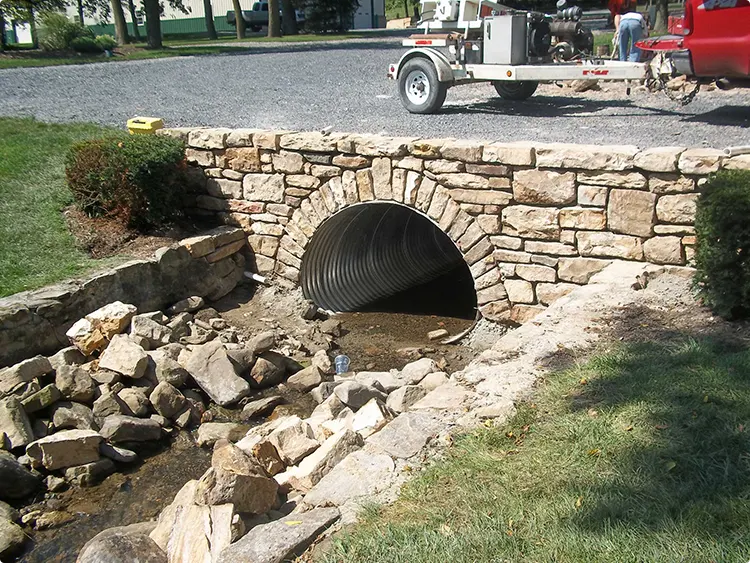
This is a classic farmstead look. A large corrugated metal culvert pipe is framed by a beautifully built fieldstone arch wall.
The stones are stacked tight and even, and the arch over the pipe is perfectly shaped. Loose rocks are scattered at the base where water exits.
It’s simple, sturdy, and honestly looks like it’s been there for a hundred years. If you like a more rustic, old-world aesthetic, this kind of stone-faced culvert is hard to beat.
Stone-Capped Driveway Culvert With Arborvitae
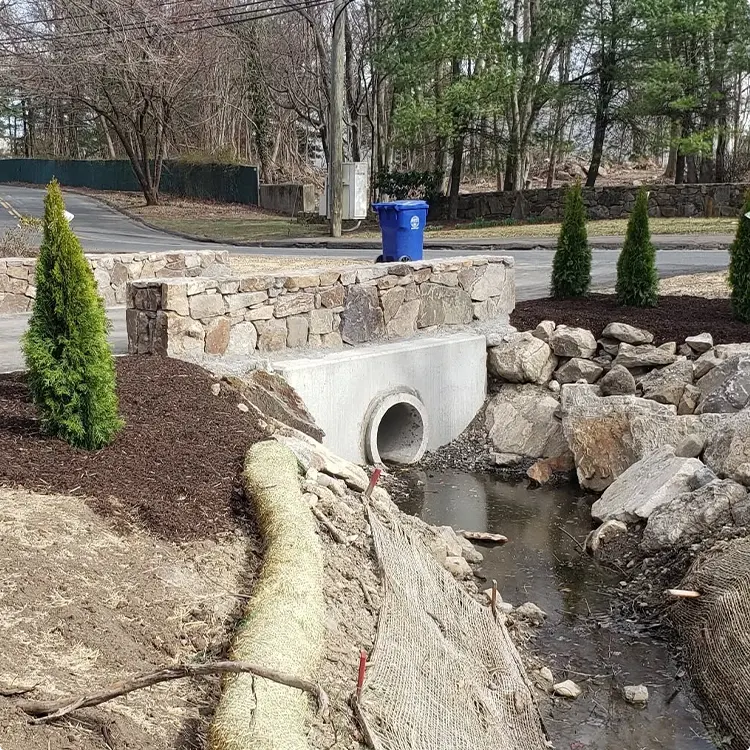
This is a fresh installation that already looks great. A concrete culvert runs under a driveway entrance, with a low stacked-stone wall built across the top.
On each side, tall arborvitae trees are planted in fresh dark mulch, flanking the whole thing like sentries. Rocks are scattered around the water outlet to manage erosion.
It’s a clean, structured look that turns a functional drainage spot into an actual entrance feature. Give those arborvitae a couple of years to fill in and this will look incredible.
Dry-Stack Slate Wall With Hidden Culvert
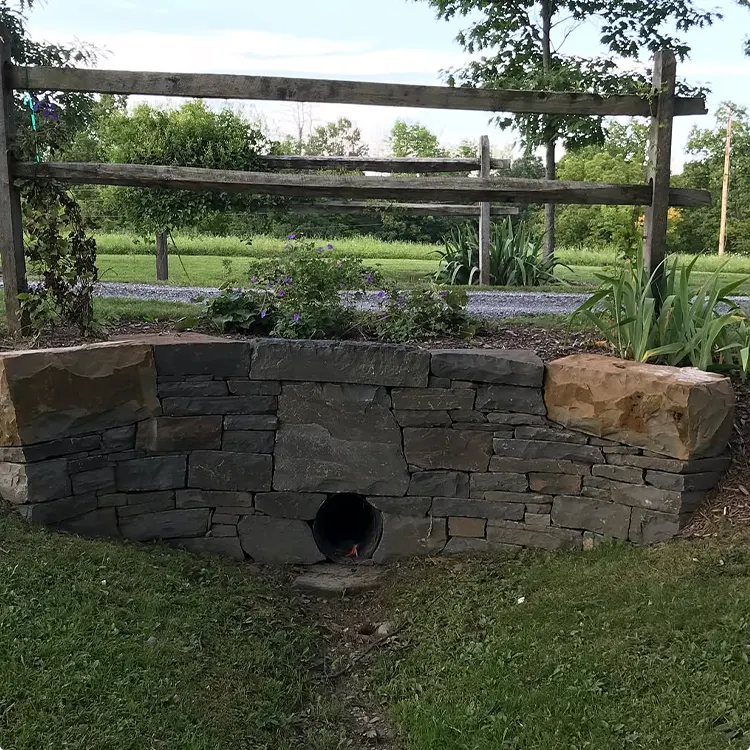
Dark slate stones are dry-stacked into a curved retaining wall, with a small culvert opening at the base.
Large anchor stones sit on each end of the wall, and purple flowers peek out from the garden bed behind it. A weathered split-rail fence runs along the back.
The wall has that satisfying handmade quality — stones fitted together without mortar, just skill and patience. It blends the culvert right into the landscape so it looks like it belongs there.
River Rock Border With Tall Grasses
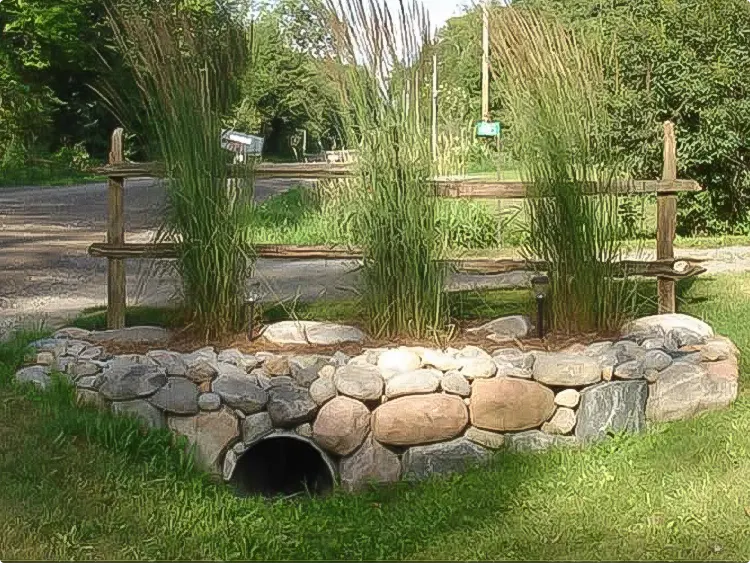
Rounded river rocks are stacked into a low curved border around a culvert opening, and tall ornamental grasses shoot up from the planting bed inside.
A rustic wood post fence runs along the back, and the whole thing sits right at the edge of a gravel road.
The combination of smooth round rocks and vertical grasses creates a really natural, almost wetland-ish feel. It’s the kind of landscaping that looks like it took zero effort but definitely took some thought.
Moss-Topped Stone Culvert in the Woods
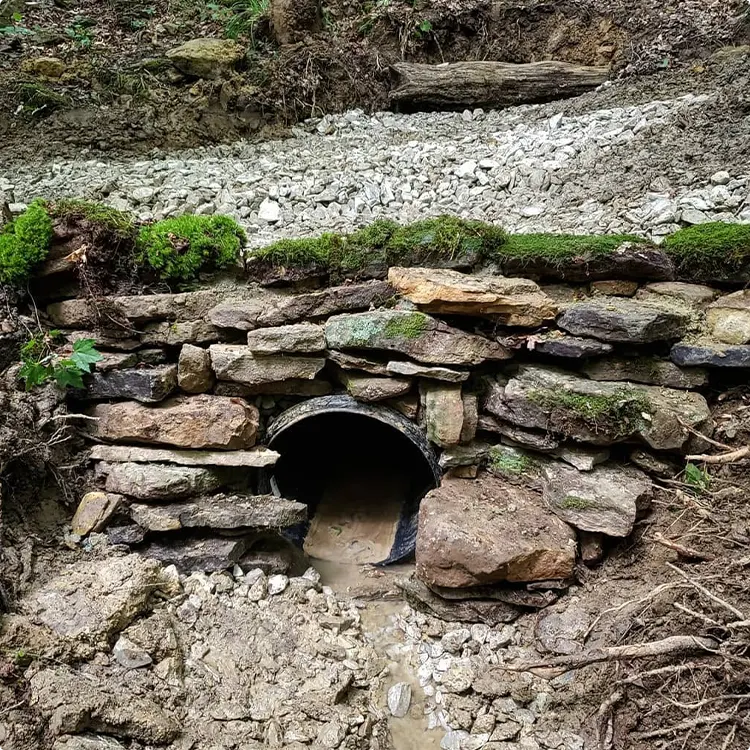
Rough-cut stones are stacked around a culvert opening set deep in a wooded hillside, with moss growing thick along the top edge.
Gravel fills the channel above, and the whole scene has this wild, untouched quality. It looks less like landscaping and more like something nature built herself.
If your culvert is in a wooded or shaded area, leaning into that mossy, organic look is honestly the move. Let the moss grow. Let it look a little rough. It works.
Glowing Culvert With Solar Path Lights
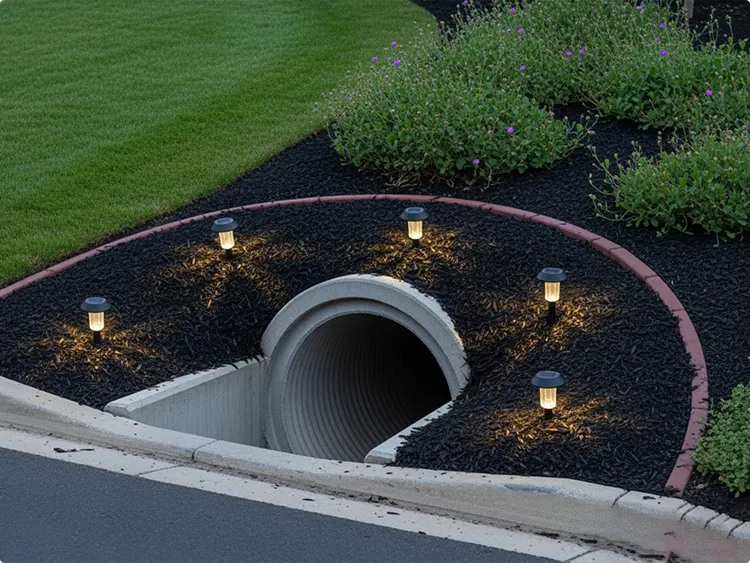
Dark black mulch fills a curved planting bed around a concrete culvert, with small solar stake lights arranged in a semicircle right at the pipe opening.
The warm glow of the lights at dusk makes the whole thing look intentional and almost decorative. Purple flowering shrubs sit in the mulch bed behind.
This is such a simple idea and it makes such a big difference. A few solar lights and some clean black mulch can turn even the most basic culvert into a nighttime feature.
Flat Limestone Slab Bridge
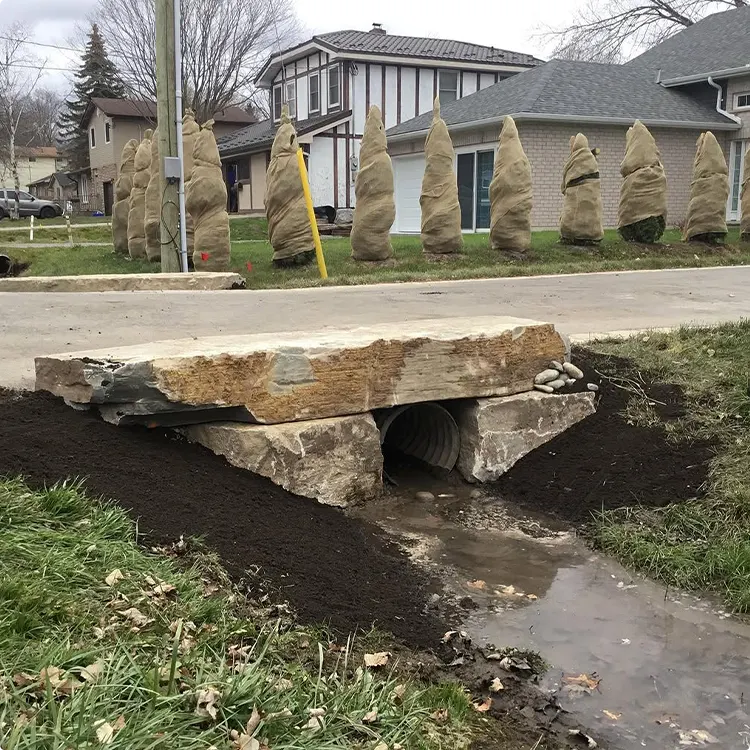
Two massive flat limestone slabs are laid side by side across a culvert to create a wide, solid crossing.
The stones are raw and natural-edged, with no cutting or shaping. They just sit there and do the job.
It’s very no-fuss and that’s exactly what makes it look good. This is the kind of solution that works really well on rural or semi-rural properties where you want something sturdy and unpretentious.
Triple Culvert Farm Crossing
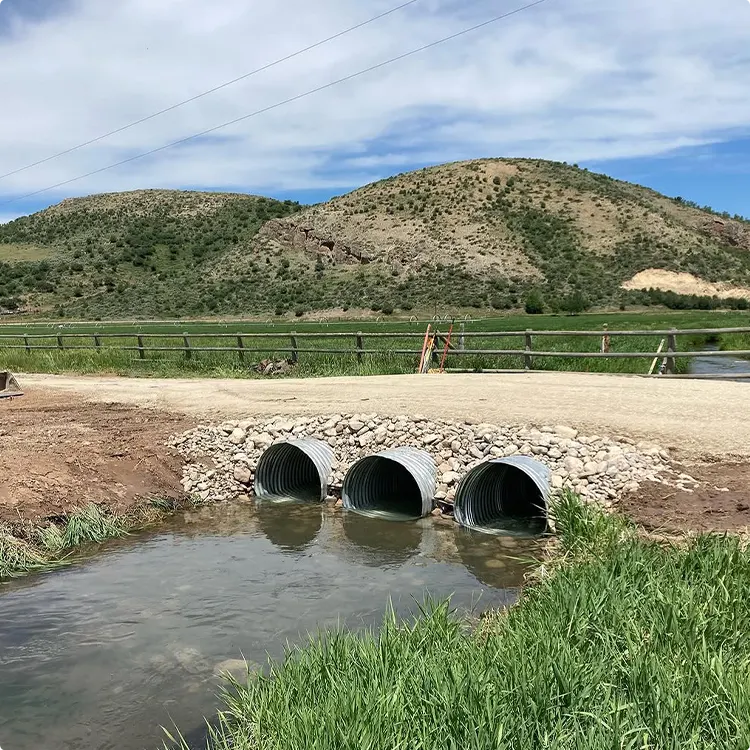
Three corrugated metal culvert pipes sit side by side under a gravel farm road crossing, with rounded rocks packed around them for stability.
The water below flows freely, and the mountain backdrop in the distance gives the whole scene a wide-open, working-land feel.
This is purely functional but there’s something satisfying about the clean repetition of three matching pipes. If you need to manage serious water flow, this kind of multi-culvert setup is both practical and visually balanced.
Gravel and Boulder Culvert Landing
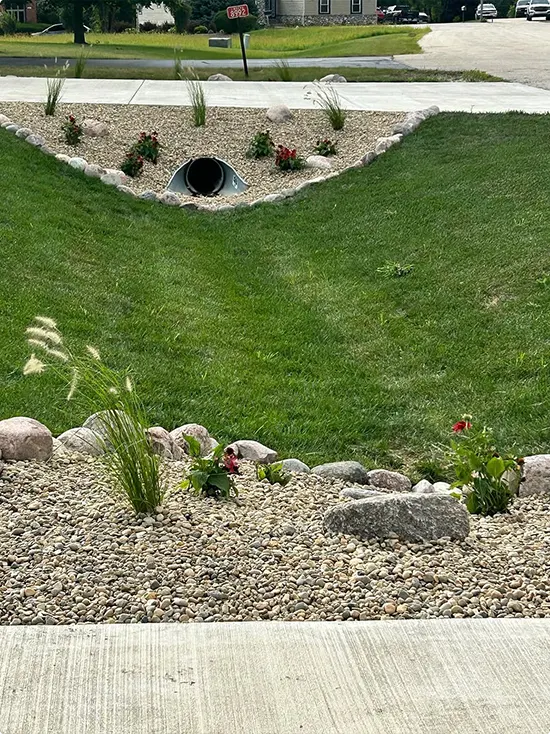
A concrete culvert pipe sits at the center of a gravel-filled swale, surrounded by rounded boulders and low ornamental grasses.
Red flowering plants dot the gravel area, and the design curves gently up toward the lawn level on both sides.
The mix of gravel, boulders, and plants makes the drainage area look like a designed garden feature rather than a utility zone. It’s a smart approach for front yards where you want the area to look good year-round.
Twin Culvert Waterfall in the Woods
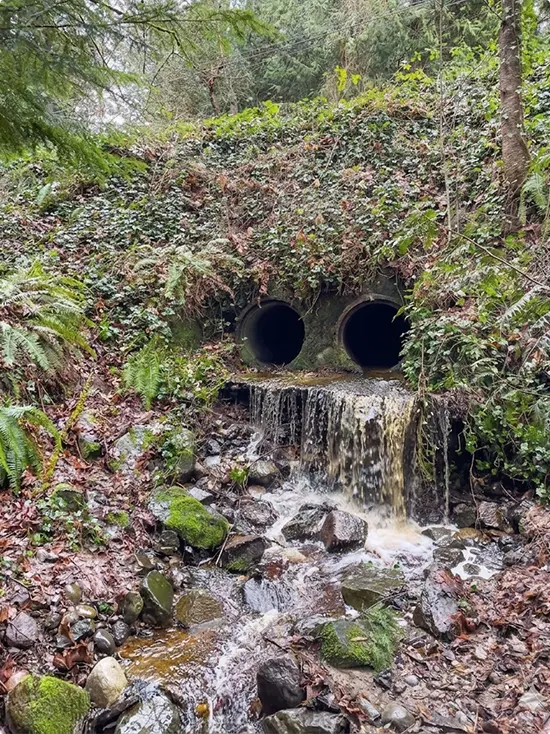
Two concrete pipes tucked into a heavily vegetated hillside let water cascade down onto mossy rocks below, creating a natural-looking waterfall effect.
Ivy and ferns drape over the pipes and surrounding slope, and the whole scene is shaded by tall evergreen trees.
This one is more discovery than design — the kind of thing you stumble on during a walk and stop to appreciate. If you have a wooded culvert with water flowing through it, encouraging ivy or native ferns to grow over the area can create this same effect naturally.
Fieldstone Arch Over a Forest Stream
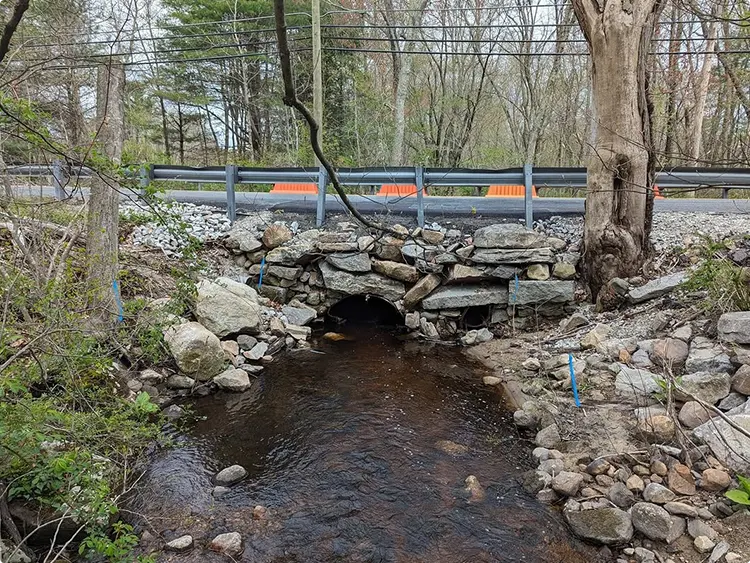
A hand-built fieldstone arch spans a small stream, with the culvert pipe running through the center.
Bare trees and early spring greenery surround the scene, and smooth water-worn rocks line the streambed. The arch is rough and organic, like something from an old estate.
The stones vary in size and color, which gives it that genuine handcrafted look. If you want something that feels historic and rooted in the landscape, a fieldstone arch like this is worth the effort.
Blue Stone Gravel Culvert Apron
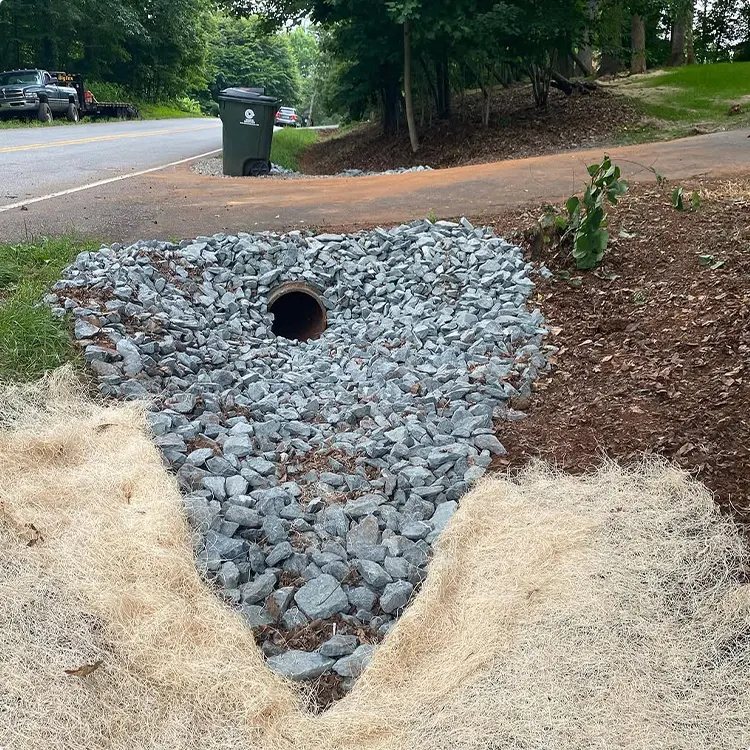
A culvert pipe is set into a triangular apron of blue-gray crushed stone, packed tight and angled to direct water flow.
Straw erosion netting covers the surrounding disturbed soil while grass grows back in. The setting is wooded and casual.
It’s not glamorous, but the blue stone gives it a surprisingly clean, finished look. This approach is especially practical for new installations where you need erosion control while things get established.
Boulder Culvert Wall With Backyard View
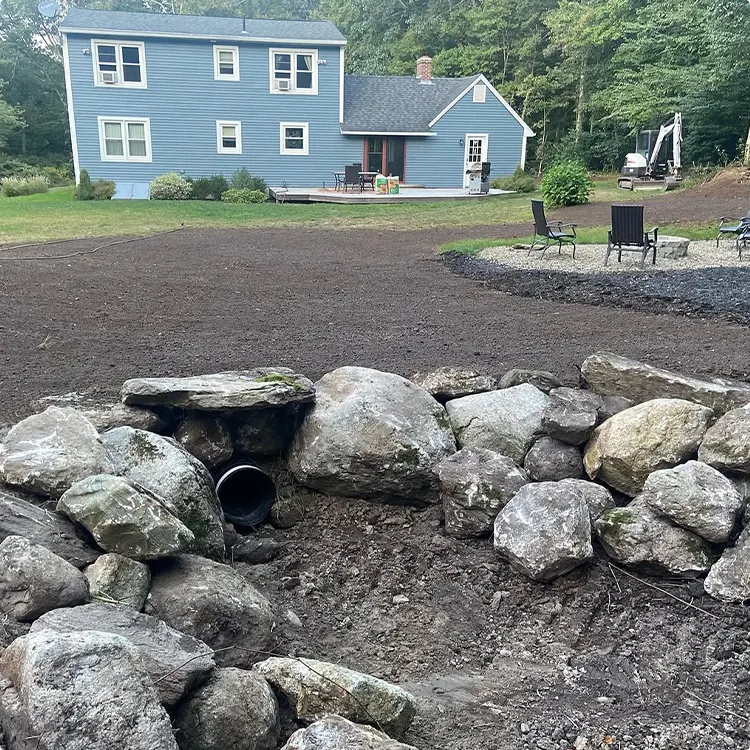
Large granite boulders are arranged into a curved dry-stack wall, with a black corrugated culvert pipe tucked through the base.
A freshly graded lawn stretches behind it toward a blue-sided farmhouse, with a gravel seating area and Adirondack chairs visible in the distance.
This is clearly a landscape in progress, but the boulder wall already gives the backyard a strong, natural structure. Once the grass fills in, that culvert will feel like a natural part of a well-designed yard.
White Crushed Stone Culvert Pad
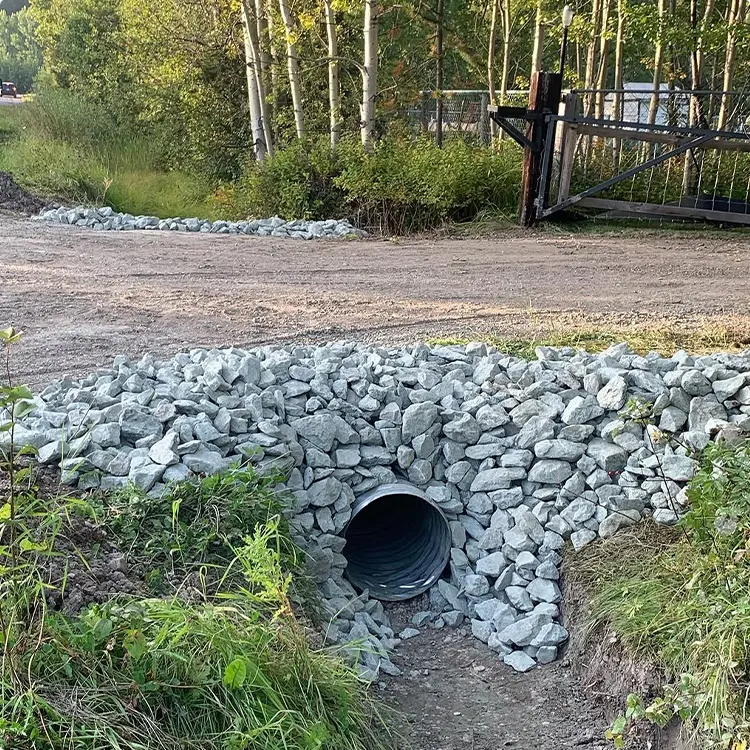
White-gray crushed stone is packed around a corrugated culvert pipe at the entrance to a gravel driveway, with the same stone extending back along a rock channel.
Birch trees line the background, and a wood and wire gate frames the entrance nearby.
The white stone stands out cleanly against the surrounding grass and dirt. It’s a quick, low-maintenance solution that still looks intentional — perfect for rural driveways where you want something neat without a lot of upkeep.
FAQs About Culvert Landscaping
What is culvert landscaping?
Culvert landscaping means designing the area around a drainage pipe to look attractive while still letting it function properly. This can include stone walls, plantings, mulch, gravel, bridges, or lighting around the culvert opening.
How do I hide a culvert in my yard?
You can hide a culvert by building a stone or boulder wall around the opening, planting ornamental grasses or shrubs nearby, covering the surrounding area with mulch or gravel, or even building a small bridge over it. The goal is to blend it into the landscape so it looks like a natural feature.
Can I plant flowers near a culvert?
Yes, you can plant flowers and shrubs near a culvert as long as the roots won’t grow into the pipe and block water flow. It’s best to stick with shallow-rooted plants like ornamental grasses, perennial flowers, or ground cover near the opening.
What rocks are best for culvert landscaping?
River rocks, fieldstone, limestone, and crushed gravel all work well around culverts. River rocks are great for a natural look, limestone slabs work well for retaining walls, and crushed stone is a low-maintenance option for aprons and drainage areas.
Do I need a permit to landscape around a culvert?
It depends on your location and whether the culvert is on public or private land. If the culvert is part of a public road or drainage system, you may need a permit before making changes. It’s always a good idea to check with your local municipality before starting any work near a drainage culvert.
How do I prevent erosion around a culvert?
Using rock aprons, erosion netting, and native plantings around culvert openings helps slow water and prevent erosion. Stacking rocks at the water outlet is especially effective because it absorbs the energy of flowing water before it hits the soil.
Can a culvert be decorative?
Absolutely. Many homeowners turn culverts into design features using stone arches, small wooden bridges, solar lighting, and lush plantings. A culvert can look just as intentional as any other garden element with the right landscaping around it.