

The front door sets the tone for your entire home. Before anyone notices your decor or landscaping, they see your entryway. If it feels warm and inviting, you’ve already made a great first impression.
That’s one reason sage green has become such a popular front door color. It’s soft without feeling boring, colorful without being overwhelming, and it looks just as beautiful on a modern home as it does on a cozy cottage or classic brick house.
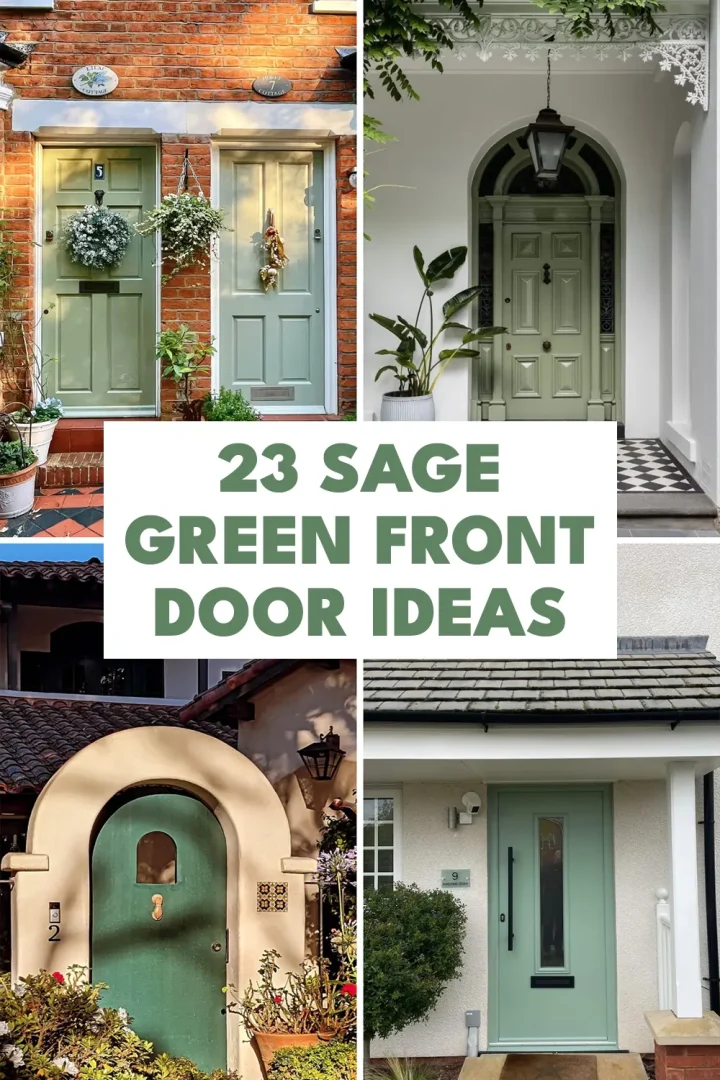
The beauty of sage green is how easy it is to style. Pair it with black hardware for a modern touch, brass accents for timeless charm, or natural wood and greenery for a relaxed, organic feel. Even simple details like a new doormat or matching planters can make the color stand out even more.
In this collection of 23 Sage Green Front Door Ideas, you’ll find plenty of inspiration for every style and budget. Some entries are sleek and contemporary, while others lean into traditional or farmhouse charm.
Browse through these ideas, save your favorites, and discover how a simple coat of sage green paint can completely refresh your home’s curb appeal.
You May Like: 25 Yellow Front Door Ideas
Twin Cottage Doors With Wreaths
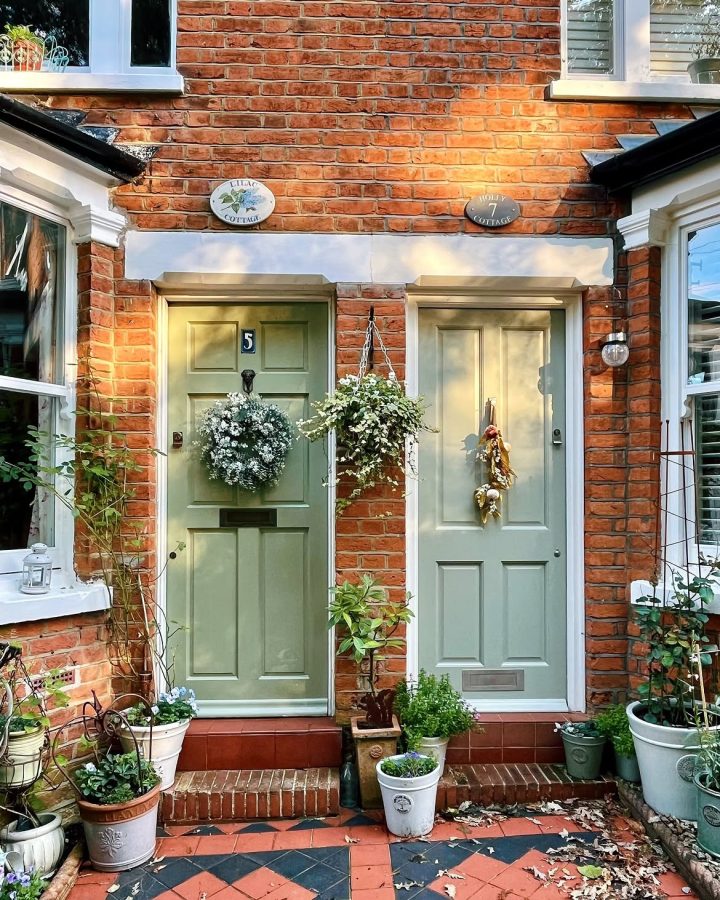
Two front doors side by side is such a charming setup, especially when they’re painted slightly different shades of sage.
One leans a bit darker olive, the other softer and lighter, but they still feel like a matching pair.
A eucalyptus wreath on one door and a dried floral bundle on the other keeps things from looking too matchy.
If you’ve got a shared entry like this, don’t feel like you need identical doors.
Pick two sage tones from the same family and let each door have its own little personality. (📸 Courtesy Loveandlilac)
Oval Window Door Framed In Petunias
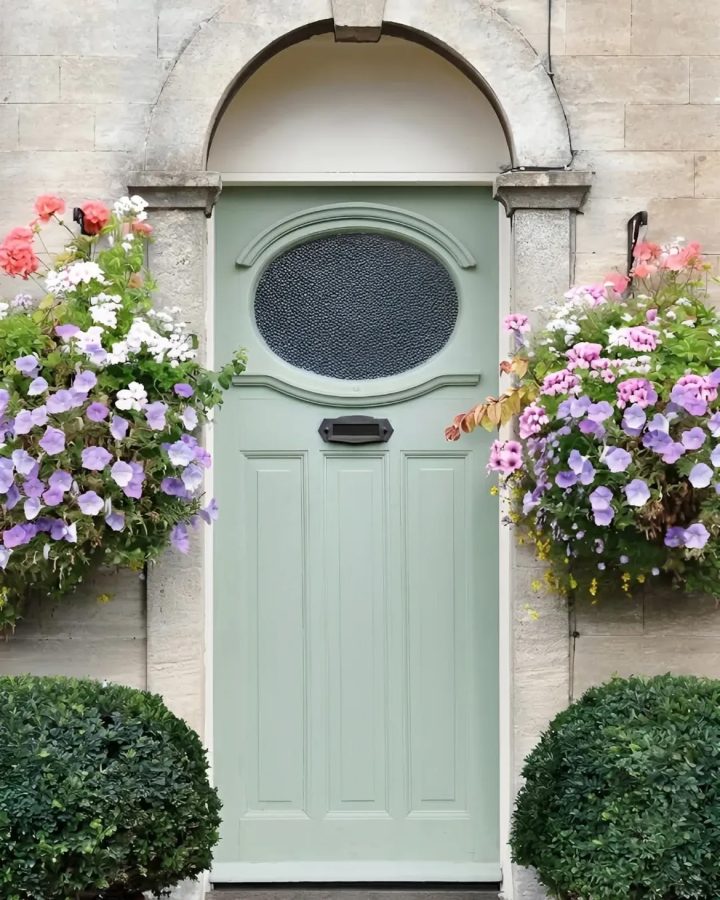
This one is all about the flowers, honestly.
The door itself is a simple sage green with a pretty oval window in the center, nothing too fussy.
But those overflowing baskets of purple and pink petunias on either side turn it into something magazine-worthy.
Boxwood balls at the base add a little structure so the whole thing doesn’t feel too wild.
Tip: if you want this look, go heavy on trailing petunias and let them cascade past the basket edge.
The contrast between soft sage and bright florals is what makes it pop. (📸 Courtesy Tlpaints)
Olive Double Doors With Brass Bee
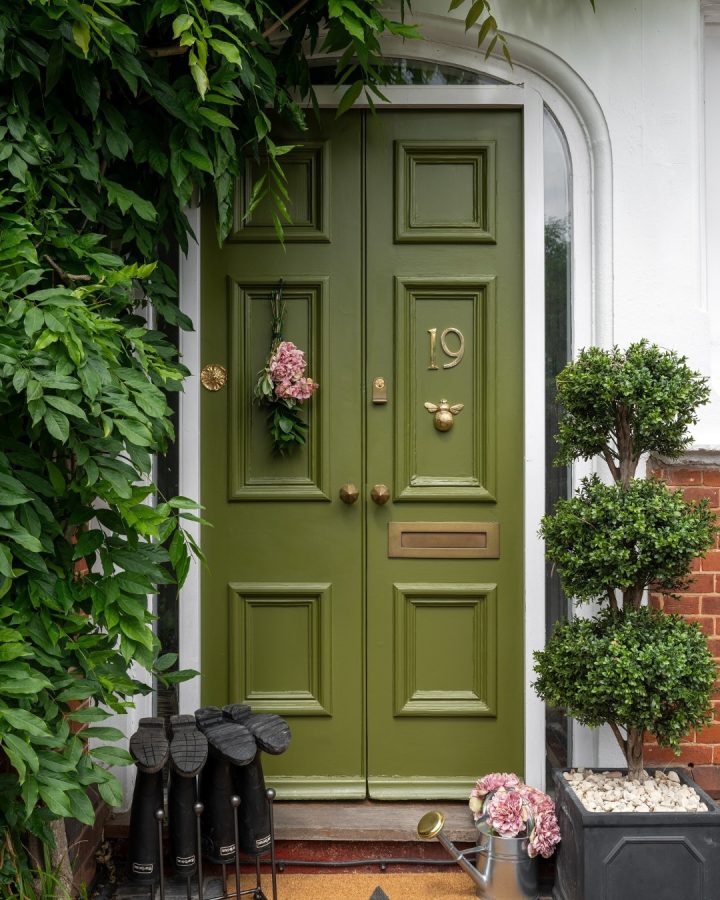
Double doors instantly make an entrance feel grander, and this olive-toned sage does a lot of the heavy lifting here.
The panel detailing is deep and traditional, almost like paneled wainscoting turned vertical.
Brass hardware, including a tiny bee door knocker, adds warmth against all that green.
A dried floral swag hung asymmetrically on one panel keeps it from feeling too formal.
If your entry has good bones already, sometimes all it needs is a rich color and a few polished brass details to feel finished.
Wellies by the door never hurt either, very lived-in and real. (📸 Courtesy Yesterhome)
Dutch Door With Golden Retrievers
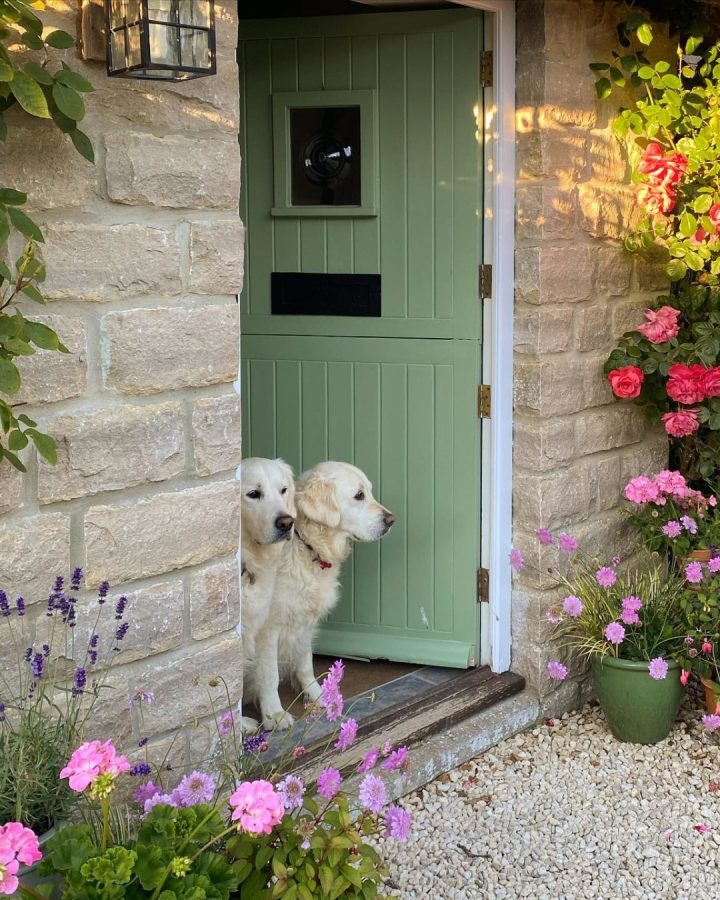
A split stable door is one of my favorite front door styles, it just feels so cottage and welcoming.
This sage green Dutch door has simple vertical planking, nothing overdone.
A small square window at the top lets you peek out before opening up.
Stone walls, climbing roses, and lavender growing right up to the step make the whole scene feel like it belongs in the English countryside.
And okay, the two golden retrievers waiting inside definitely help sell the vibe too.
If you want a stable door, keep the trim simple and let the surrounding greenery do the talking. (📸 Courtesy Houseofharts_)
Fanlight Door With Lattice Glass
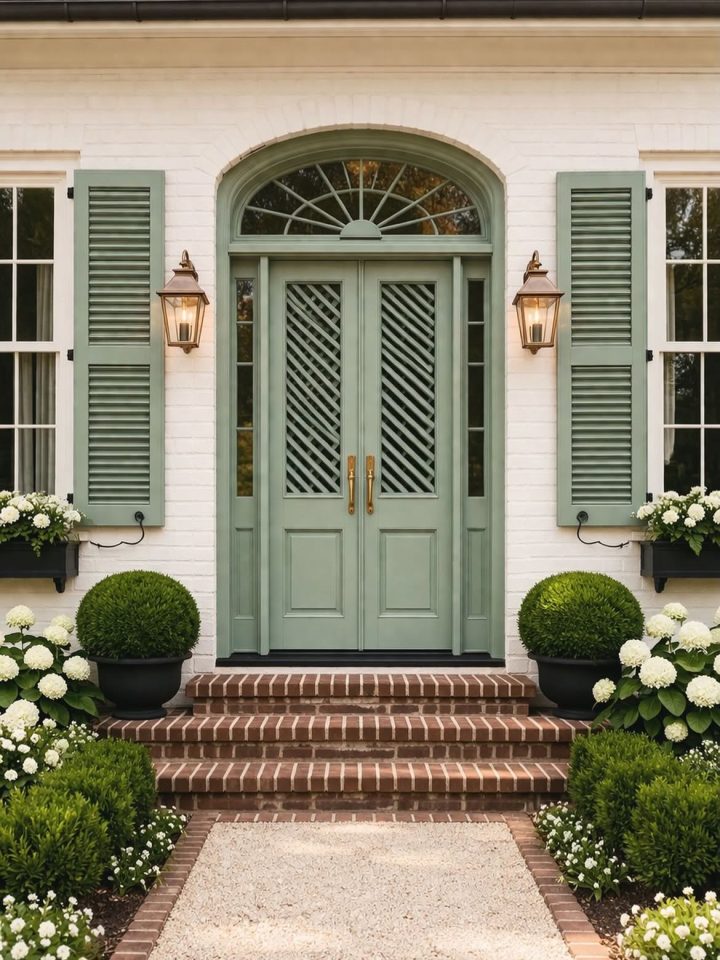
This one goes full traditional colonial, and it’s stunning.
A soft sage door pairs with matching louvered shutters, so the color repeats across the whole facade instead of just the door.
Diagonal lattice glass panels catch the light beautifully, and that half-moon fanlight above adds real architectural presence.
Brass lever handles tie in with the lantern sconces on either side.
If your house has classic proportions like this, matching your shutters to your door color pulls everything together in a way that feels intentional, not accidental.
White hydrangeas at the base keep it soft. (📸 Courtesy Green_and_living)
Arched Entry With Checkerboard Tile
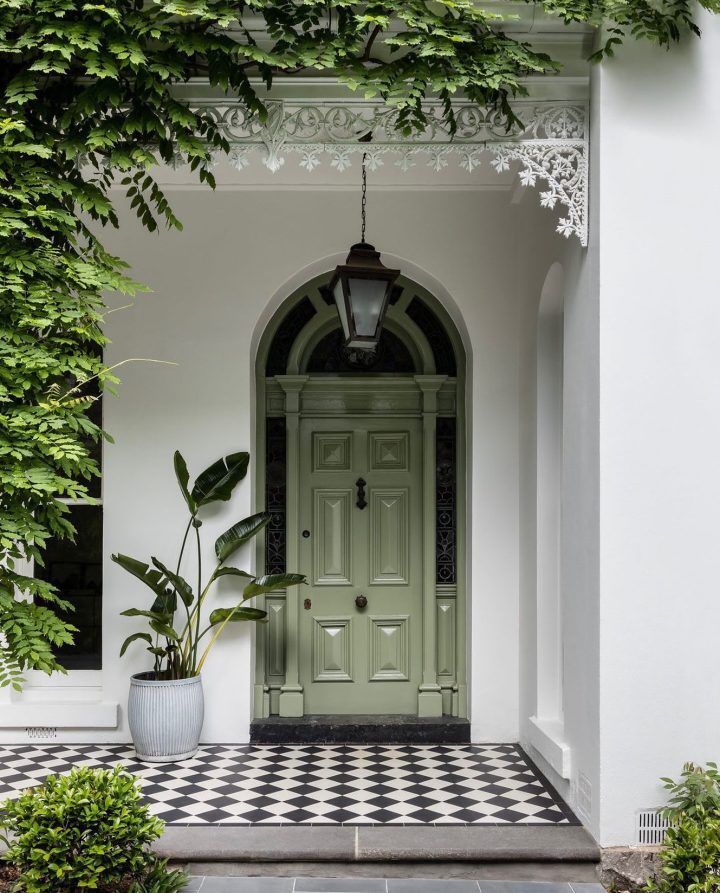
There’s something so elegant about an arched doorway, and this sage green door makes the most of it.
Deep panel molding and a dark brass knocker give it real weight and presence.
Stained glass sidelights let light filter through without giving up privacy.
But honestly, that black and white checkerboard tile floor might be my favorite part of this whole setup.
It’s a classic pairing that never goes out of style.
If you’re redoing your entryway, consider tile as much as door color, the two work together more than you’d think. (📸 Courtesy Alirossdesign)
Modern Farmhouse With Arched Green Door
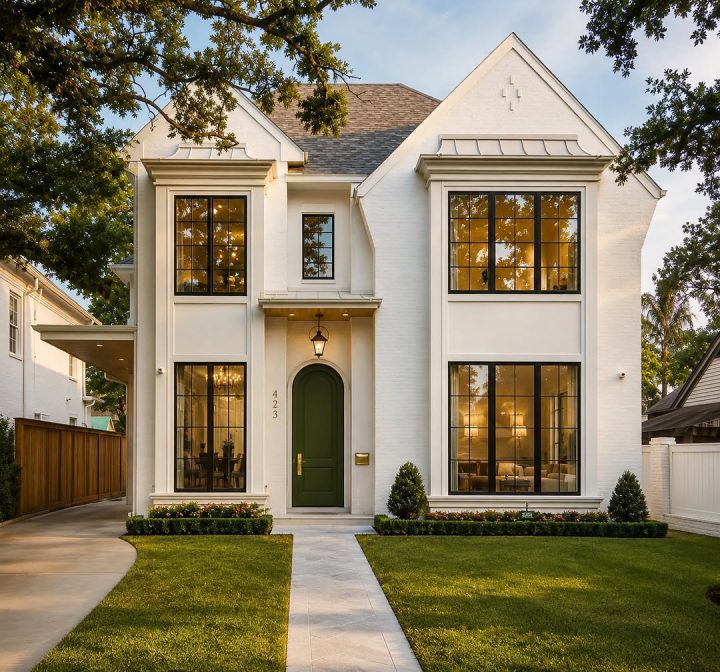
White brick exteriors are having such a moment right now, and a deep sage-green arched door is the perfect contrast against it.
Black-framed windows and a simple brass house number keep things clean and modern.
The arched top of the door softens all those straight lines everywhere else on the house.
Boxwood shrubs and low flower beds frame the entry without competing with it.
If you’re building or renovating, this combo of white brick plus green door plus black windows is basically foolproof.
It photographs beautifully at golden hour too. (📸 Courtesy Hannanco.interiors)
Stained Glass Rose Door Under Vines
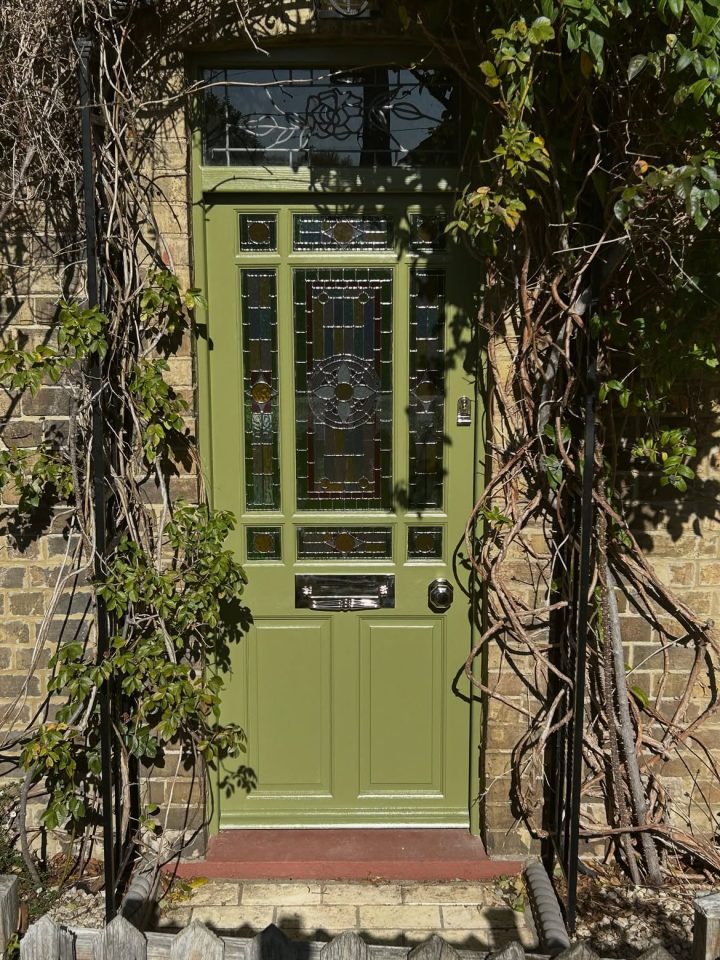
Stained glass turns an ordinary door into a piece of art, and this rose motif is gorgeous.
The sage green panels around the glass keep it from feeling too ornate or old-fashioned.
Climbing vines have taken over the surrounding brick, giving the whole thing a slightly wild, romantic feel.
A polished brass letterbox and doorknob add just enough shine.
If your door has original stained glass or you’re adding a reproduction, choose a muted green like this so the glass stays the star of the show.
Let the greenery grow in on purpose, it looks better a little unruly. (📸 Courtesy Geleta_doors)
Wisteria Draped Entry Door
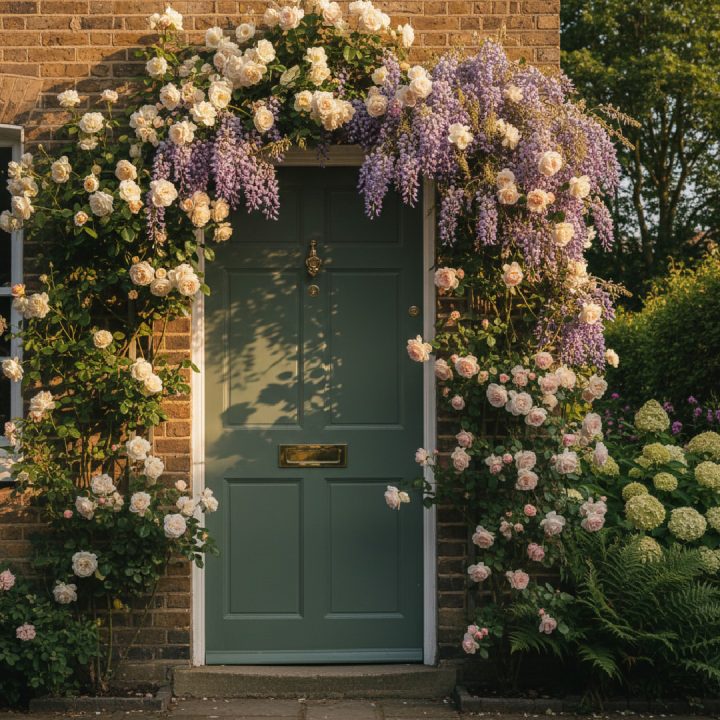
I don’t think there’s a prettier front door backdrop than a full wisteria and rose arch.
The door underneath is a cooler, blue-leaning sage, almost eucalyptus in tone.
Simple panel detailing keeps it from competing with all that cascading purple and cream blooms overhead.
A brass knocker and letterbox add subtle shine without shouting for attention.
This look takes patience since climbers need years to establish, but if you’ve already got roses or wisteria on your house, train them to frame your door like this.
It’s worth the wait. (📸 Courtesy Houseofbrass.uk)
Olive French Doors With Cozy Porch
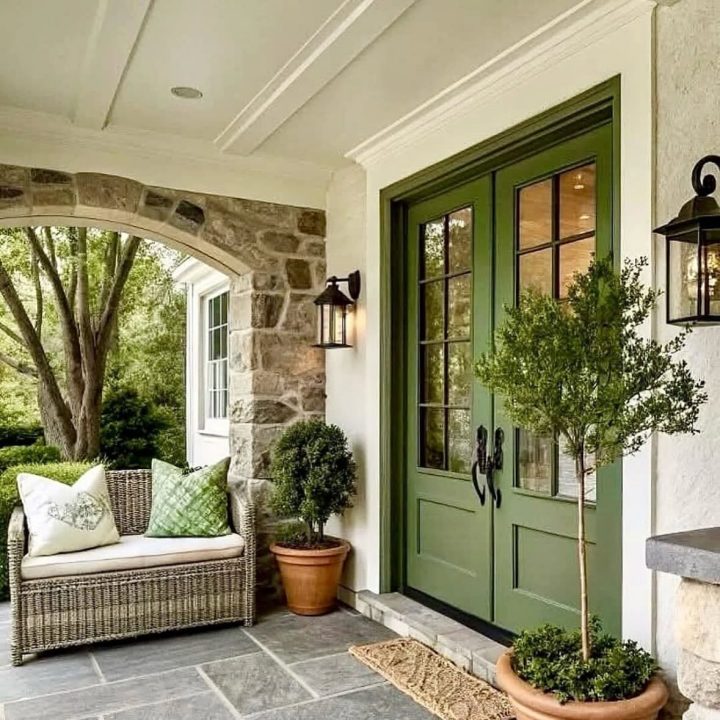
This olive-toned double door brings such a rich, grounded feel to a covered porch.
Black iron hardware and glass panes let light spill through while still feeling secure.
A wicker loveseat with green throw pillows echoes the door color without matching it exactly.
Potted olive trees on either side tie the whole look together, literally and visually.
If you have a covered entry, don’t skip the seating.
A cozy little bench like this makes the space feel like an outdoor room, not just a walkway to your front door. (📸 Courtesy Sirgreenltd)
Brick Entry With Lavender Wreath
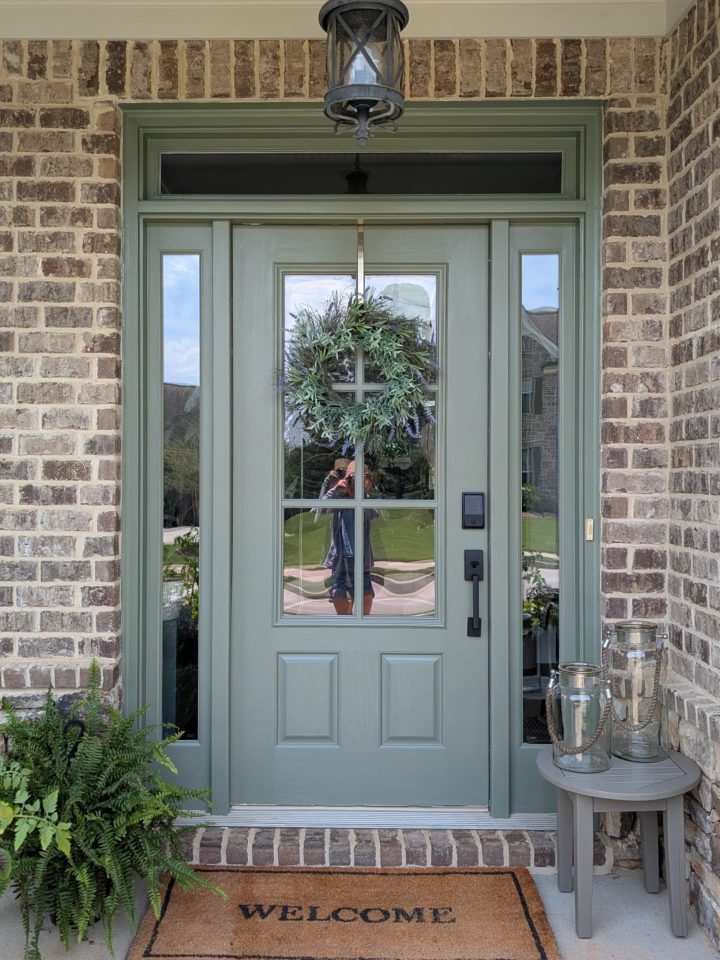
Sage green against warm brick is one of those combinations that just always works, no matter the brick tone.
This door keeps it simple, glass panes up top, solid panels below, and a lavender wreath as the only real decoration.
A coir welcome mat and a couple of glass lanterns on a side table finish the porch without overdoing it.
Ferns spilling out of a planter soften the brick edges.
Honestly, sometimes the best front door look is just a good color and one well-chosen wreath.
You don’t need a ton of accessories to make it feel finished. (📸 Courtesy Athomewithxin)
Striped Awning Over Cottage Door
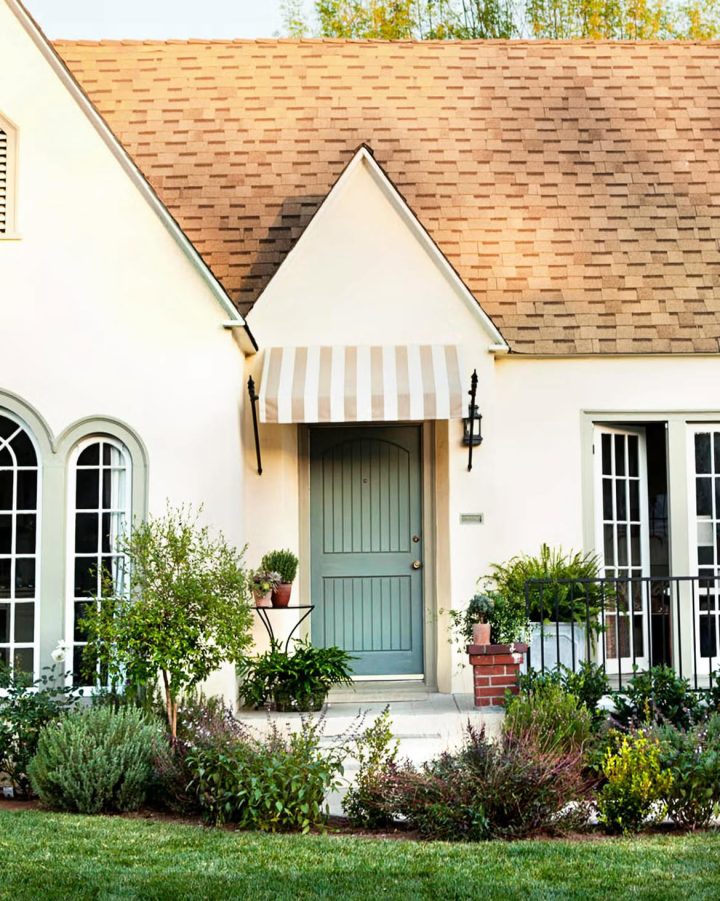
A striped fabric awning is such an unexpected but charming touch above a front door.
This sage green door has simple vertical planking, cottage style, nothing too formal.
The tan and cream stripes on the awning echo the warm stucco walls behind it.
Wrought iron scroll brackets hold the awning up and add a little vintage character.
If you want your entry to feel a bit more playful, an awning is an easy way to do it.
Just pick a fabric pattern that complements your door color instead of fighting it. (📸 Courtesy Housebeautiful)
Composite Door With Olive Topiaries
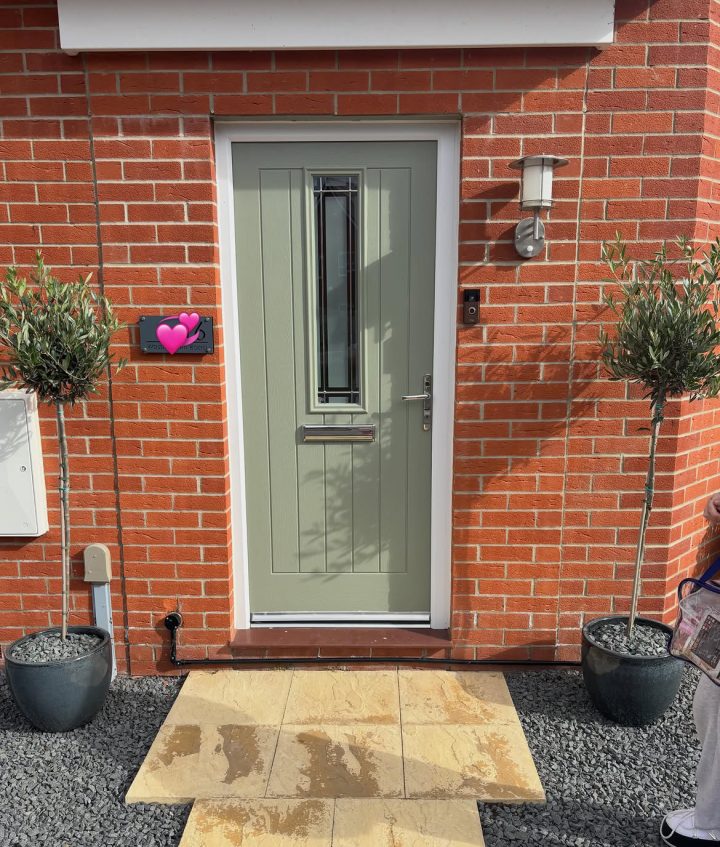
Composite doors get a bad rap sometimes for looking too uniform, but this sage tone with a decorative glass strip proves they can look really polished.
Chrome hardware keeps it modern and clean.
Matching potted olive topiaries on either side give the entry a bit of height and structure.
A stone paver path leads right up to the step, simple but effective.
If you’re replacing an old door and want low maintenance, composite in a soft sage is a great middle ground between classic wood looks and practical upkeep. (📸 Courtesy No16forfour)
Classic Sage Door With Brass Lanterns
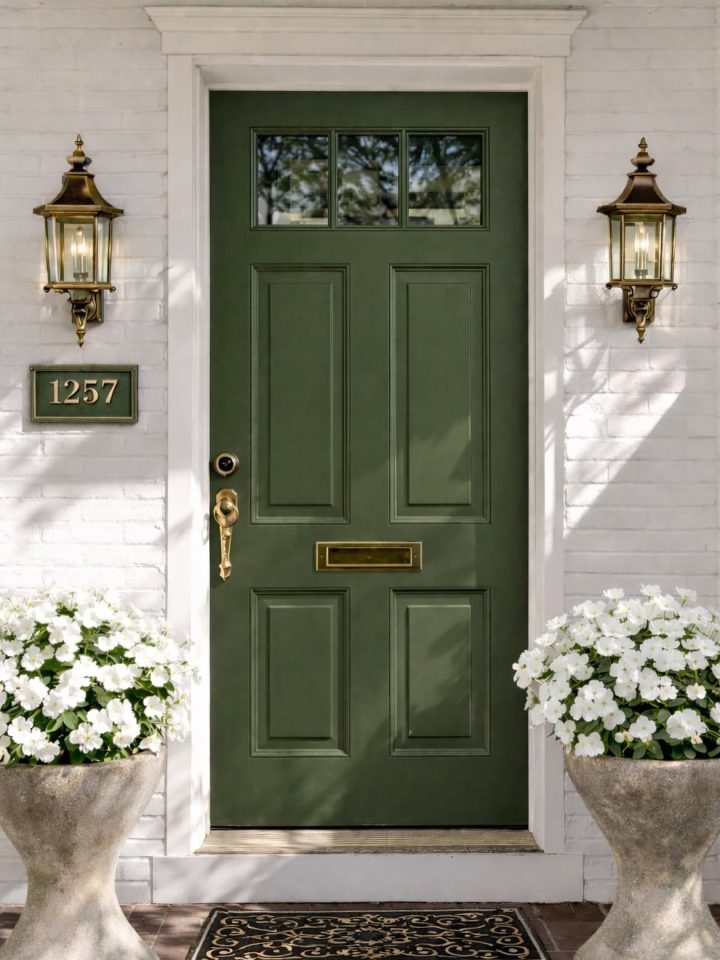
White brick, brass lanterns, and a rich sage green door, this is textbook curb appeal done right.
The six-panel door design is timeless, nothing trendy that’ll feel dated in five years.
Symmetrical urns overflowing with white flowers frame the entry on both sides.
A house number plaque in matching green ties in with the door color, a small detail that makes a big difference.
If you’re going for a classic look that’ll age well, stick with symmetry, brass hardware, and a door color that’s rich but not too dark.
It really is that simple. (📸 Courtesy Amyhowardhome)
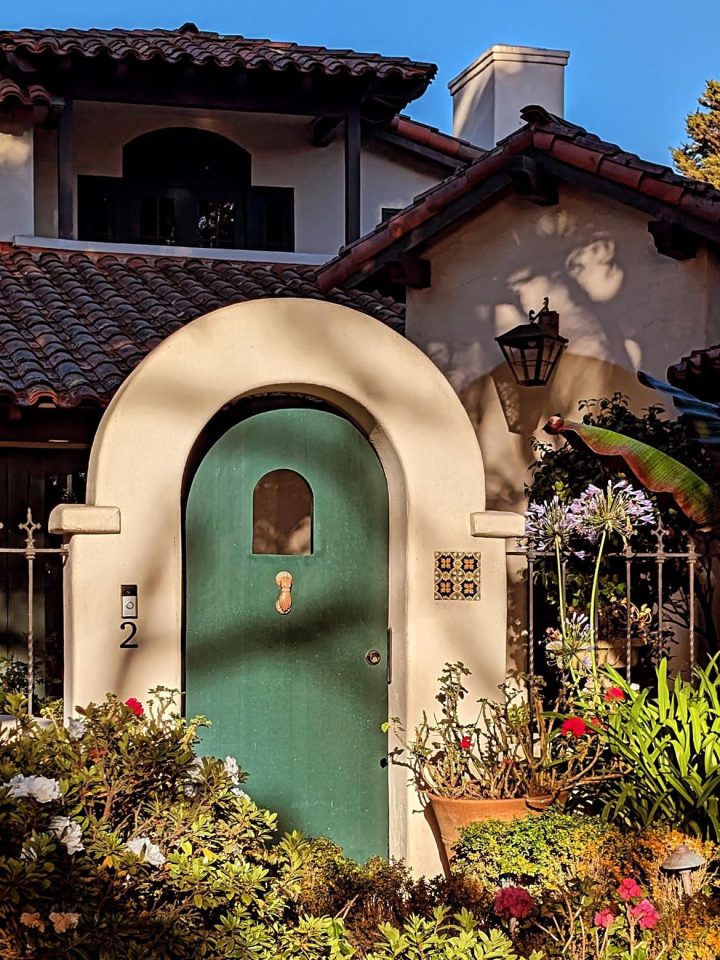
Spanish Arch Door In Teal Sage
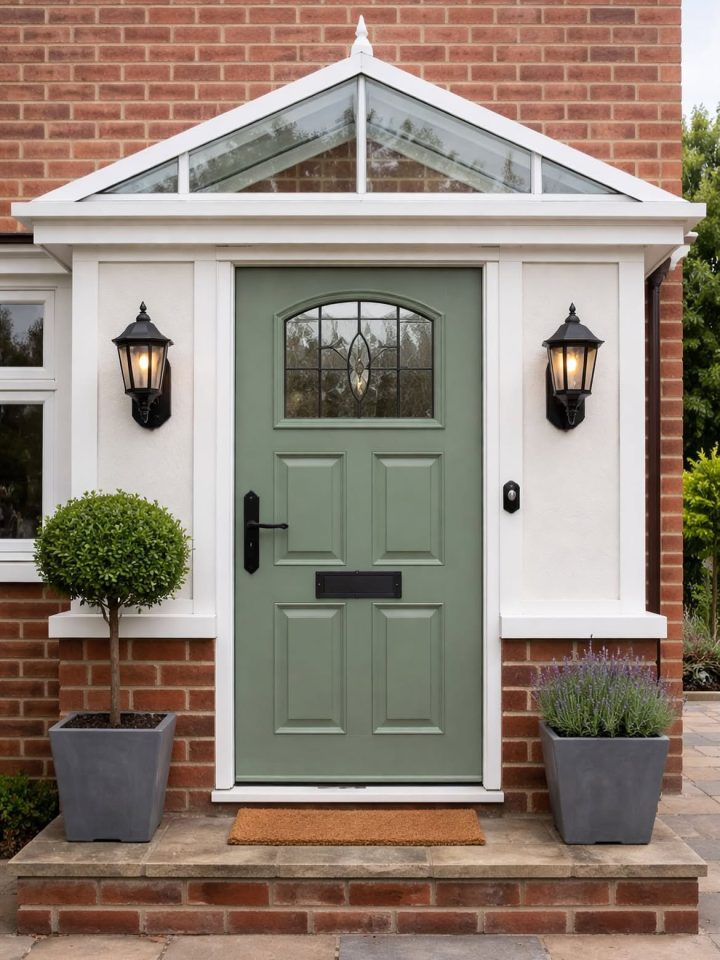
Okay, this one leans more teal than true sage, but the arched stucco surround is too good not to include.
A round window cut into the door lets a little light and character through.
Terracotta roof tiles and a wrought iron gate give it strong Spanish Colonial vibes.
Agapanthus and geraniums spilling around the base add color without distracting from the architecture.
If your home has Mediterranean or Spanish roots, a slightly deeper green-blue like this can look incredible against warm stucco and clay tile.
Don’t be afraid to lean into the arch shape either. (📸 Courtesy Whitefieldwindows)
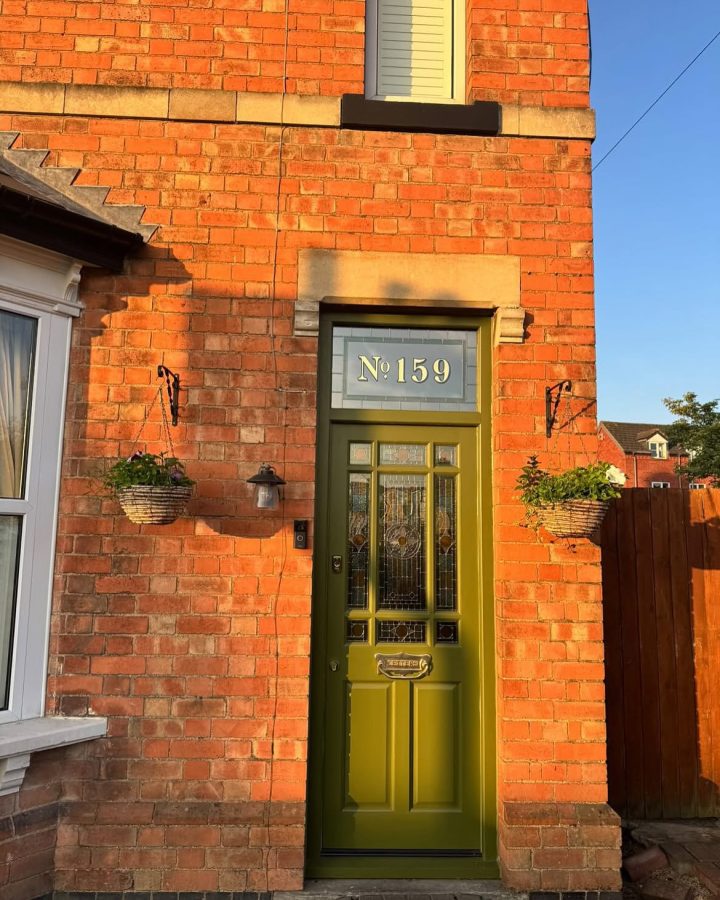
Olive Door With Stained Glass Transom
Bright orange brick and an olive green door might sound like a bold pairing, but it works so well here.
A stained glass transom above the door adds a pop of color and pattern up top.
Hanging baskets on either side soften all that brick with a bit of greenery.
A simple house number plaque keeps things tidy and easy to read from the street.
If your brick is on the warmer, more orange side, olive green is a safer bet than a cooler sage.
The warm tones actually complement each other nicely. (📸 Courtesy Alespixels)
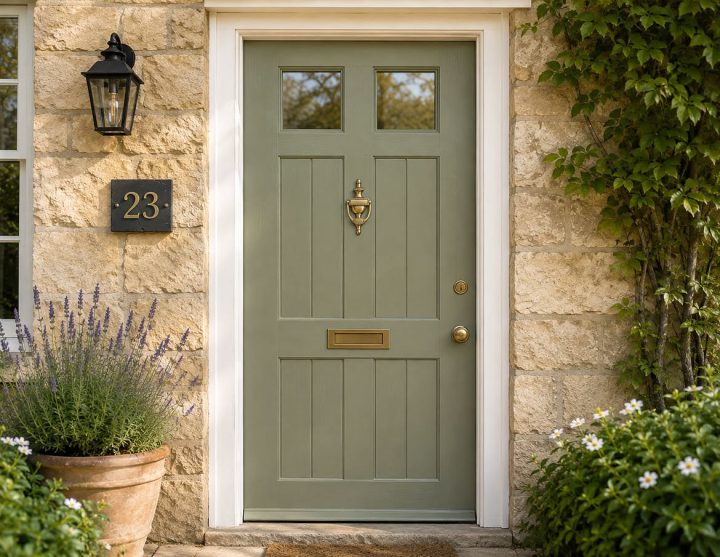
Stone Cottage Door With Brass Knocker
There’s a reason sage green and natural stone show up together so often, they’re basically made for each other.
This door keeps things simple with vertical glass panes on top and solid panels below.
A brass urn-shaped door knocker is the standout hardware detail here.
Lavender and a terracotta pot filled with daisies soften the stone wall beside it.
If you’re working with a stone exterior, don’t overthink the hardware.
One nice brass piece, like this knocker, is often enough to make the whole door feel finished. (📸 Courtesy Geleta_doors)
Golden Hour Door With House Number
There’s nothing like catching a front door in that late afternoon light, it makes even a simple olive door look dramatic.
Stained glass panels down the center catch the sun and throw little bits of color across the step.
A bold house number plaque above the door adds a nice graphic element.
Hanging baskets on iron brackets flank the entry, filled with trailing purple flowers.
If you can, take a few photos of your own door at golden hour before deciding it’s “done.”
Sometimes the lighting alone tells you if the color is working. (📸 Courtesy Oakcrafts.co.uk)
Composite Door With Diamond Glass
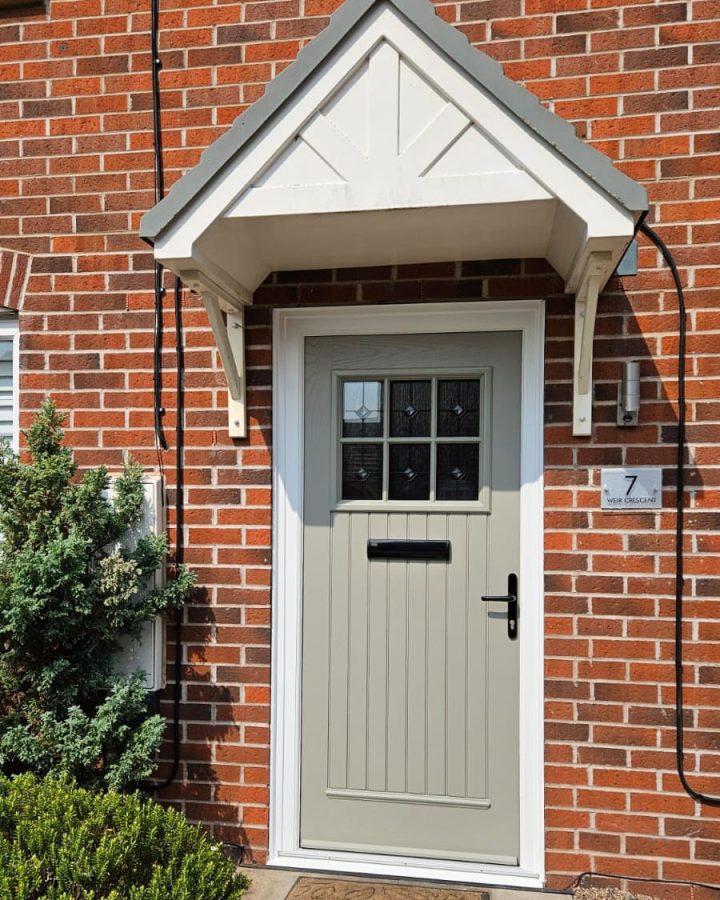
This soft sage composite door has a slightly cooler, grayer undertone than some of the others on this list.
A gabled overhang above the door gives real architectural weight to an otherwise simple brick facade.
Diamond-patterned glass panels at the top add texture without needing extra decoration.
Black hardware keeps the look current and a little more modern.
If your entry doesn’t have a covered porch, a small gabled canopy like this is a nice way to add shelter and curb appeal at the same time.
It doesn’t take much space either. (📸 Courtesy 5starwindows)
Sage French Doors With Yellow Blooms
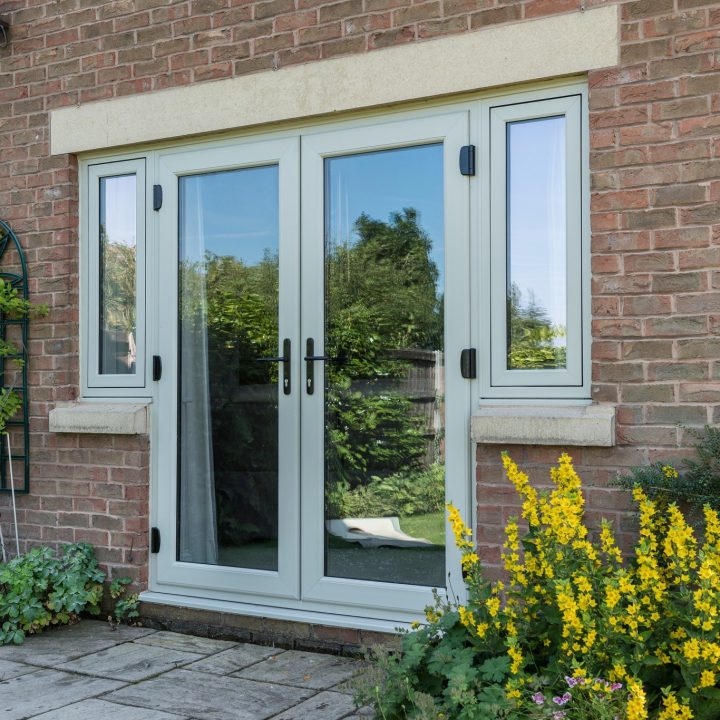
Sage green isn’t just for front doors, it works beautifully on French doors too.
These double doors open onto a garden and have slim sidelights on either side for extra light.
Black handles and hinges add a bit of contrast against the soft green frame.
Tall yellow loosestrife blooms growing right up against the brick make the whole scene feel a little wild and cottage-garden charming.
If you’ve got a garden-facing door, consider carrying your sage green through from the front of the house.
It creates a nice thread of color all the way around. (📸 Courtesy 5starwindows)
Soft Sage Door With Modern Lines
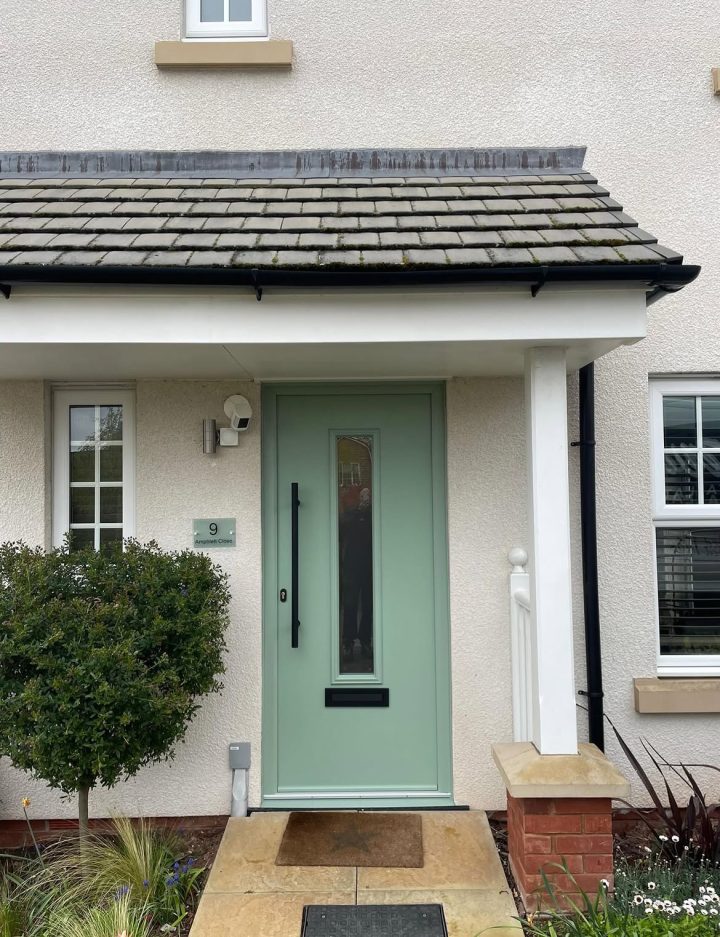
This soft sage green front door proves that you don’t need bold colors to make your entry feel inviting. The clean white exterior lets the gentle green shade take center stage, while the slim vertical glass panel adds just enough detail without making the design feel busy. I also like how the black hardware gives the whole look a little contrast. It keeps everything feeling fresh and current.
If you’re trying this look at home, keep the rest of the entry simple. A neutral doormat, trimmed shrubs, and a few low-maintenance plants are really all you need. Sometimes the prettiest front doors aren’t packed with decor. They just let the color do the talking. (📸 Courtesy solidorltd)
Vintage Charm In Sage Green
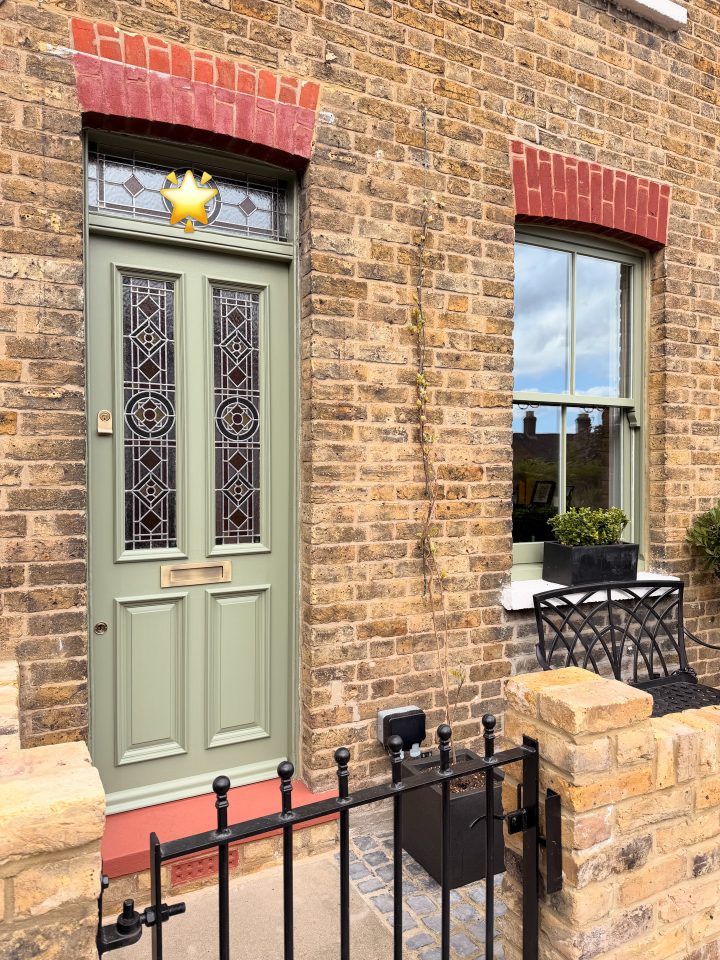
A sage green front door feels right at home against warm brick, especially when it’s paired with beautiful stained glass panels like these. The vintage details give the entrance so much personality, while the muted green paint softens the rich brick tones without competing with them. Even the brass letterbox adds a little warmth that ties everything together.
This is a great reminder that older homes don’t need loud colors to stand out. Keep the trim in the same shade, add a few black planters or iron accents, and let the character of the house shine. The result feels timeless instead of trendy, which is always a good choice for a front entrance. (📸 Courtesy littlepengehouse)
Classic Entry With Soft Sage Appeal
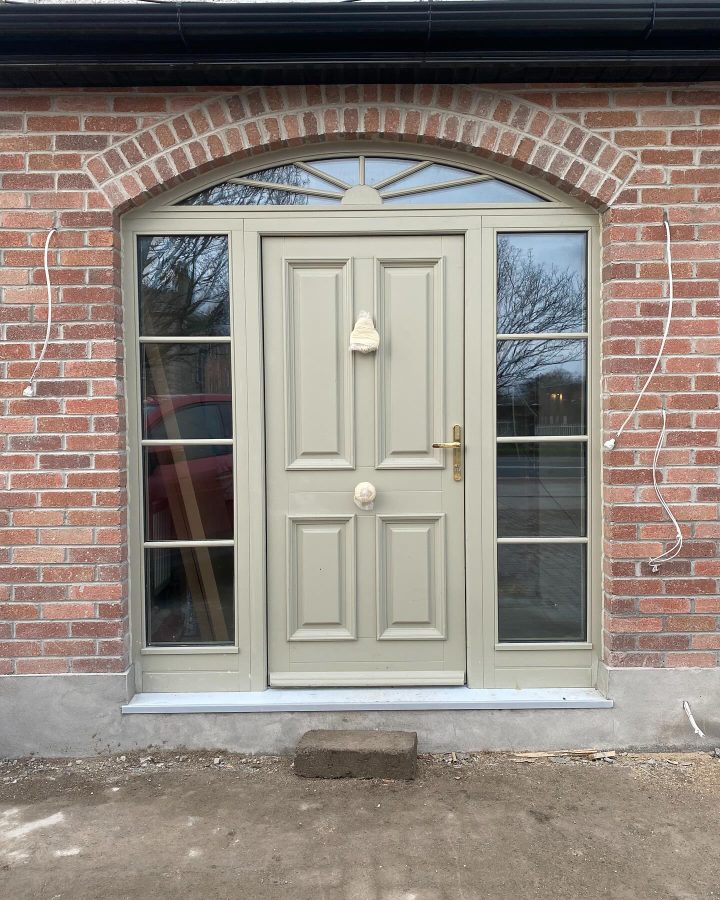
This entry shows how a slightly muted sage green can create an elegant first impression without feeling too colorful. The paneled door, matching sidelights, and arched fanlight all work together to give the entrance a balanced, traditional look. The soft green also pairs beautifully with the red brick, making the whole facade feel warm and welcoming.
If you’re designing a similar entry, try using the same paint color across the door, frame, and sidelights for a seamless finish. Simple brass hardware is all you need to add a little warmth. Once landscaping and a finished walkway are in place, this kind of front door becomes an instant focal point. (📸 Courtesy lovelyirishhomes)
FAQs about Sage Green Front Door Ideas
What undertones work best with sage green front doors?
Sage green tends to look best against warm materials like red brick, natural stone, or cream stucco. The warmth in those backgrounds balances the slightly cool, muted quality of the green, so the door doesn’t feel flat or washed out.
Does sage green front door paint fade quickly in direct sun?
Any exterior paint color can fade with prolonged sun exposure, but muted greens like sage tend to show fading less dramatically than bold or dark colors. Using a high-quality exterior paint with UV protection and reapplying every few years will help keep the color looking fresh.
What hardware finish pairs best with a sage green door?
Both brass and matte black hardware work beautifully with sage green, it really depends on the style you’re going for. Brass leans more traditional and warm, while black hardware gives a slightly more modern, crisp look.
Can I pair sage green with other green shades on the same house?
Yes, pairing a sage door with a slightly darker or lighter green on shutters, trim, or planters can look really intentional rather than mismatched. Just make sure the undertones are similar, either all cool-leaning or all warm-leaning, so the greens feel like a cohesive family rather than clashing.