

A patio is already a great place to relax, but adding a retaining wall can make it feel more finished, more useful, and honestly, a lot more interesting to look at.
Retaining walls do much more than hold back soil. They create levels in a sloped yard, frame outdoor living spaces, add extra seating, and bring texture that makes a patio feel thoughtfully designed instead of just placed in the backyard.
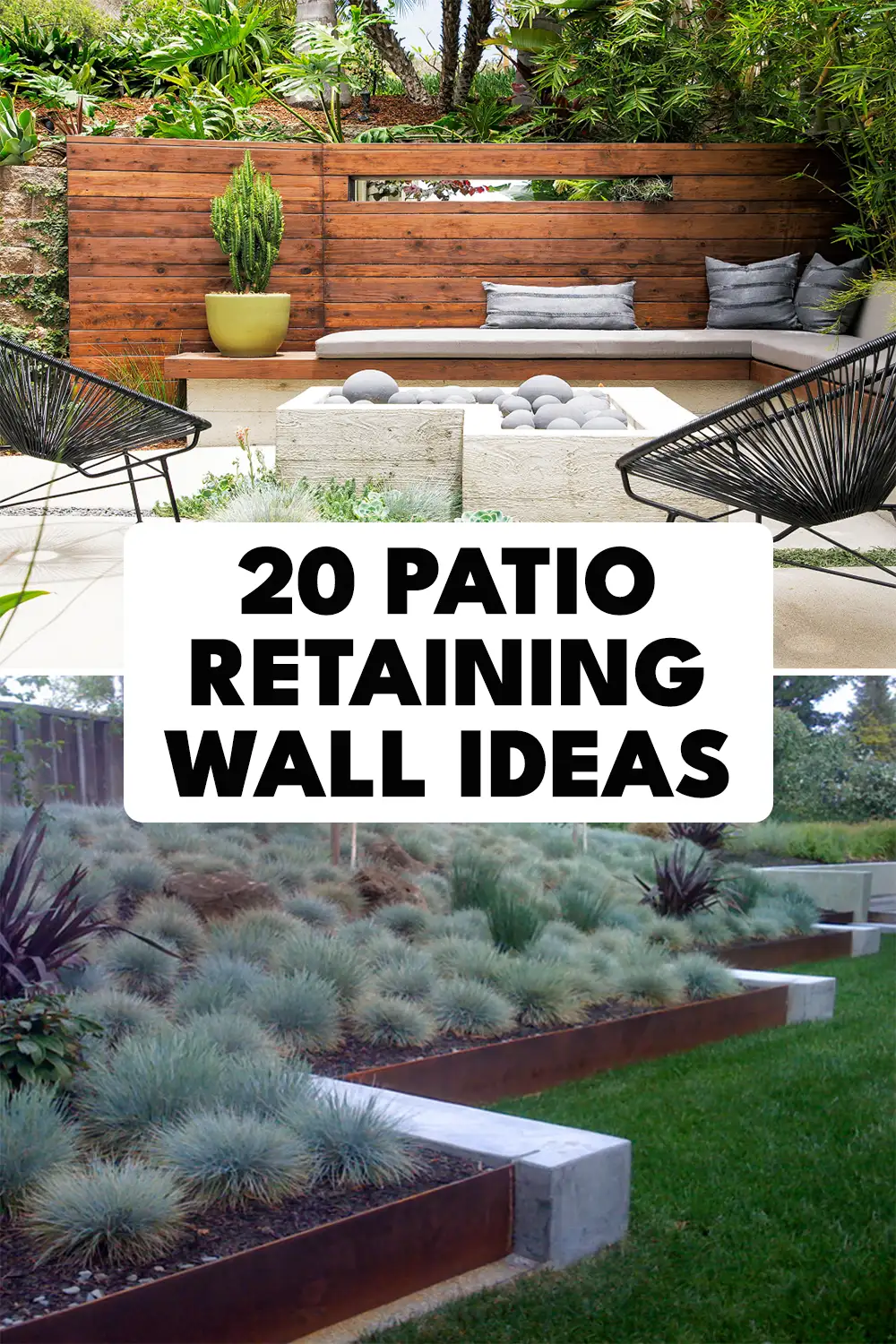
The nice thing is that retaining walls come in all kinds of styles. Some feel rustic and natural with large boulders. Others look clean and modern with concrete blocks, steel panels, or neatly stacked stone.
Whether your yard has a steep slope or you simply want to add a little structure around your patio, there are plenty of creative ways to make a retaining wall part of the design.
If you’ve been looking for ways to upgrade your outdoor space, these patio retaining wall ideas might spark a few plans for your own backyard project.
Also Read: 19 Creative Sloped Backyard Landscaping Ideas
Tiered Stone Terrace With Fireside Glow
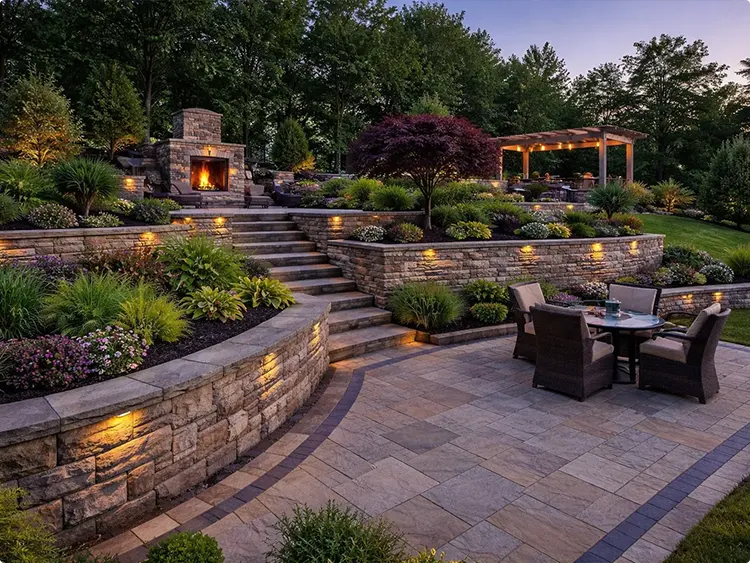
This backyard does the most with a slope. Stacked stone walls step the yard down in layers, and each level gets its own job.
Up top, there’s a stone fireplace. Down below, a paver patio with built-in lighting.
If you’re working with a hill, this is the move. Break it into terraces instead of fighting the grade.
Add low lighting along the wall caps and steps. It makes evening hangouts feel intentional, not accidental. (📸 Courtesy Skylinehearth)
Curved Patio Wall With Stone Pillars
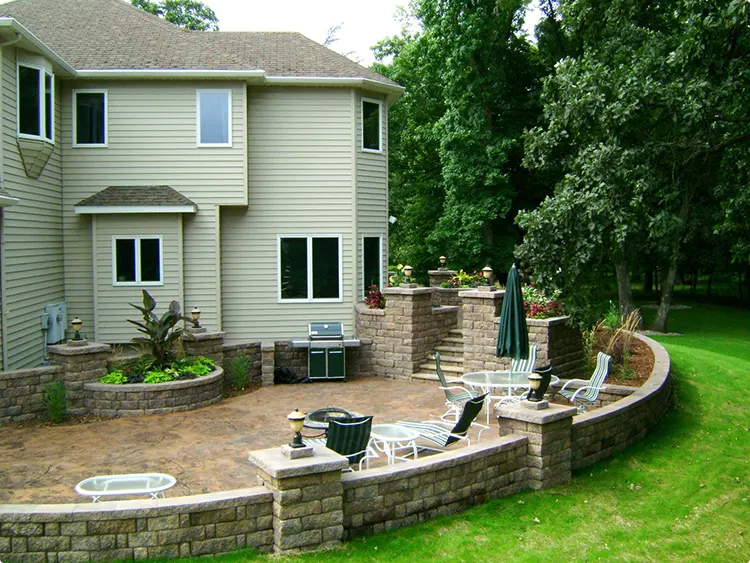
I love how this wall hugs the patio in a soft curve instead of going straight. It makes the whole space feel less boxy.
Stone pillars break up the wall every few feet. They double as little ledges for planters and lanterns.
This is a great trick if your patio butts up against a slope. The curve also helps it flow with the lawn instead of cutting it off.
Stick with a stamped concrete patio inside the wall for a cohesive look. (📸 Courtesy Oasislandscapesnd)
Paver Steps Into a Raised Patio
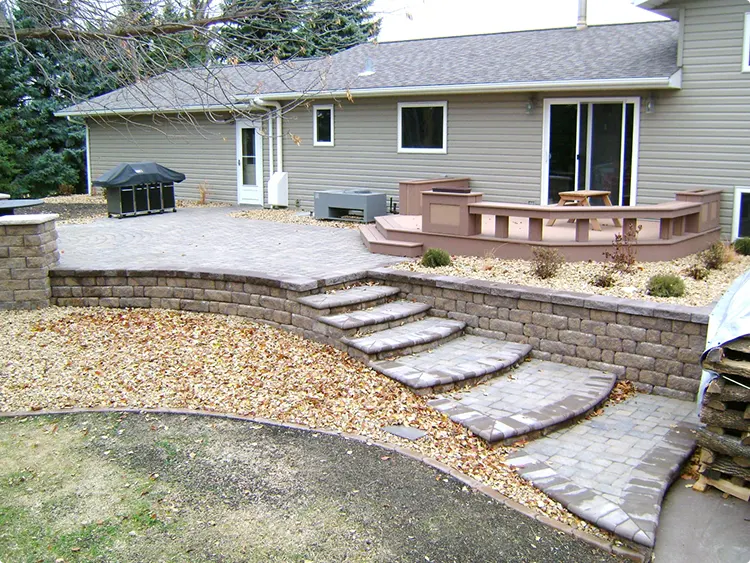
Here’s a simple way to handle a backyard with two levels. A low retaining wall holds up the paver patio, and a few wide steps connect it down to the lawn.
The steps aren’t steep or awkward. They’re broad and shallow, so walking up feels natural.
This setup works great if your house sits higher than your yard. No giant staircase needed, just enough wall to even things out.
Mulch around the base softens the transition from stone to grass. (📸 Courtesy Oasislandscapesnd)
Natural Boulder Wall for a Rustic Edge
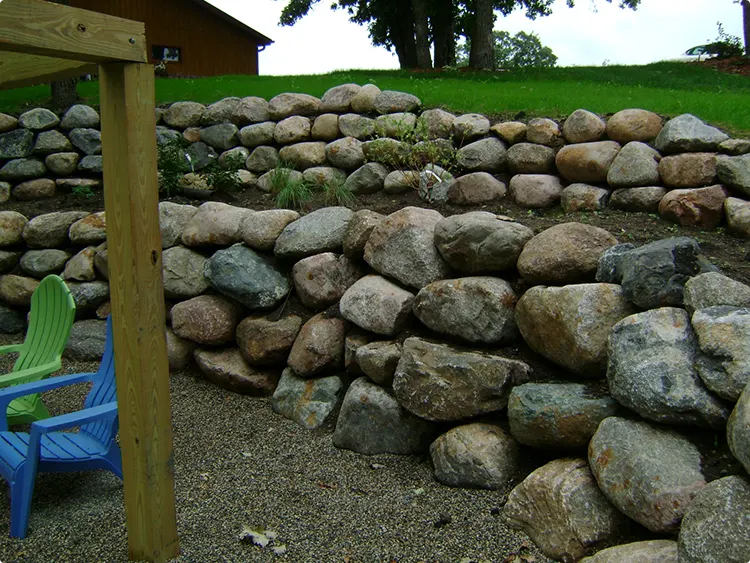
If poured concrete or cut stone feels too polished for your space, try boulders instead. This wall stacks them right on top of each other, gaps and all.
It looks like it’s been there forever, even if it just went in. That’s the beauty of boulder walls.
Tuck a few perennials into the cracks between rocks. They’ll soften the look even more over time.
This style fits cabins, lake houses, or any yard with a more relaxed, wooded feel. (📸 Courtesy Oasislandscapesnd)
Curved Retaining Wall Holding a Paver Patio
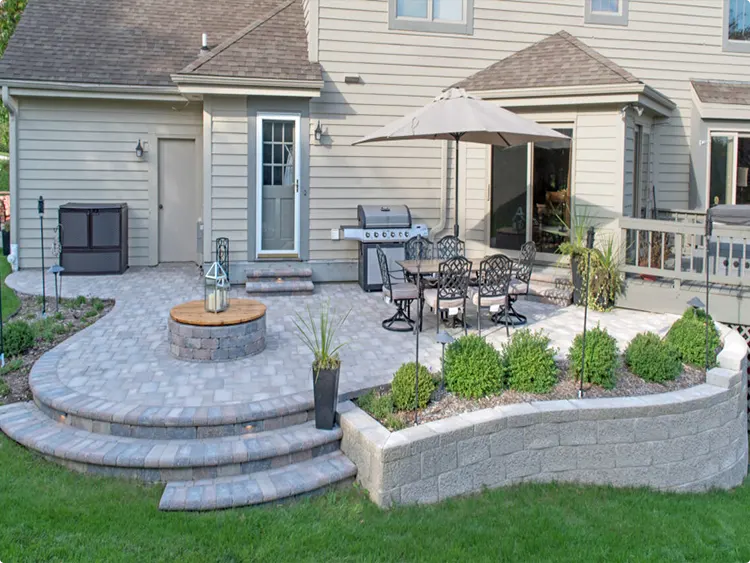
This one’s proof that a retaining wall doesn’t need to be flashy to work hard. A simple curved wall lifts the paver patio above the lawn and keeps the soil exactly where it should be.
Built-in planters along the front edge are a nice touch. They turn a structural wall into a little garden bed too.
A round fire pit area sits right in the curve, which makes the space feel cozy instead of just functional.
If your yard slopes toward the house, this kind of wall can redirect water and protect your foundation. (📸 Courtesy Integritylandscapeservices)
Stacked Stone Wall With a Putting Green Lawn
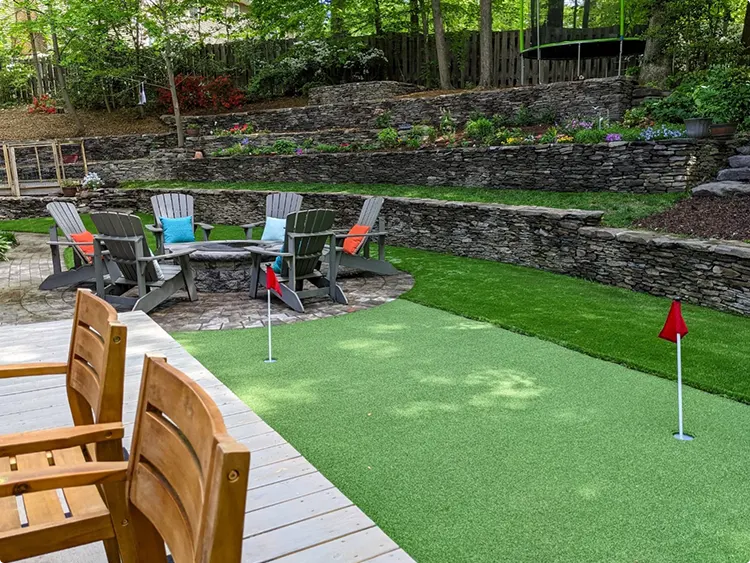
Okay, this backyard is having way too much fun. Layered stone retaining walls climb the slope, and each level grows something different, flowers up top, grass lower down.
At the bottom, there’s a mini putting green built right into the lawn.
This is a great example of multi-tiered walls doing double duty. They hold the hill in place and give you flower beds at eye level instead of bending over.
If you’ve got kids or just love backyard games, work the flat space at the base into something fun like this. (📸 Courtesy Campbellferrara)
Low Stone Wall Framing a Front Lawn
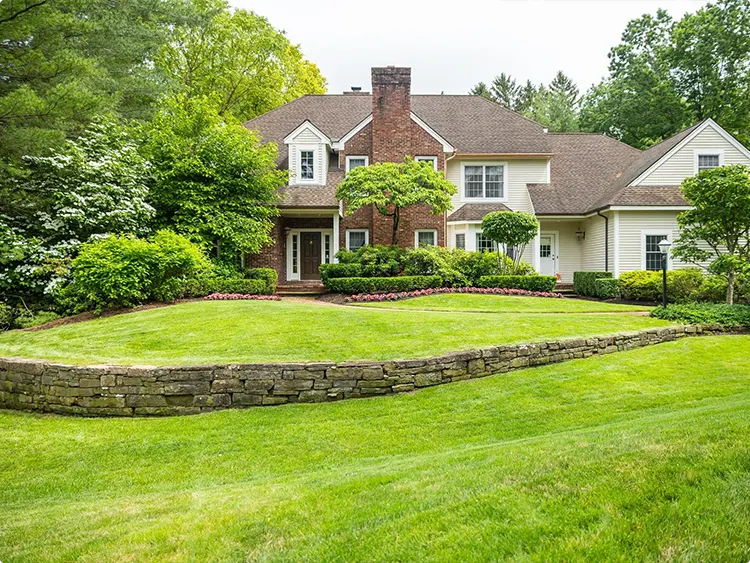
Sometimes a retaining wall isn’t about height, it’s about definition. This low stacked stone wall curves gently along the front yard, holding back just enough soil to create a clean edge.
It’s barely two feet tall, but it makes a big difference visually. The lawn looks more finished, more intentional.
This is a good option if your yard only has a gentle slope. You don’t need a tall wall to make an impact.
Let the grass grow right up to the stone for a soft, natural transition. (📸 Courtesy Gallivancompanies)
Stone Wall Patio With Built-In Waterfall Feature
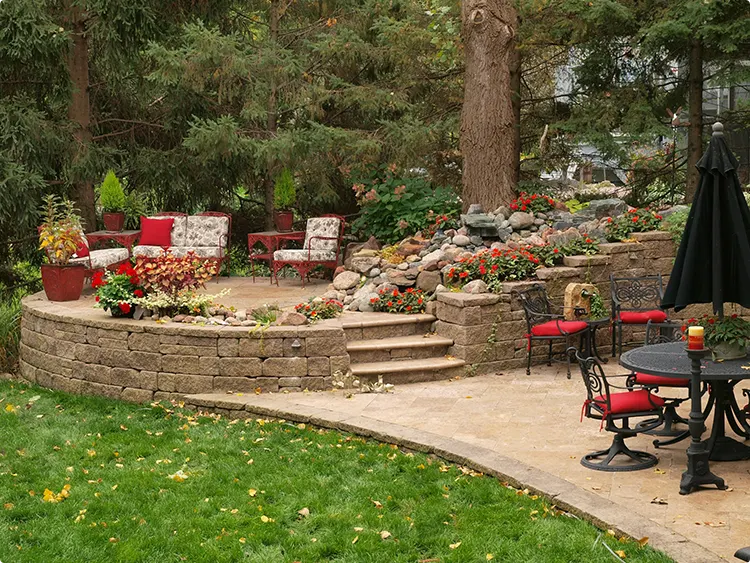
This patio takes “retaining wall” and turns it into a whole experience. Tucked into the stacked stone, there’s a small rock waterfall feeding into a little pond area.
The wall itself rises just enough to create a raised garden bed full of red blooms.
Steps lead up from the main patio, so you’re never stuck on one flat level. Iron furniture and red cushions add some warmth against all that stone.
If you want your wall to feel like more than just a structural fix, sneak in a water feature like this. (📸 Courtesy Thomas J. Story)
Modern Wood Wall With Hidden Window Cutout
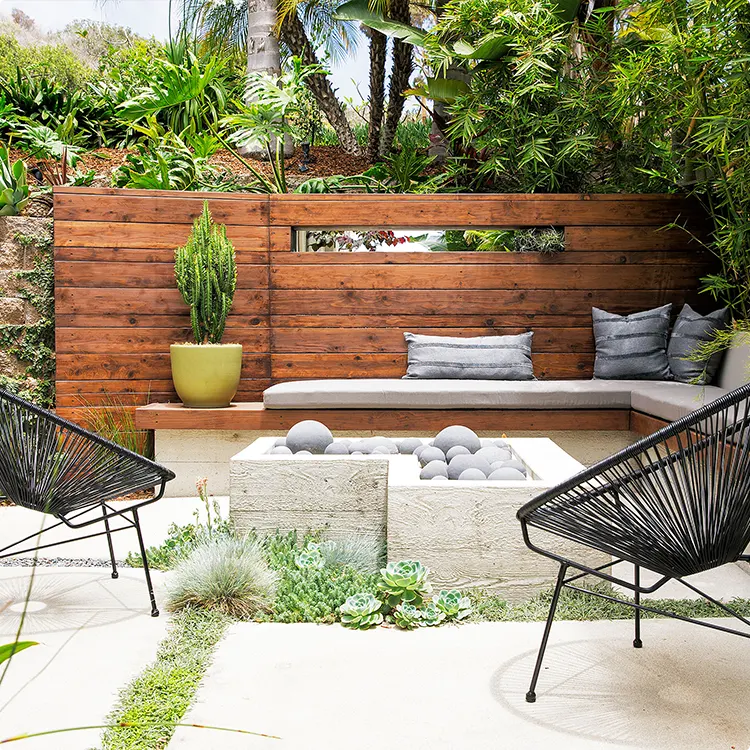
This wall is sleek, simple, and a little unexpected. Horizontal wood planks stack up into a privacy wall, but there’s a thin cutout near the top that lets a sliver of greenery peek through.
It’s a small detail, but it keeps the wall from feeling like a solid block.
A built-in bench runs along the base, so the wall isn’t just holding back a hillside, it’s seating too.
This look works best in modern or coastal-style yards where clean lines matter. (📸 Courtesy Cortzendecor)
Concrete Retaining Wall With a Built-In Fireplace
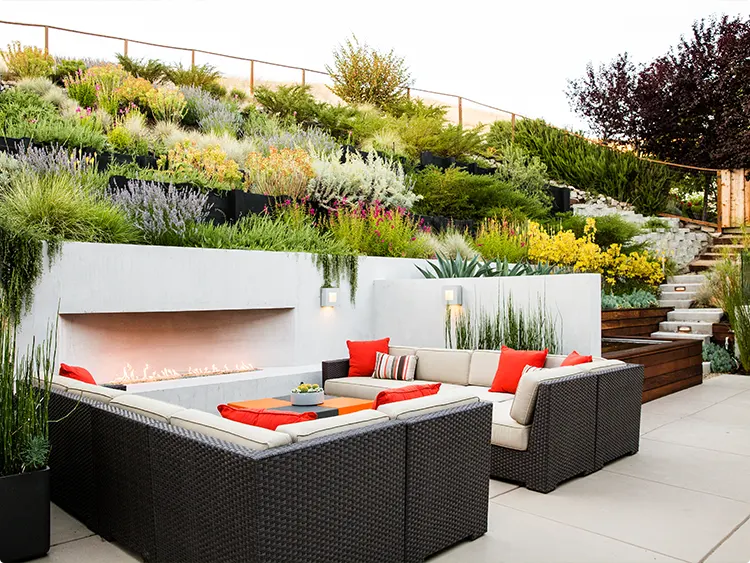
This backyard turned a steep slope into the main event. A clean concrete wall holds back tiered planting beds, and a sleek built-in fireplace sits right at patio level.
Everything about this feels intentional, from the linear fire feature to the boxy wicker seating with those pops of orange.
Steps with built-in lighting wind up the hill on one side, so the whole yard stays connected.
If you’ve got a steep lot, don’t fight it. Lean into the levels and make each one count. (📸 Courtesy Rendevdc)
Stacked Block Wall With Glowing Step Lighting
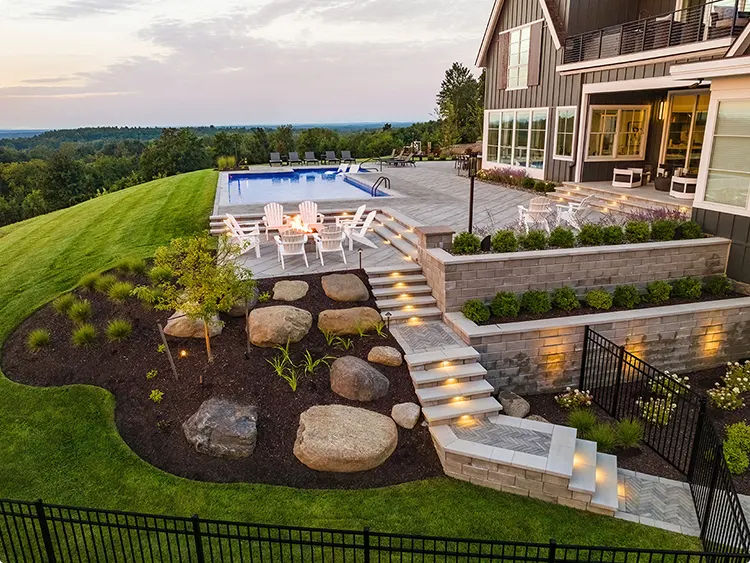
This backyard makes the most of a big elevation drop. A stacked block retaining wall steps the yard down toward a pool and patio, and small lights tucked into each step make the whole thing glow at dusk.
Boulders and native grasses soften the slope on one side instead of leaving it bare.
This is a great approach for larger properties with real elevation changes. Breaking it into a few wall levels keeps it from feeling like one giant cliff.
Add lighting at every step, not just the top and bottom. It makes a huge safety and style difference at night. (📸 Courtesy Houzz)
Wood Plank Wall for a Raised Flower Bed
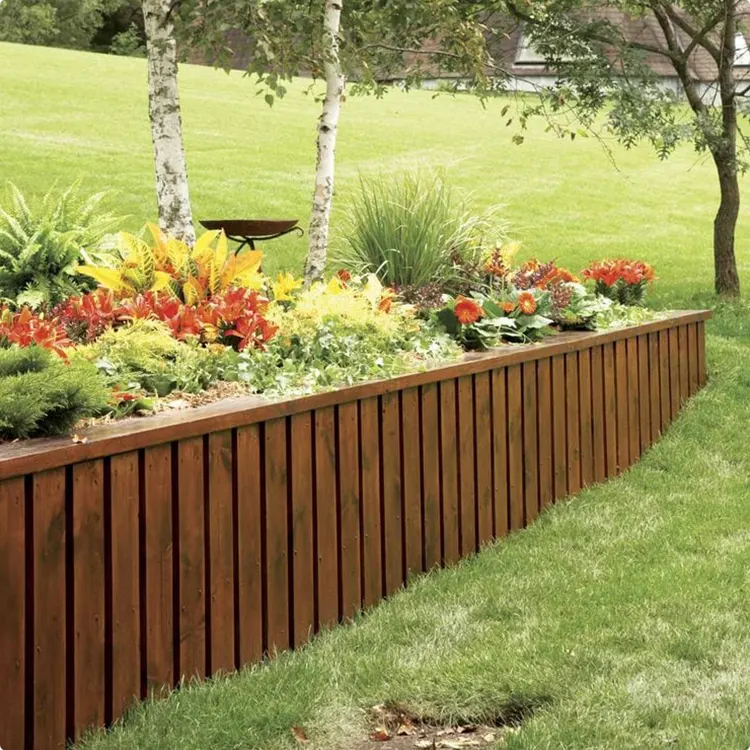
This one’s about as simple as retaining walls get. Vertical wood planks form a low wall, just enough to lift the flower bed above the lawn.
Bright orange and yellow blooms spill over the top, which makes the wood look almost like a frame for the flowers.
This is a solid weekend project if you’ve got a small slope or just want to define a planting area. No fancy materials needed, just sturdy boards and good drainage.
Stain the wood a warm tone like this one for a little extra polish. (📸 Courtesy Gallivancompanies)
Timber Wall Holding Back a Lush Hillside
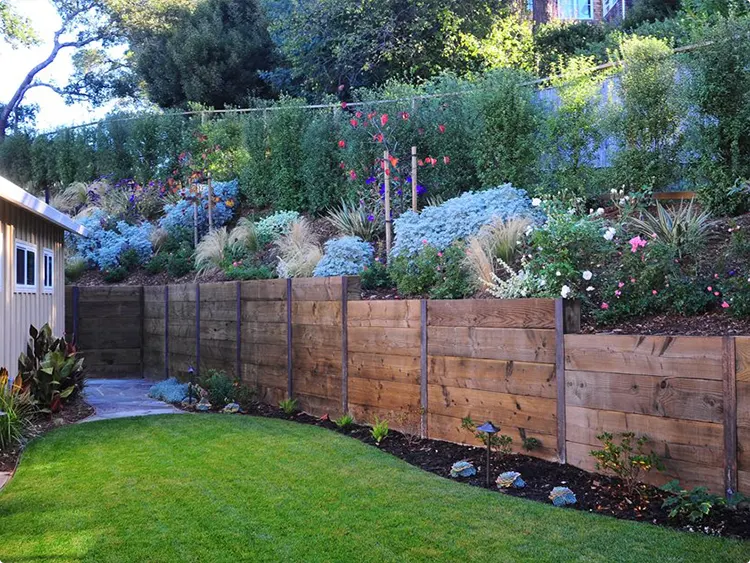
Here’s a great example of a wall that’s purely functional, and that’s okay. Horizontal timber planks between steel posts hold back a hill packed with blue-gray succulents and wildflowers.
The wood tone is warm enough to feel intentional instead of utilitarian.
A narrow path cuts through the wall at one point, leading to a side yard tucked behind the slope.
This style is great if your backyard backs up to a hill and you need something sturdy but not stark. (📸 Courtesy Familyhandyman)
Gabion Wall Filled With River Rock
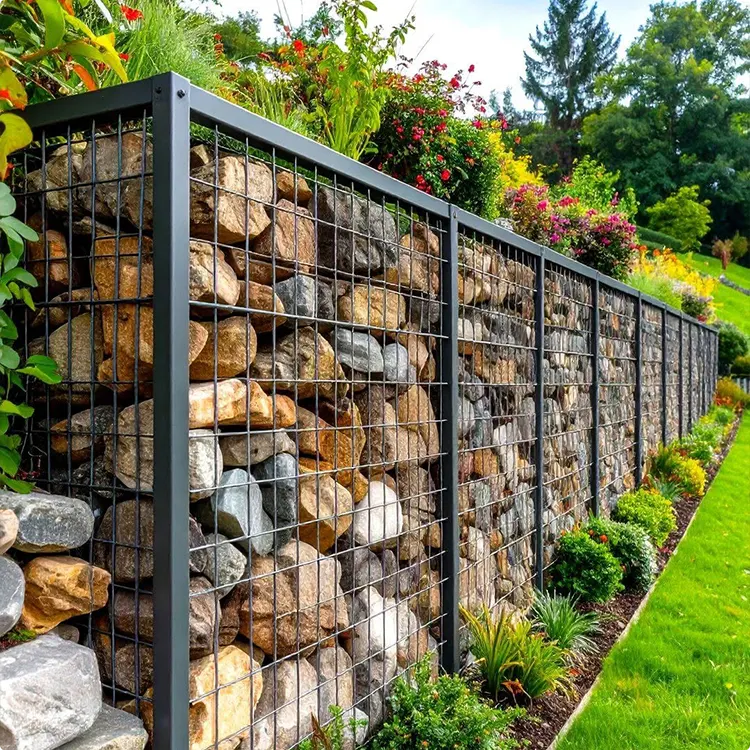
If you want texture without the labor of dry-stacking stone yourself, a gabion wall might be your answer. Wire cages get filled with loose rock, river rock here, and the result looks intentional and modern at the same time.
It’s also a great way to use mismatched stone, since the cage holds it all together no matter the shapes.
Flowers planted right at the top edge soften the industrial look.
This is a smart pick if you want a retaining wall that doesn’t need mortar or masonry skills. (📸 Courtesy Landscapingnetwork)
Corten Steel Edging Through Ornamental Grass
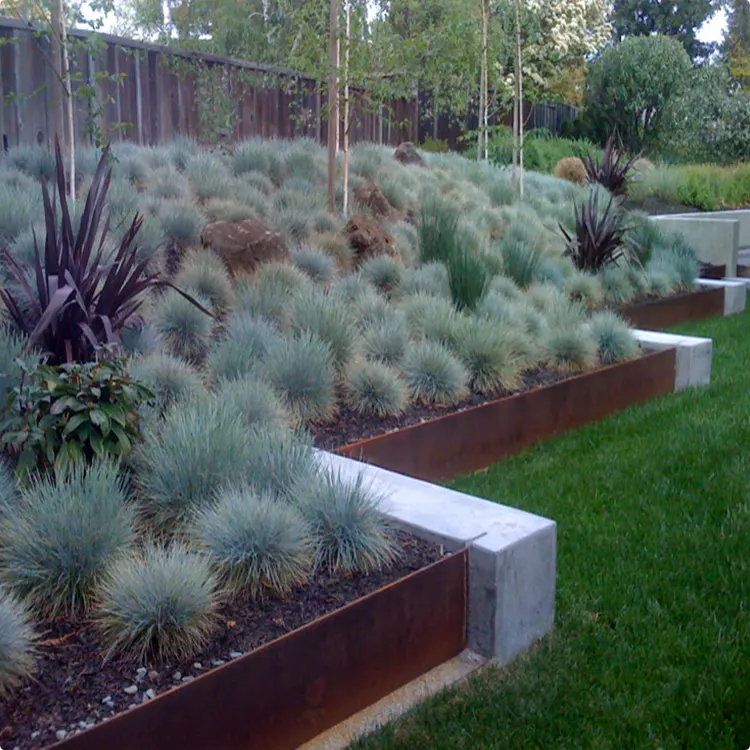
This wall barely looks like a wall at all, more like a sharp line drawn through a sea of blue fescue. Corten steel edging holds the slope in clean, low tiers.
The rusted finish is the whole point here. It warms up over time and contrasts beautifully with all that silvery grass.
If you’re going for a modern, low-maintenance look, this kind of edging is worth considering. It’s subtle but it does real structural work.
Pair it with ornamental grasses for movement and texture without much upkeep. (📸 Courtesy Facebook)
Rusted Steel Tiers With Boulder Accents
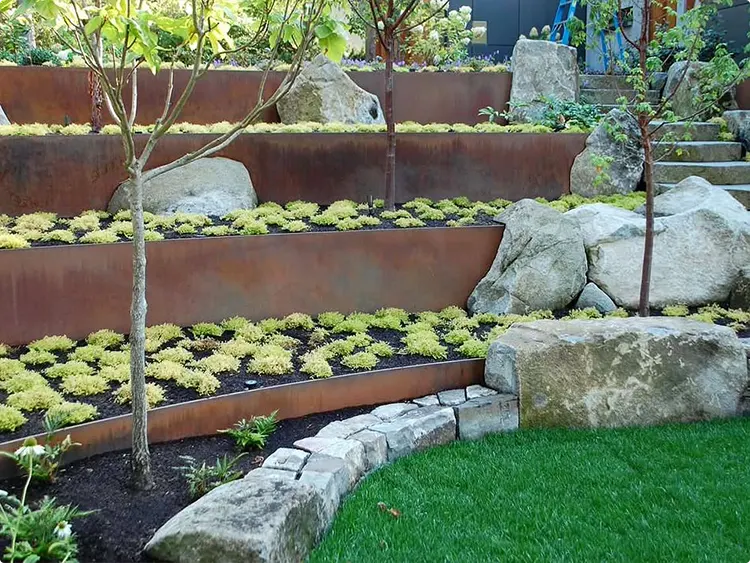
This terraced hillside leans hard into industrial-meets-garden. Corten steel bands stack in tiers, each one planted with a low groundcover that glows almost chartreuse against the rust.
Big boulders break up the lines so it doesn’t feel too rigid.
Young trees planted right into the tiers will eventually grow tall enough to shade the whole slope.
This is a great option if you’ve got a steep hill and want something sculptural, not just functional. (📸 Courtesy Houzz)
Brick Retaining Wall With a Clean Cap
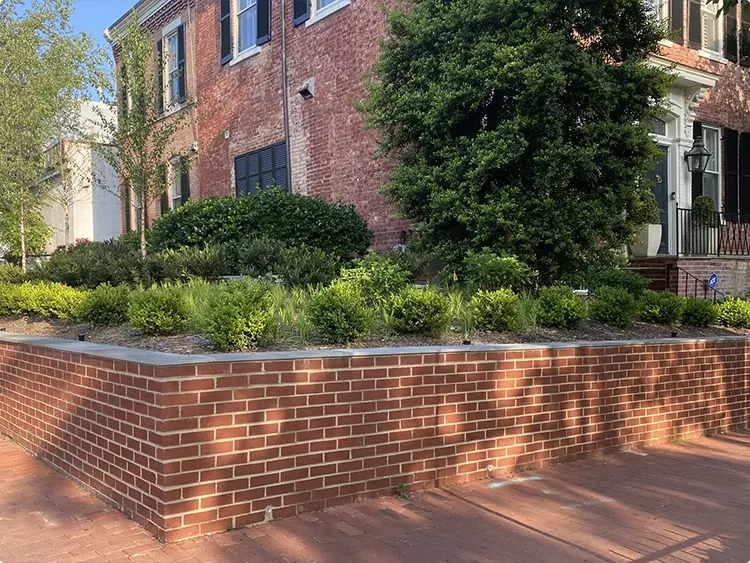
There’s something about a brick wall that just feels permanent and put-together. This one wraps around a raised planting bed, with a smooth concrete cap finishing off the top edge.
It matches the brick house behind it, which ties the whole front yard together.
If your home is brick, matching your retaining wall to it is an easy way to make new landscaping look like it’s always been there.
Keep the planting simple, boxwoods and grasses work great here, so the wall stays the star. (📸 Courtesy Unknown)
Dry-Stacked Stone Border for a Garden Bed
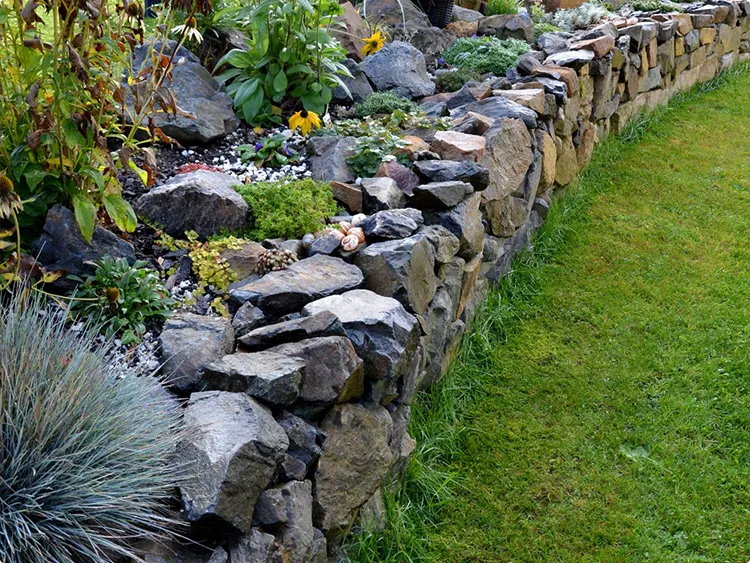
This is about as low-effort, high-charm as retaining walls get. Loosely stacked stones, no mortar, no fuss, hold back a garden bed packed with perennials and moss.
The gaps between stones aren’t a flaw. They’re an opportunity. Tiny plants love tucking into those crevices.
This style is perfect for a cottage garden or anywhere you want things to look a little wild and lived-in.
Use whatever stone you can find locally. Matching isn’t the goal here, character is. (📸 Courtesy Homedit)
S-Curve Block Wall Framing a Mulch Bed
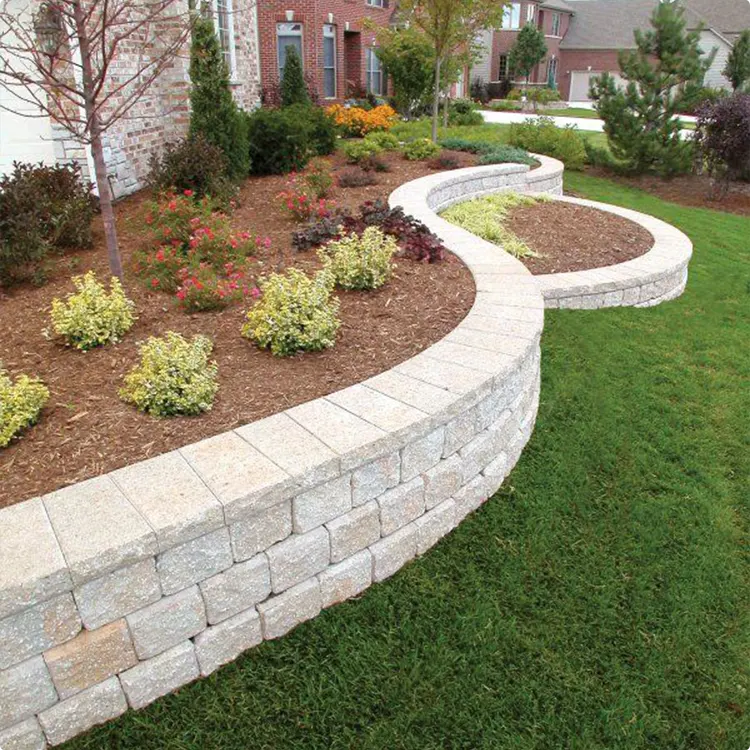
This wall does a lot of visual work just by curving. Instead of a straight line, it winds in an S-shape, creating two distinct planting pockets instead of one long bed.
The tan block matches the brick on the house, so it feels built-in rather than added on.
This is a great trick if your front yard slopes toward the driveway. A curved wall like this breaks up the space and adds interest from the street.
Fill the beds with a mix of evergreens and seasonal color so it looks good year-round. (📸 Courtesy Unilock)
Corrugated Metal Wall With Slatted Privacy Screen
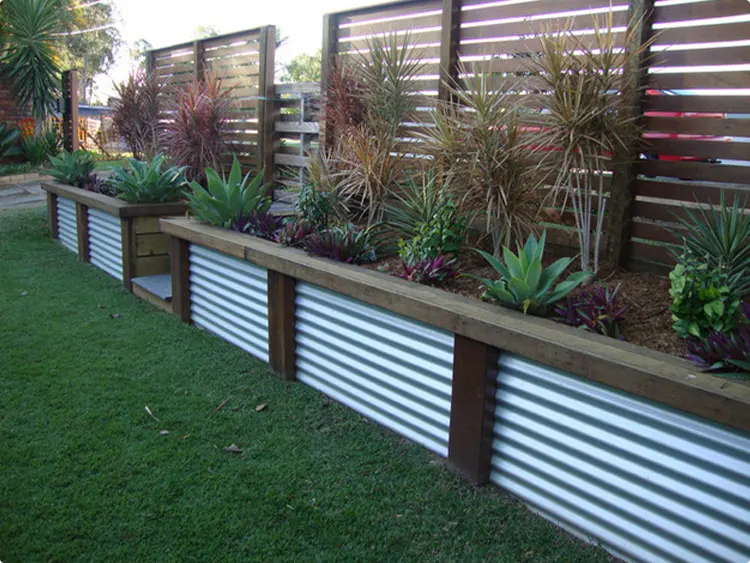
This wall pairs two materials that don’t usually show up together, corrugated galvanized steel on the bottom, slatted wood privacy panels on top. Somehow it just works.
The metal handles the retaining job, holding back the raised bed of agave and tropical plants.
The wood screen above adds privacy without blocking light or airflow completely.
If you want a wall with some edge to it, literally, this combo is worth trying. It’s industrial but still warm thanks to the wood tones. (📸 Courtesy Houzz)
FAQs About Patio Retaining Wall Ideas
What is the cheapest material for a retaining wall?
Wood is usually the most budget-friendly option, especially pressure-treated timber. Gabion walls (wire cages filled with rock) are also affordable if you have access to free or low-cost stone.
How tall can a retaining wall be without a permit?
This varies a lot by city and county, but many places allow walls up to 3 or 4 feet without a permit. Anything taller usually needs engineering approval, so check your local building codes before you start digging.
Do retaining walls need drainage?
Yes, almost always. Without proper drainage, water builds up behind the wall and adds pressure that can cause it to crack or lean over time. Most walls need gravel backfill and sometimes a drainage pipe behind them.
Can I build a retaining wall myself?
Smaller walls under 3 feet are often doable as a DIY project, especially with interlocking blocks made for stacking. Taller walls holding back a lot of soil are safer left to a professional, since the engineering matters more as height increases.
How long do retaining walls last?
It depends on the material. Concrete and stone walls can last 50 years or more with good drainage. Wood walls typically last 20 to 30 years before they need replacing, depending on the climate and wood type used.