

Paver Walkways can completely change how your yard feels. A simple path can guide guests to your front door, lead you through the garden, or connect your patio to the rest of the backyard.
And honestly, once you notice a well-designed walkway, you realize it does more than help people get from one spot to another. It quietly shapes the whole landscape.
Some walkways are straight and clean. Others curve gently through flower beds or trees. You might see large stepping stones set in grass, classic brick paths near a front porch, or modern pavers mixed with gravel. Every little choice changes the mood of the space.
The nice thing about pavers is how flexible they are. You can keep things simple with evenly spaced stones, or play with shapes, patterns, and borders if you want something a bit more styled. Even a small walkway can make a yard look thoughtful and finished.
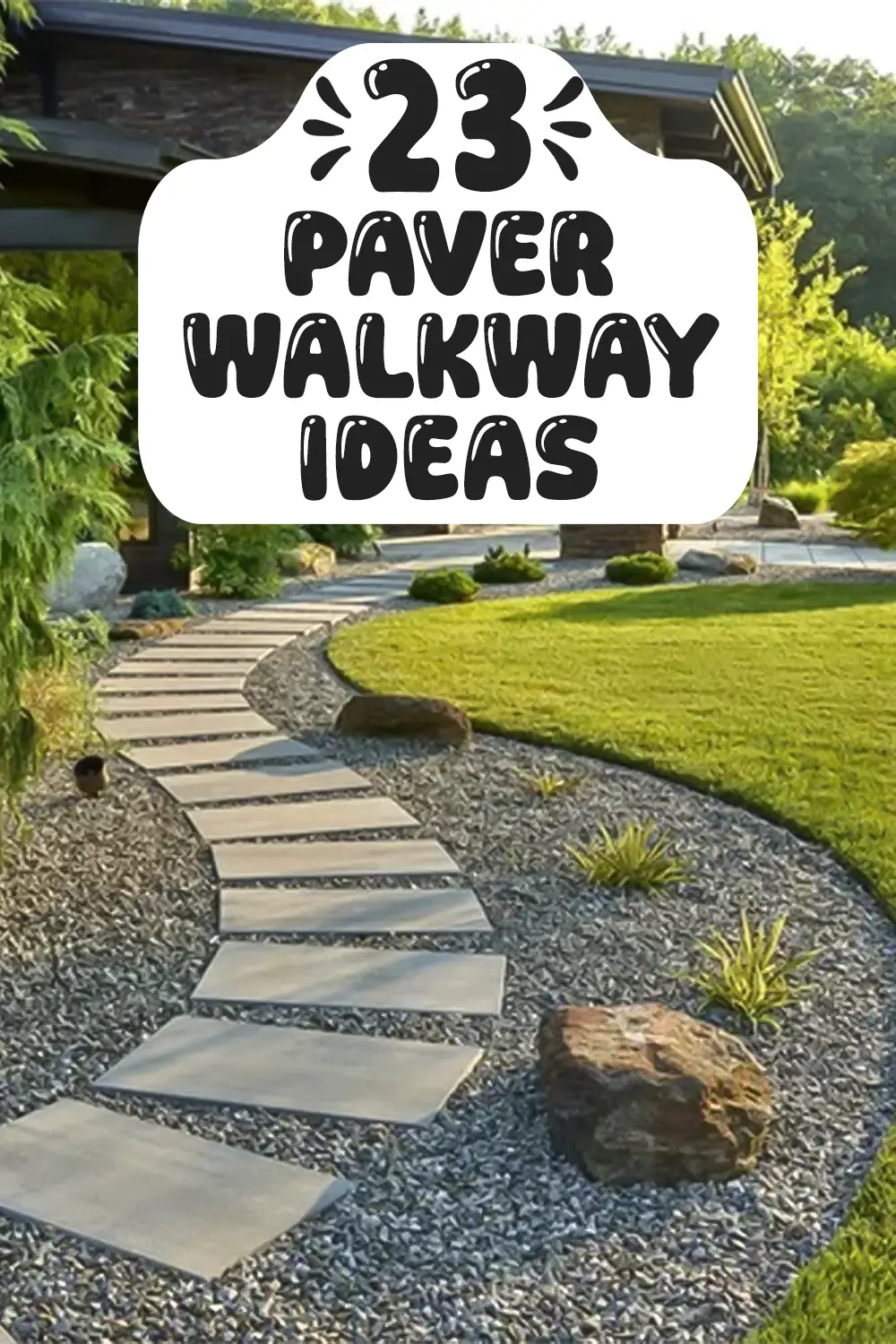
If you’re thinking about updating your garden path or adding a new one, these Paver Walkway Ideas will give you plenty to think about. Some are cozy, some feel modern, and a few might make you look at your backyard and think, “Maybe I should try that.”
Also Read: 37 Walkways to Front Door Ideas
Stepping Stone Path to a Cozy Backyard Pavilion
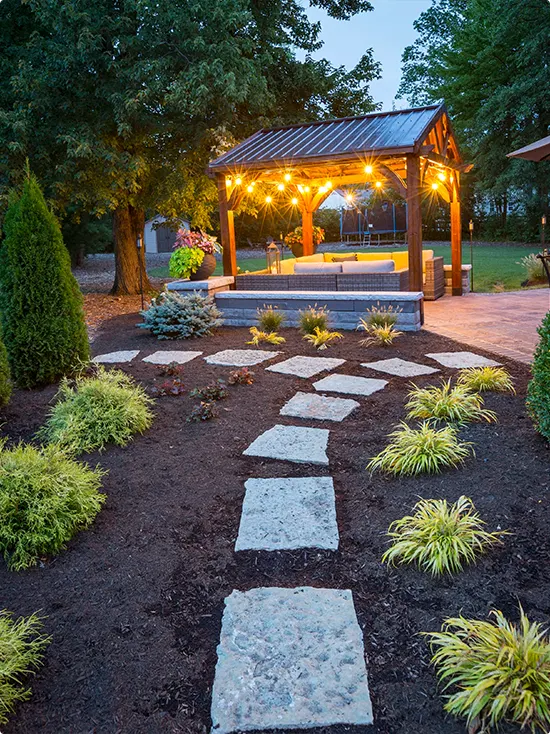
Large square pavers lead you right through the garden and toward that warm wooden pavilion. The stones sit in dark mulch, with small plants tucked along the sides, so the path feels soft and natural instead of stiff.
I like how the walkway pulls your eyes forward. You just follow the stones, step by step, until you reach the cozy seating area glowing under those warm lights. It feels a bit like a quiet garden trail that ends with a reward.
If you want a walkway that feels relaxed, try spacing the pavers like this. Leave a little room around them for mulch, ground cover, or small plants. It keeps the path simple but still full of life.
Curved Garden Walkway Along the Landscape
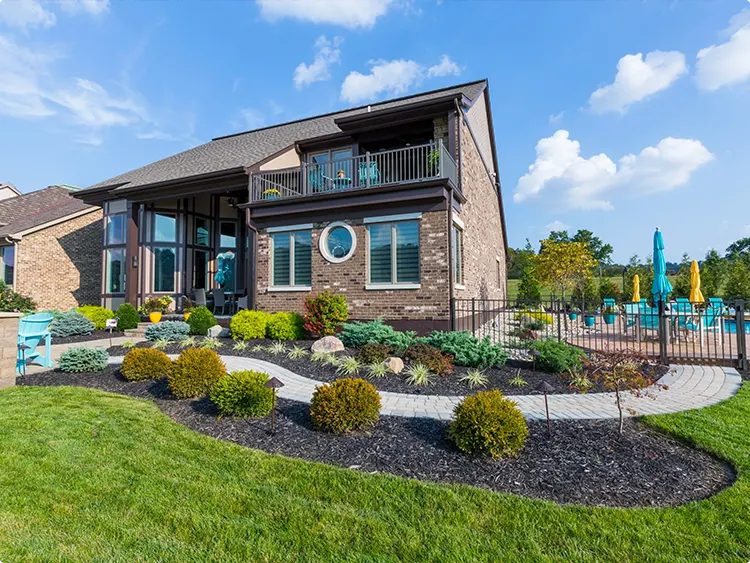
This paver walkway gently curves through the front yard, wrapping around the landscaping beds like it belongs there. The light pavers contrast nicely with the dark mulch and green shrubs, so the path really stands out.
Curved paths always feel more welcoming to me. Instead of walking straight from point A to point B, you sort of wander through the garden a little, noticing the plants and flowers along the way.
The trick here is the soft curve. Straight paths are fine, but a gentle bend like this makes the yard feel more natural and relaxed. It almost guides guests to the front door without even trying.
Modern Paver Path with Pebble Fill
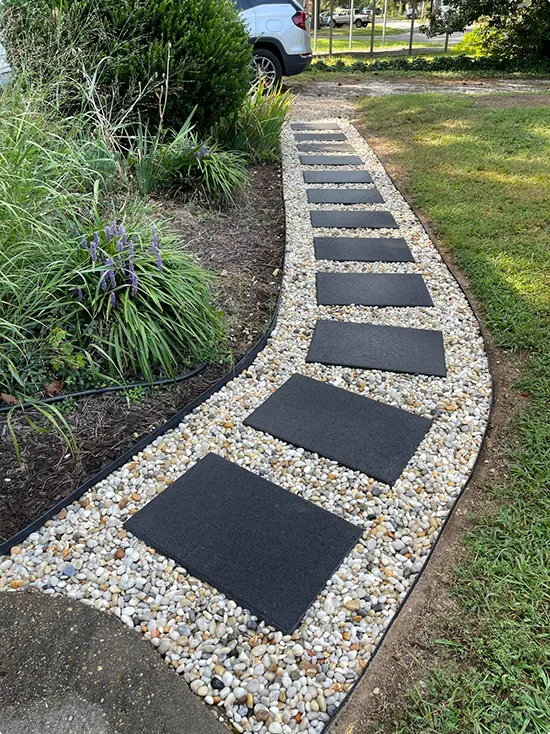
Rectangular dark pavers sit neatly inside a bed of small white pebbles, creating a clean and modern walkway. The stones are spaced evenly, and the pebbles fill the gaps so the whole path looks tidy and intentional.
This style works great if you like simple, low-maintenance landscaping. The pebbles help with drainage, and they keep weeds down too, which honestly makes life easier.
I also like the contrast here. Dark stepping stones against light pebbles always look sharp. It’s one of those simple ideas that somehow makes a yard feel a little more designed.
Secret Garden Mossy Flagstones
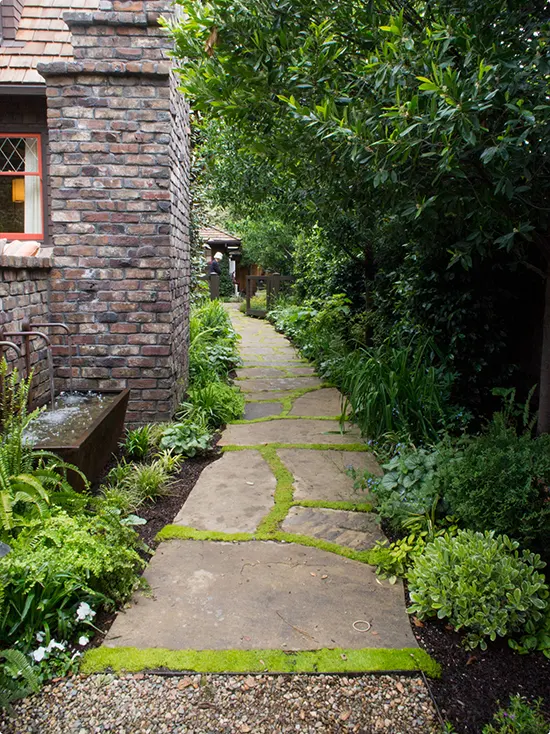
Large, flat stones are nestled into a lush carpet of bright green moss to create a path that feels like a hidden discovery. It sits right next to a rustic brick wall and a small water feature, making the whole side yard feel like a quiet sanctuary.
Using moss instead of traditional grout gives the walkway a soft, cushioned look that blends perfectly with the surrounding ferns. It is a great way to make a narrow passage feel like a deliberate, magical part of the garden.
Enchanted Nighttime Garden Arbors
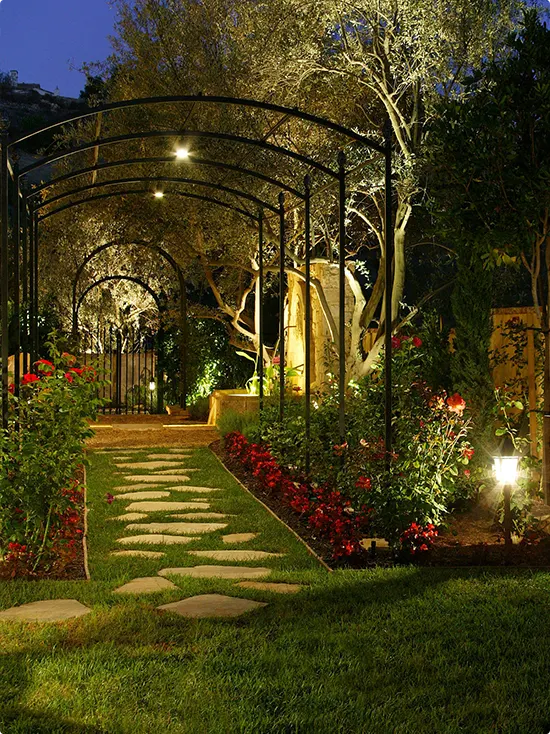
Stepping stones are scattered across a manicured lawn under a series of glowing black metal arches. The warm lights tucked into the trellis make the path feel like something out of a fairy tale once the sun goes down.
This design works so well because it adds height and drama to a flat yard. The mix of red flowers and soft grass around the stones makes every step feel like a special event.
Lavender-Lined Meadow Walk
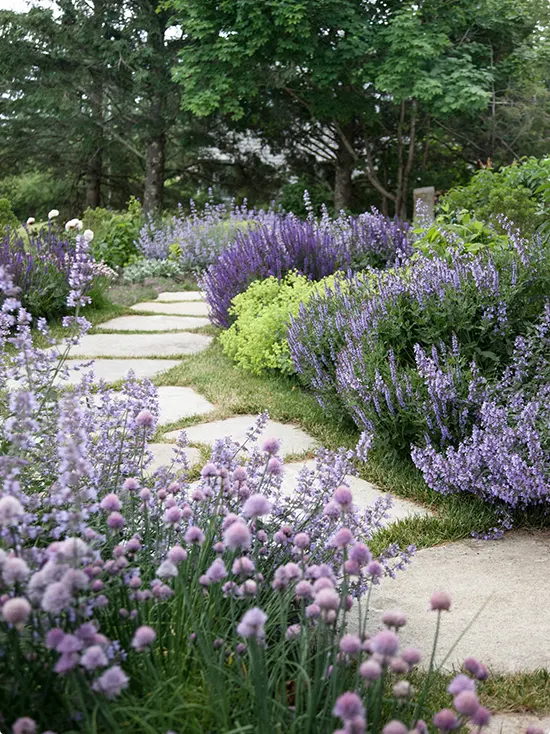
Irregular light-colored pavers wind through a sea of purple lavender and soft green shrubs. The cool tones of the stone look beautiful against the vibrant purples and blues of the plants.
I love how the flowers spill over the edges of the path just a little bit. It makes the walkway feel less rigid and more like it is part of a natural, blooming meadow.
Formal Slate Estate Path
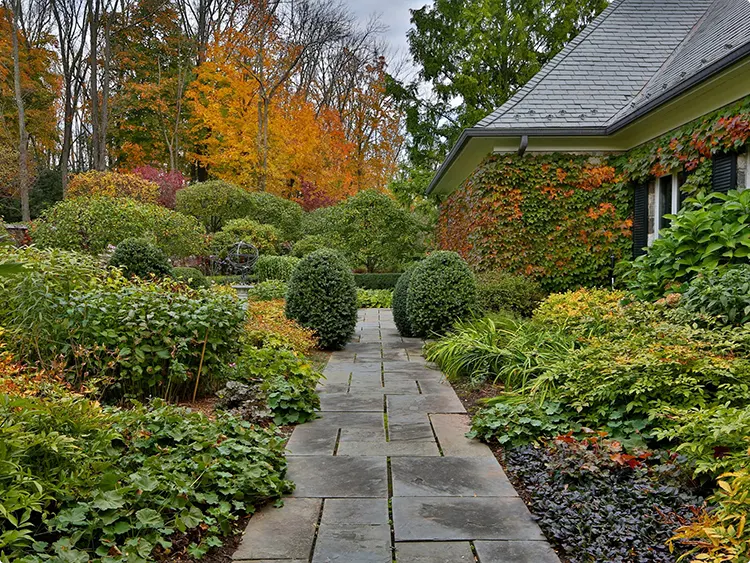
Long, rectangular slate pavers are laid in a crisp, offset pattern through a perfectly manicured garden. The dark gray stone provides a sharp contrast to the bright green hedges and the warm autumn colors of the trees in the background.
This is the look to go for if you want your home to feel a bit more grand and organized. The straight lines of the walkway guide your eyes right through the landscape, making the yard feel incredibly long and spacious.
Desert Oasis Sandstone Trail
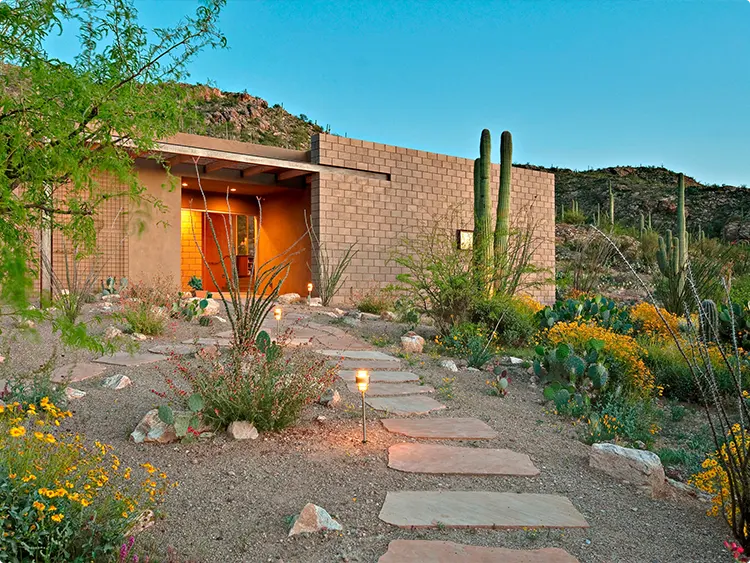
Natural sandstone slabs are spaced out across a sandy, gravel-filled landscape dotted with cacti and desert blooms. The warm, earthy tones of the stone match the desert architecture and the rugged mountains in the distance.
Little path lights are tucked near the plants to keep the walkway safe and inviting at night. It proves that you don’t need a lot of green grass to have a walkway that feels welcoming and full of life.
Curved Cobblestone Bordered Path
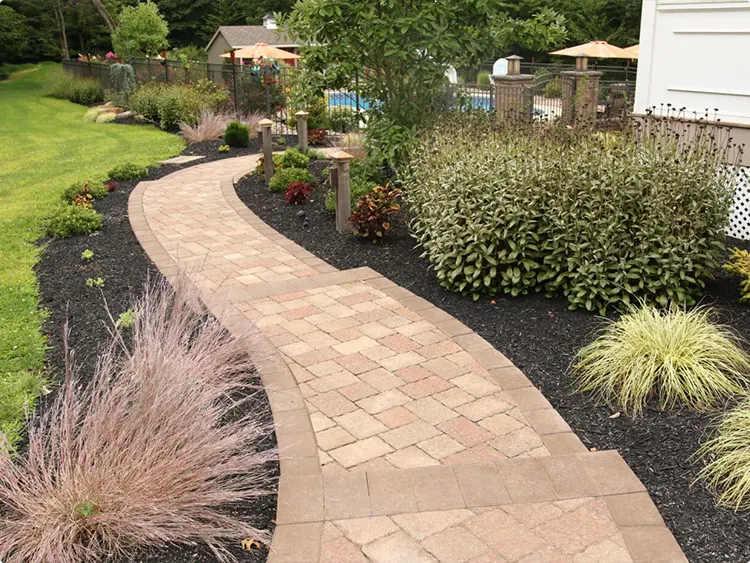
Multicolor pavers are laid in a tight, diagonal pattern with a solid border that follows a graceful curve. The path is set against dark mulch which really makes the tan and rosy colors of the stones pop.
The curve of the walkway adds a lot of visual interest to a large backyard and leads you naturally toward the pool area. Using a different colored stone for the border gives the whole project a very finished, professional look.
Zen Gravel and Stone Escape
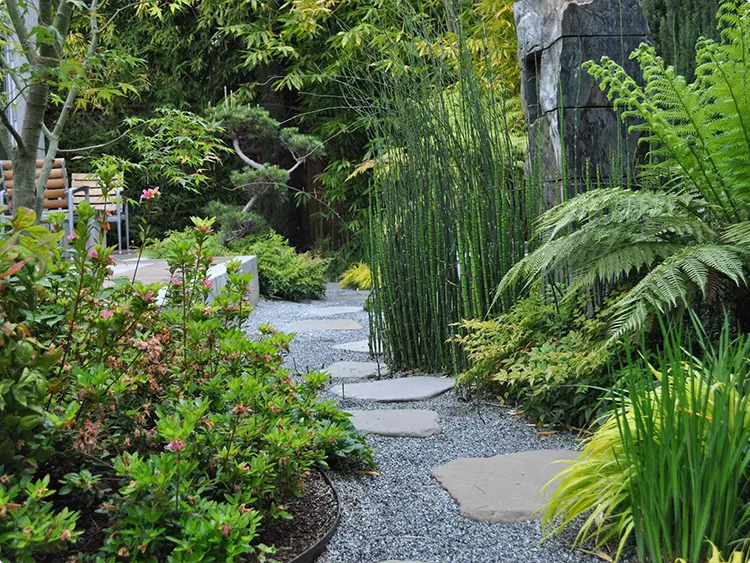
Smooth, organic-shaped stones are “floating” in a bed of fine gray gravel, surrounded by tall bamboo and lush ferns. It has a very peaceful, Japanese-inspired vibe that feels a world away from the noise of the street.
This is a smart choice for areas where you want good drainage and a low-maintenance setup. The contrast between the solid stones and the loose gravel creates a nice texture that feels great to walk on.
Modern Cabin Mossy Mosaic
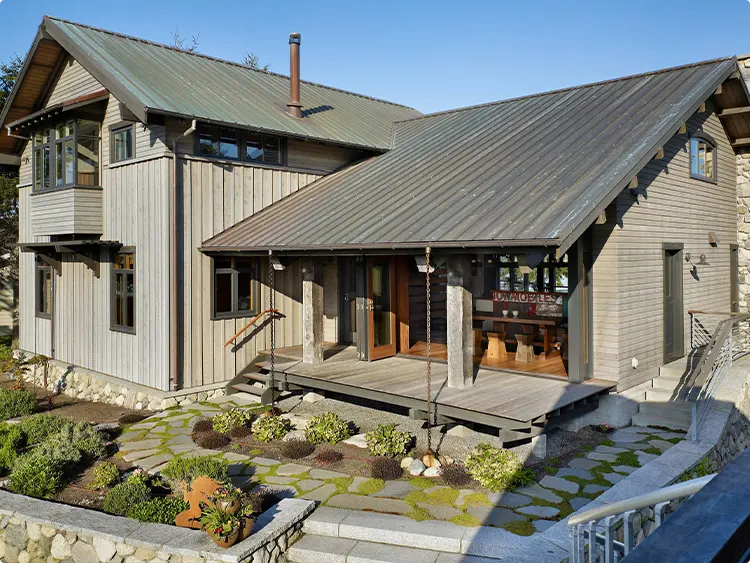
Irregularly shaped gray pavers are fitted together like a puzzle, with soft green moss filling the wide gaps. This path winds through a contemporary landscape with native grasses and a cool, wood-sided home.
It feels very grounded and organic, especially with the way the moss softens the hard edges of the stone. It’s the perfect way to make a brand-new house feel like it’s been part of the forest for decades.
S-Curve Grassy Stairway
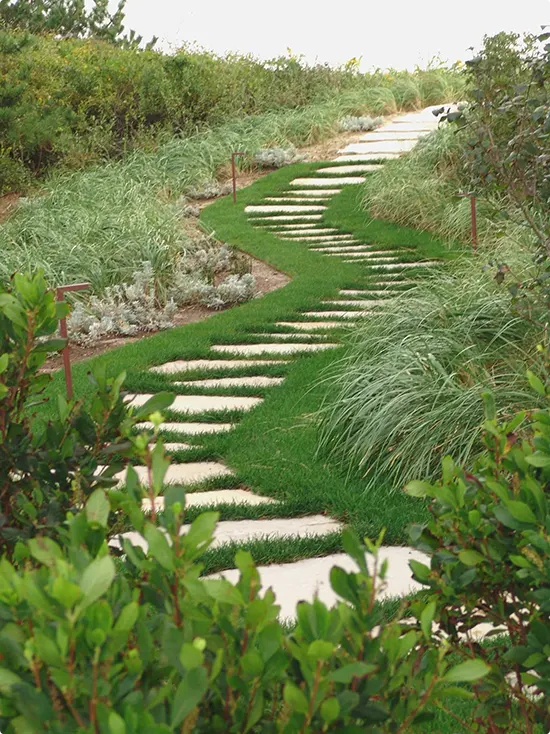
Thin, cream-colored stone slabs are embedded into a winding strip of perfectly green grass. This “S” shape adds a lot of movement to a hilly yard and makes a simple slope look intentional and high-end.
The way the stones are layered looks almost like a staircase made of light. It’s a genius move for a backyard with a bit of a climb because it turns a chore into a scenic walk.
Hydrangea-Flanked Slate Corridor
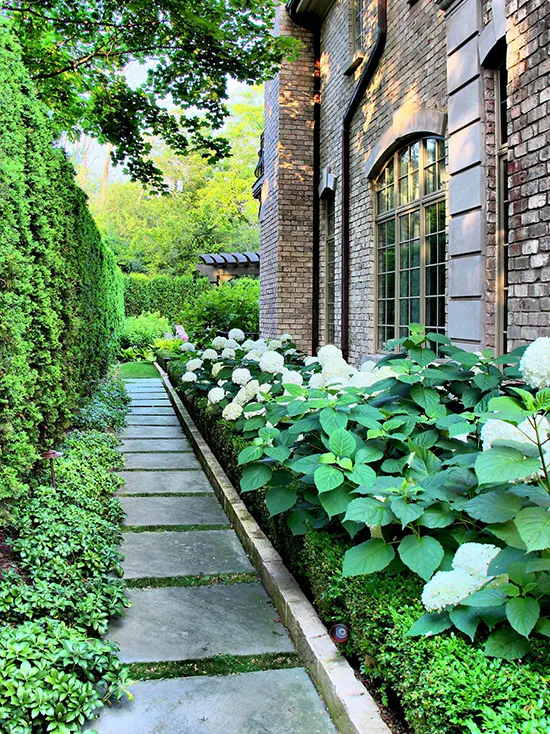
Large, square slate tiles create a clean, linear path right alongside a brick house. The path is tucked between a tall, manicured privacy hedge and a row of overflowing white hydrangeas.
This layout is a masterclass in using “dead space” along the side of a building. It feels like a private hallway that just happens to be outside, and those hydrangeas make it feel so posh.
Rustic Decomposed Granite Bend
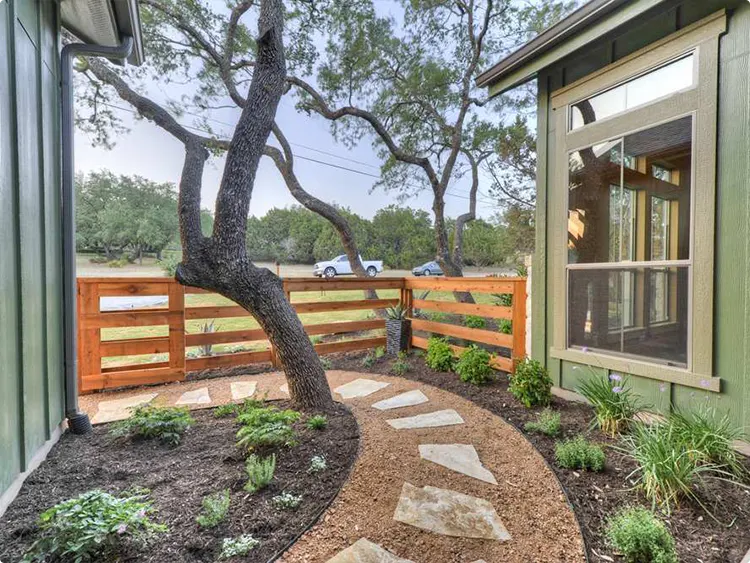
Light-colored flagstones are scattered along a path made of fine, crunchy orange gravel. This walkway curves around a gnarled old tree and leads toward a warm wooden fence.
It has a very relaxed, West Coast vibe that doesn’t feel too “done.” It’s great for a casual backyard where you want to keep things breezy and natural-looking.
Tropical Fire Pit Stepping Stones
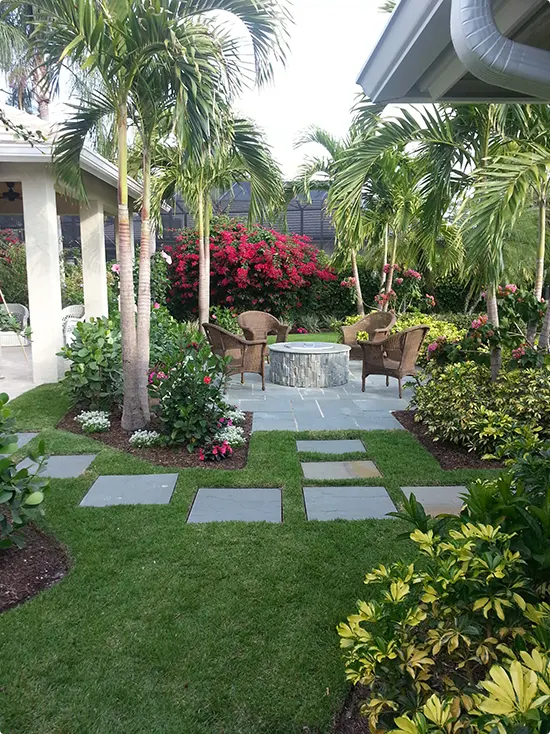
Big, square gray pavers are set into the grass to lead guests toward a cozy central fire pit. Surrounded by tall palm trees and bright pink bougainvillea, it feels like a private resort in the backyard.
The geometric grid of the stones balances out the wild, tropical plants perfectly. It’s a very clean way to define an outdoor “room” without having to pour a giant slab of concrete.
Stamped Concrete Pebble Border
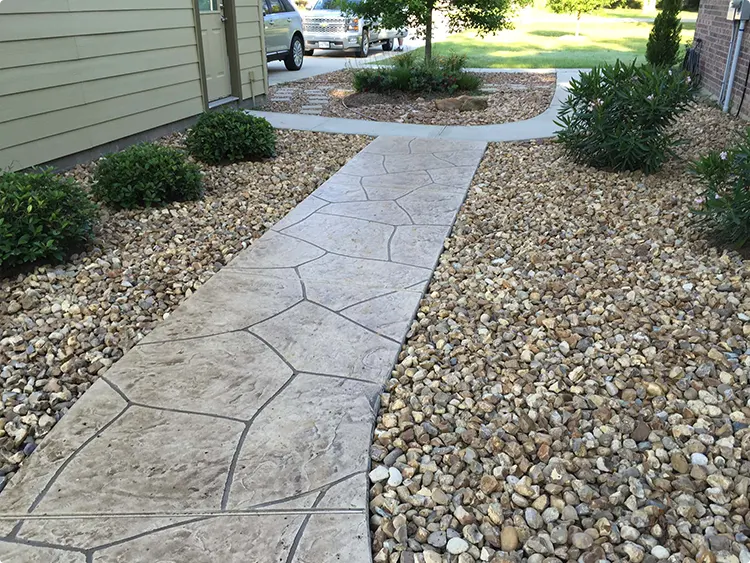
A solid, light-gray walkway with a flagstone-style stamp cuts through a wide bed of smooth river rocks. This look is very tidy and helps keep weeds at bay while still giving you that “stony” texture.
I think the mix of the flat walking surface and the chunky rocks on the side is a great tactile contrast. Plus, it’s super easy to blow leaves off of this during the fall.
Luxury Garden Grid
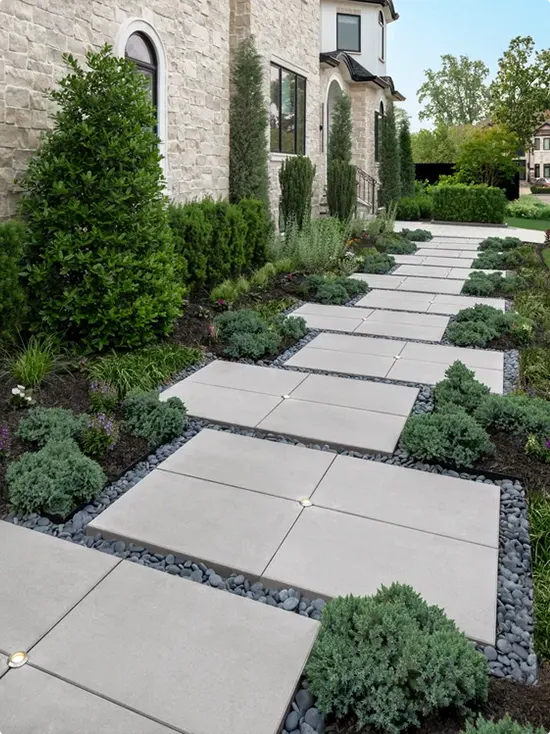
Massive, oversized concrete pavers are laid out with small dark pebbles filling the gaps in between. The path is lined with fluffy green shrubs and small integrated lights that glow from the ground.
This feels very expensive and architectural, almost like a museum entrance. The lights are a total game-changer for safety and for making the yard look amazing from the window at night.
Slate Path Through the Crushed Rock
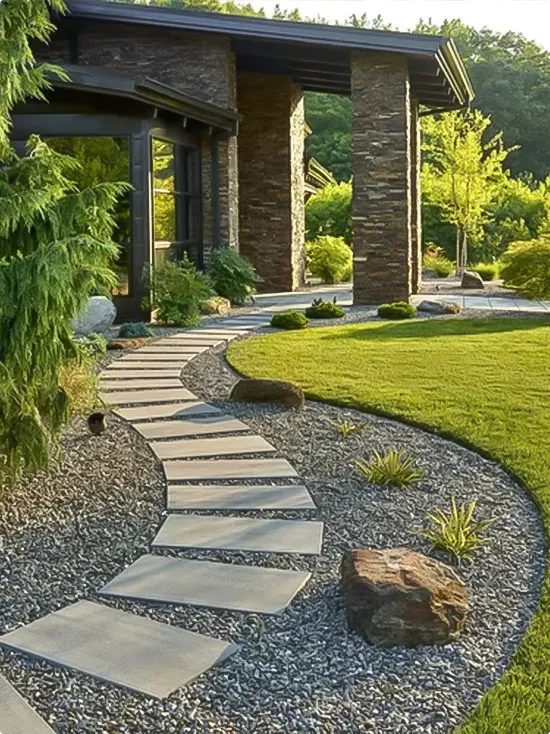
Uniform slate rectangles create a steady walking surface through a sea of small, blue-gray crushed stones. The path curves gently away from a modern, stone-clad home and into the greenery.
This is a great solution for a yard that might have some drainage issues. The water can soak right through the rocks, and the slate stays nice and level for your feet.
Industrial Alleyway Slabs
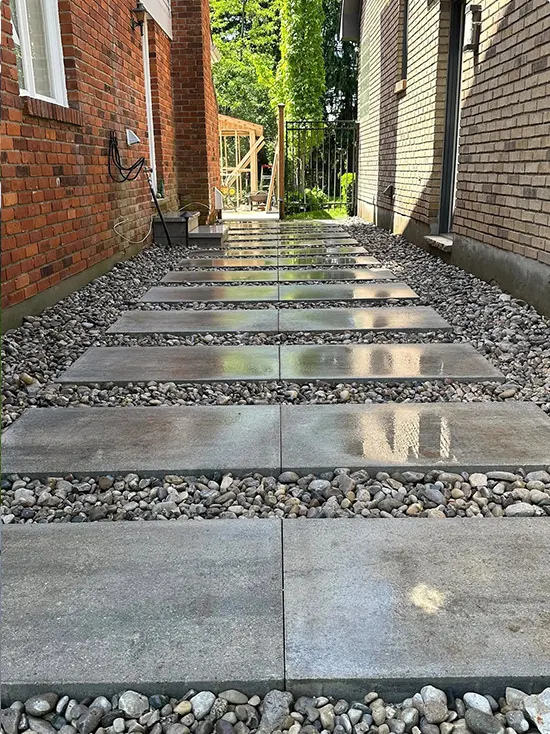
Extra-wide concrete slabs are laid horizontally across a narrow side yard filled with medium-sized gray pebbles. The wet look of the stones against the red brick and brown siding gives it a very cool, urban feel.
It’s a simple, repetitive pattern that makes a narrow space feel wider than it actually is. It’s a very practical design that still feels like a deliberate style choice.
Monochrome Minimalist Walk
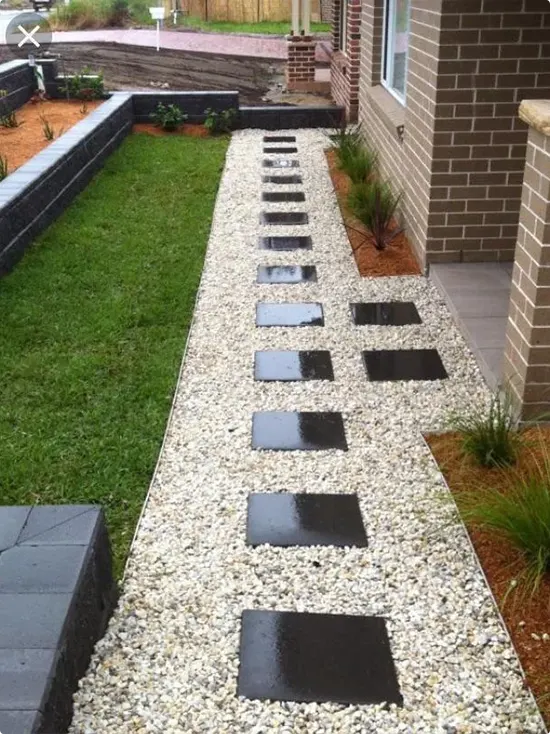
Small, dark square pavers create a single-file line through a bed of bright white gravel. It’s a very high-contrast look that sits right up against the house and a raised garden bed.
This is perfect for a tiny space where you don’t want things to feel cluttered. It’s sharp, modern, and honestly, it looks like it would be very easy to put together in a weekend.
Tiered Stone Threshold
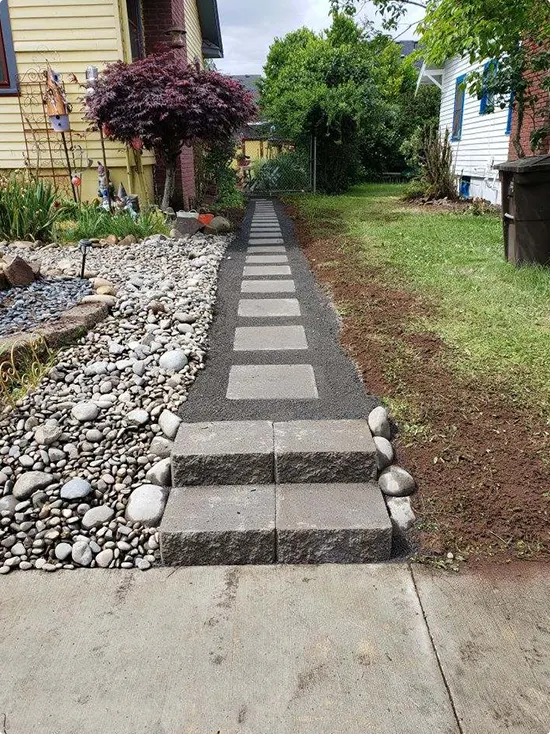
Heavy, rectangular stone blocks create a sturdy set of steps that transition from a concrete driveway to a gravel path. The gray stones are bordered by large river rocks to help hold the soil in place.
Starting a long path with these solid steps gives the entrance a lot of “weight” and importance. It is a very practical way to handle a small change in elevation while keeping the look clean.
Curvy Paver Ribbon with Floral Accents
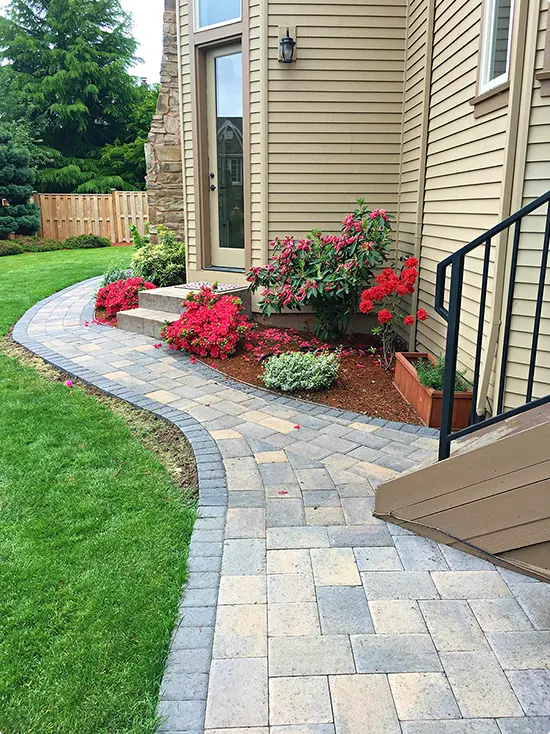
A winding path of multi-toned tan pavers snakes along the side of a house, bordered by dark brown mulch. Bright red azaleas provide a huge splash of color against the neutral siding of the home.
The dark gray border stones help the lighter pavers stand out and keep the edges looking sharp. It’s a classic look that adds a lot of “curb appeal” to a side entry or a backyard gate.
Yin-Yang Fire Pit Flow
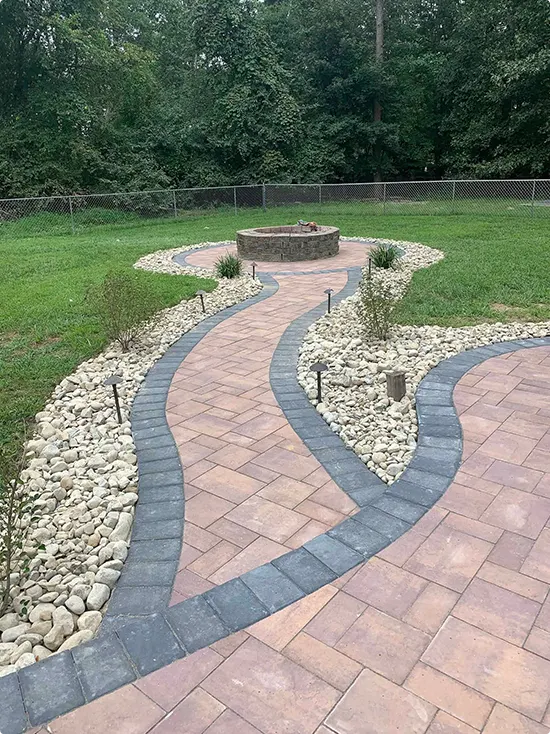
Two separate paver paths curve gracefully together before meeting at a circular stone fire pit in the center of the lawn. The paths are lined with light-colored river rocks that match the tones of the pavers perfectly.
I love how the dark border stones create a “river” effect that guides you right to the seating area. It turns a standard flat lawn into a dynamic space that actually feels like it’s moving toward a destination.
FAQs About Paver Walkway Ideas
What is the best material for a paver walkway?
Concrete, brick, and natural stone are the most common choices.
Concrete pavers are affordable and easy to install. Brick gives a classic look. Natural stone feels more relaxed and garden-like.
Think about the style of your home first. A modern house may look better with clean concrete pavers, while a cottage garden pairs nicely with natural stone.
How wide should a paver walkway be?
Most walkways work well at about 36 to 48 inches wide.
This gives enough space for one person to walk comfortably. If you want two people to walk side by side, go closer to 48 inches.
Garden stepping stone paths can be a little narrower. They are more about the look than heavy foot traffic.
Do you need gravel under pavers?
Yes, a gravel base helps the walkway stay level over time.
It improves drainage and keeps the pavers from shifting or sinking. Usually, a few inches of compacted gravel followed by a layer of sand works well.
Skipping this step often leads to uneven stones later.
Are paver walkways easy to maintain?
Paver walkways are surprisingly low maintenance.
Most of the time, you just need to sweep the path and rinse it with water. If weeds appear between stones, pulling them early keeps things tidy.
Some people also add polymeric sand between pavers to reduce weeds.
How far apart should stepping stone pavers be?
A comfortable spacing is usually 18 to 24 inches from the center of each stone.
This matches a natural walking step for most people. The goal is to walk the path without taking awkward steps.
Before placing them permanently, try laying the stones on the ground and walking the path once or twice.
Can paver walkways increase home value?
They can definitely improve curb appeal.
A well-designed walkway makes the entrance of a home feel welcoming and finished. Buyers often notice small landscape details like this.
It may not add a huge dollar amount on its own, but it helps the whole property feel more polished.