

Stone garden edging is one of those little details that can completely change how a yard feels. It gives flower beds a clean shape, keeps mulch where it belongs, and adds texture that looks natural in almost any garden style.
The best part? Stone never feels too trendy. It works in cottage gardens, modern landscapes, rustic backyards, and everything in between.
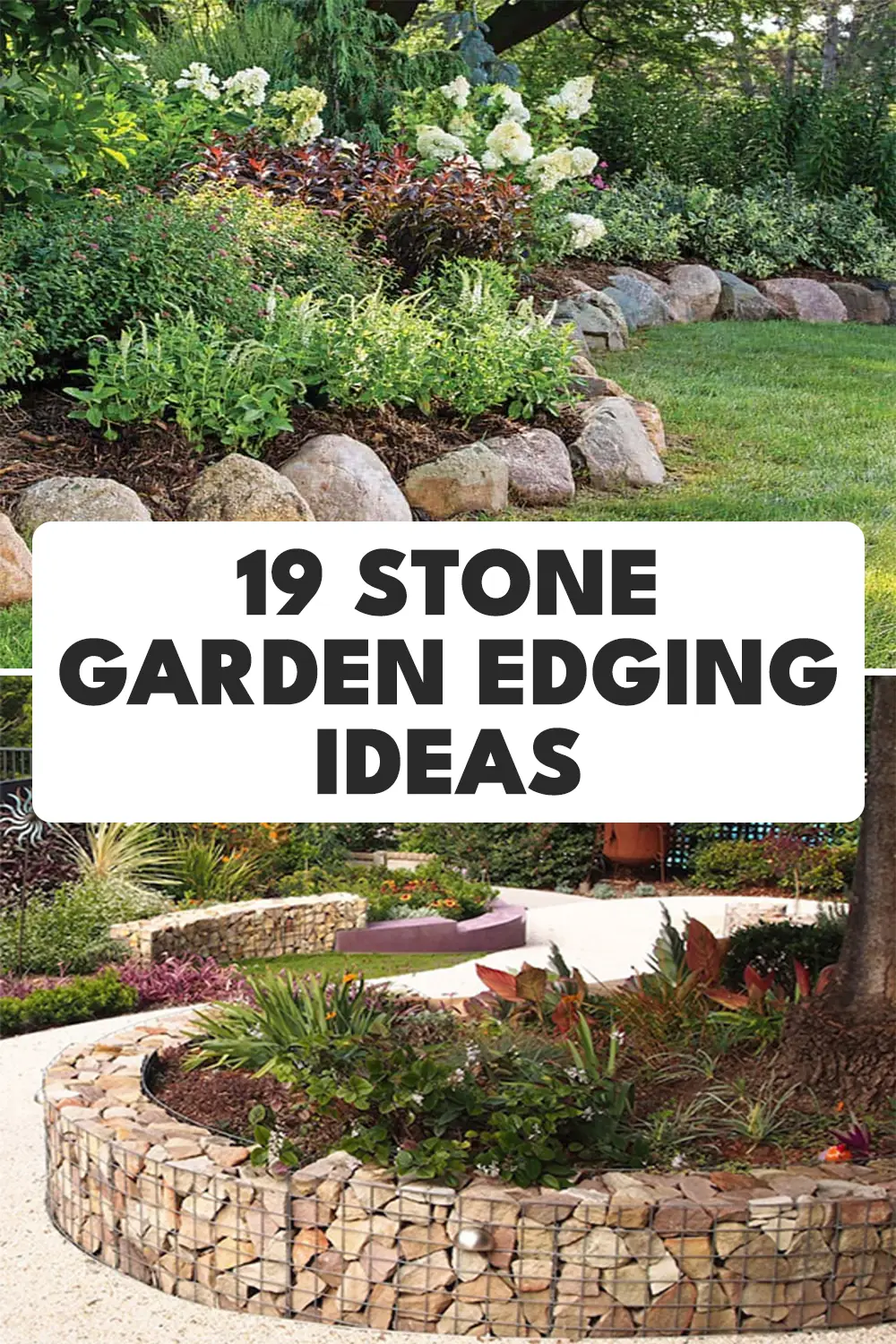
Some people love neat rows of cut stone. Others prefer a relaxed border made from river rocks or weathered boulders. There really isn’t a wrong choice.
That’s what makes stone edging so fun to play with. A simple line of rocks can make a garden bed feel finished, while a more creative arrangement can become a feature all on its own.
If you’ve been looking for ways to define your planting areas or give your garden a little extra character, these stone garden edging ideas are full of inspiration. Grab a cup of coffee, take a scroll, and save your favorites for later.
Also Read: 23 Brick Garden Edging Ideas
Curved Stone Wall That Does Double Duty
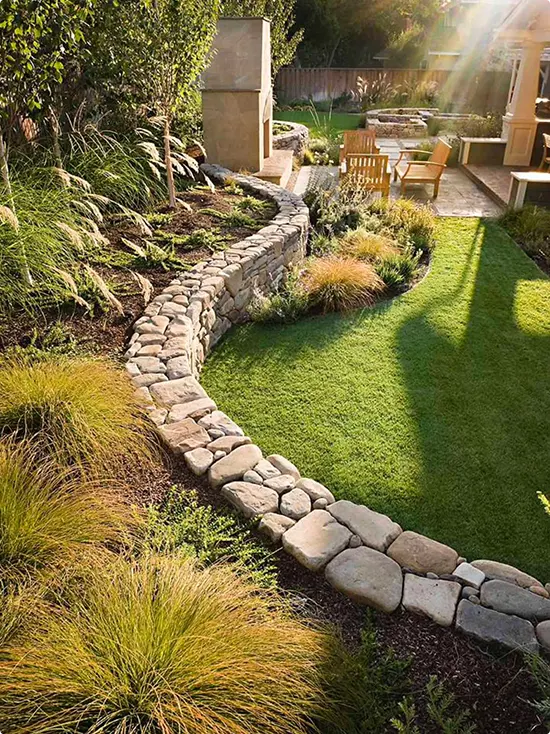
This low stone retaining wall curves through the backyard and separates the lawn from the planted beds on either side.
It’s stacked just high enough to hold the soil back without feeling like a barrier. The natural fieldstones fit together without any mortar, which gives it that relaxed, lived-in look.
If your yard has a slight slope, this kind of edging solves two problems at once — it keeps things tidy and stops soil from washing onto the grass. (📸 Courtesy Artisticcreations)
River Rock Corner Bed With Mixed Color Blooms
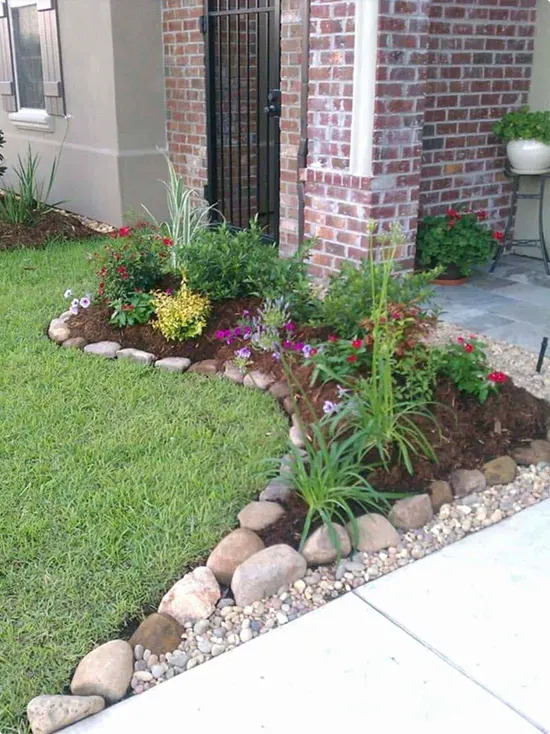
Round river rocks line the edges of this front yard flower bed, and the mix of sizes makes it feel natural rather than forced.
The rocks sit right along the lawn line and also meet the walkway, which helps tie the whole entry together.
This is a great idea if you want something low-maintenance. The rocks stay put, they don’t need replacing, and they look good even when the flowers aren’t blooming. (📸 Courtesy Beaumondelandscape)
Cobblestone Edging Around a Gravel Garden
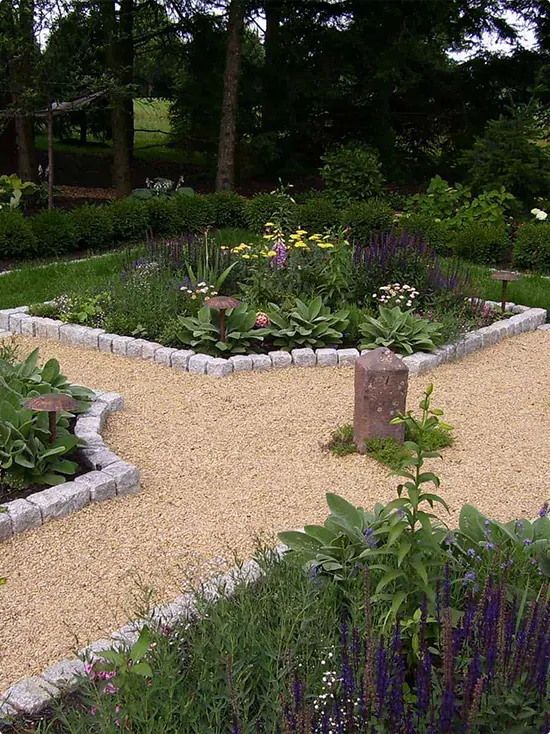
Small granite cobblestones line these raised planting beds, and the contrast between the pale gravel path and the dark gray stones is really satisfying to look at.
The square-cut stones give the beds a clean, structured shape that works perfectly in a formal garden layout.
If you love that European cottage garden feel, this combo of gravel paths and cobblestone borders is a solid place to start. (📸 Courtesy Thinkrvl)
Bluestone Edging With Raised Planter Walls
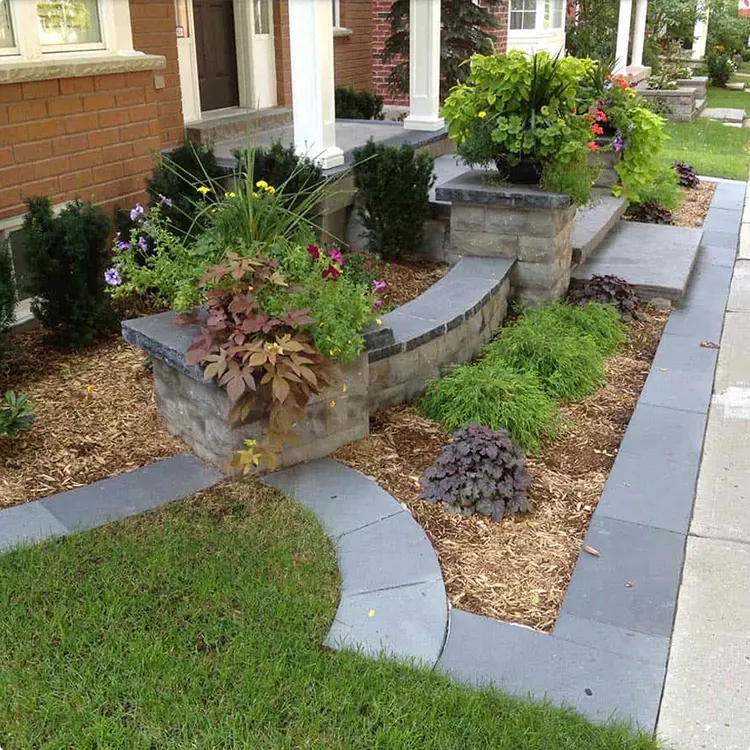
Flat bluestone slabs curve along the lawn edge while stacked stone walls create raised planting boxes near the porch steps.
The dark slate color pulls everything together — the walls, the path edging, and even the steps all match.
It’s a bigger project, but the result looks like it was designed by someone who really knew what they were doing. Worth it if you’re ready to go all in on the front yard. (📸 Courtesy Horvathlandscapes)
Boulder-Edged Flower Bed Bursting With Color
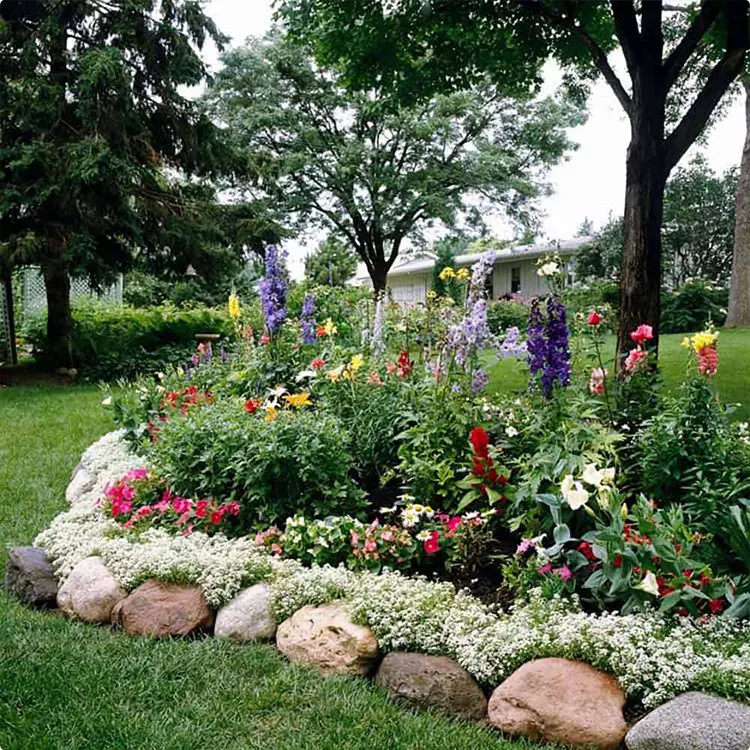
Large, rough boulders line this sprawling flower bed, and white alyssum creeps along the inner edge like a soft little border inside the border.
The combination of tall purple delphiniums, red blooms, and yellow flowers behind those chunky rocks feels wildly abundant. In the best way.
This works because the big rocks are grounding — they keep everything from looking chaotic even when there’s a lot going on with the plants. (📸 Courtesy Susan Gilmore for bhg.com)
Cottage Garden Bed With Layered Stone Edge
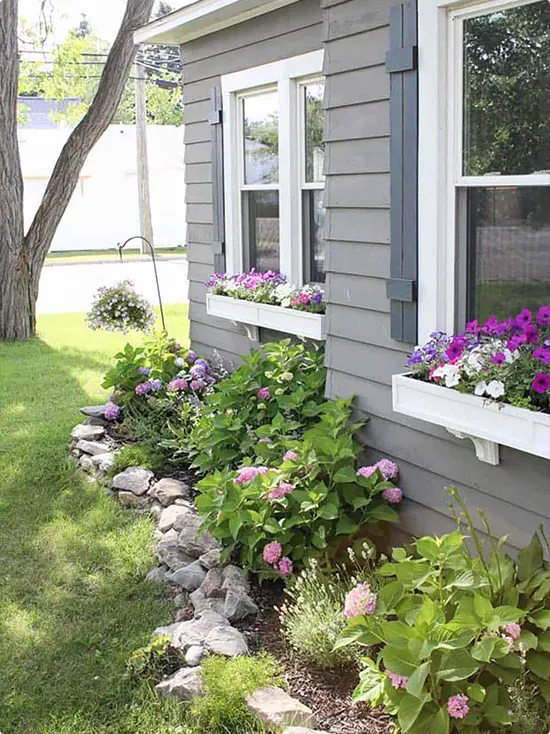
Flat and rounded stones are loosely placed along the base of this garden bed, tucked right against a gray-sided house with window boxes up top.
The pink hydrangeas spilling over the stones make it feel very effortless and cottagecore. And I mean that as a compliment.
Even just one row of stones like this is enough to define the edge and keep the mulch from spreading onto the lawn. (📸 Courtesy lcdicontracting)
Uniform Stone Blocks Along a Curved Bed
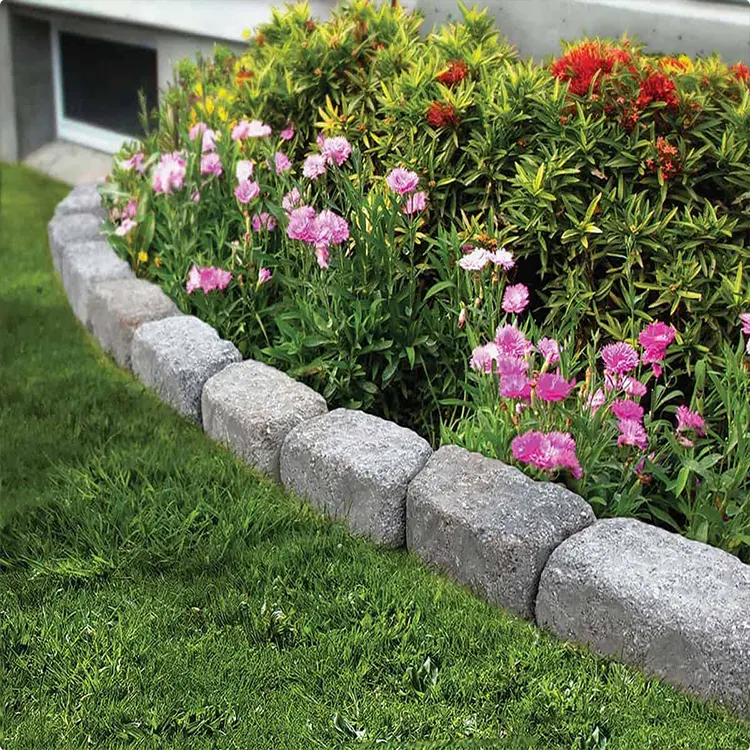
These rectangular gray stone blocks are set in a single row along the edge of the garden, and the slight curve makes the border feel intentional without being too stiff.
The blocks are all the same size, which gives the edging a neater, more polished look compared to natural fieldstones.
If you want something that looks clean from the curb, uniform cut stones like these are one of the easiest ways to get there. (📸 Courtesy Leebp)
Boulder Border With Garden Statue Backdrop
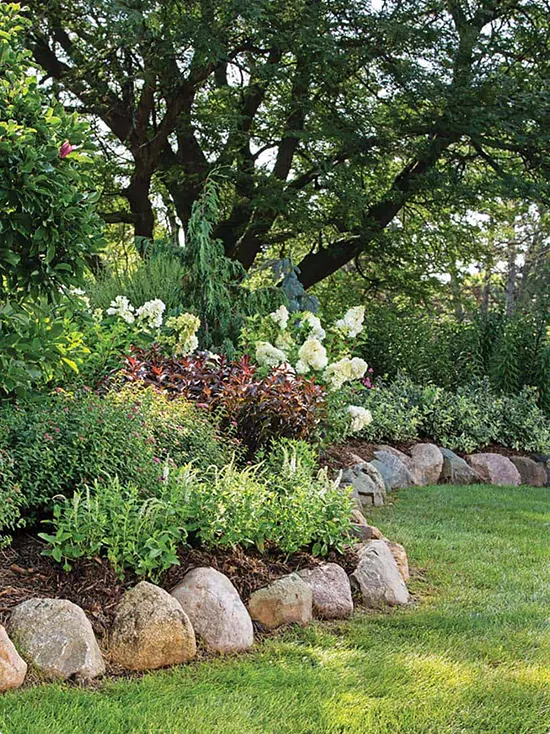
Large, rounded boulders sit side by side along a long curved garden bed, with white hydrangeas and deep red shrubs planted just behind them.
There’s even a garden statue tucked in the background, which gives the whole space a kind of quiet, woodland feel.
Big boulders like this work best in larger yards where you have room for them to breathe. They’re heavy, yes, but they basically last forever. (📸 Courtesy Midwestdesignmag)
Gabion Basket Raised Garden Bed
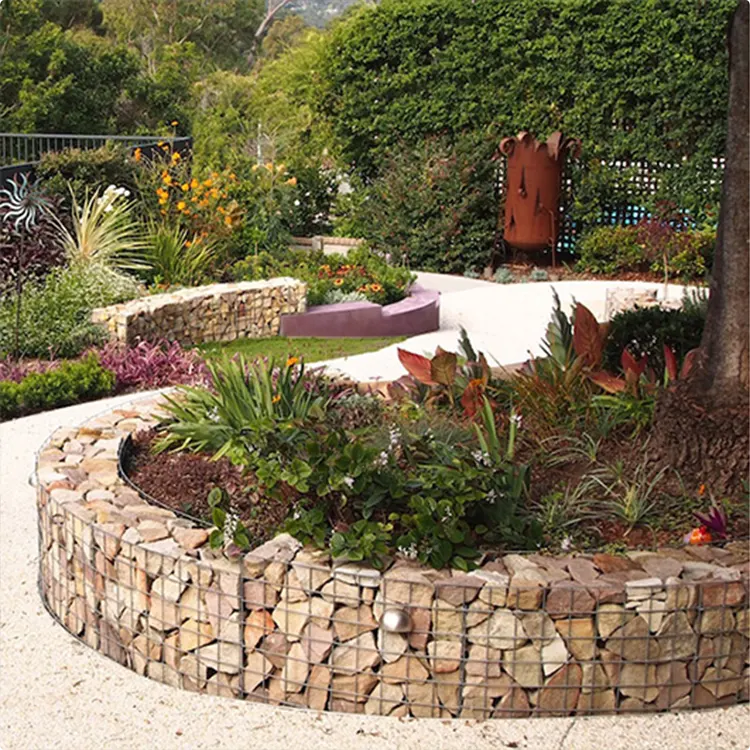
Rocks are packed inside wire gabion cages that curve around a raised planting bed, with tropical plants spilling out from the top.
It’s a really modern take on stone edging. The wire holds everything in place, so you get the texture of loose stone but in a very structured shape.
This style looks especially good in contemporary gardens where clean lines and interesting materials are the whole point. (📸 Courtesy Outhousedesign)
Natural Stone Edge Around a Shady Tree Bed
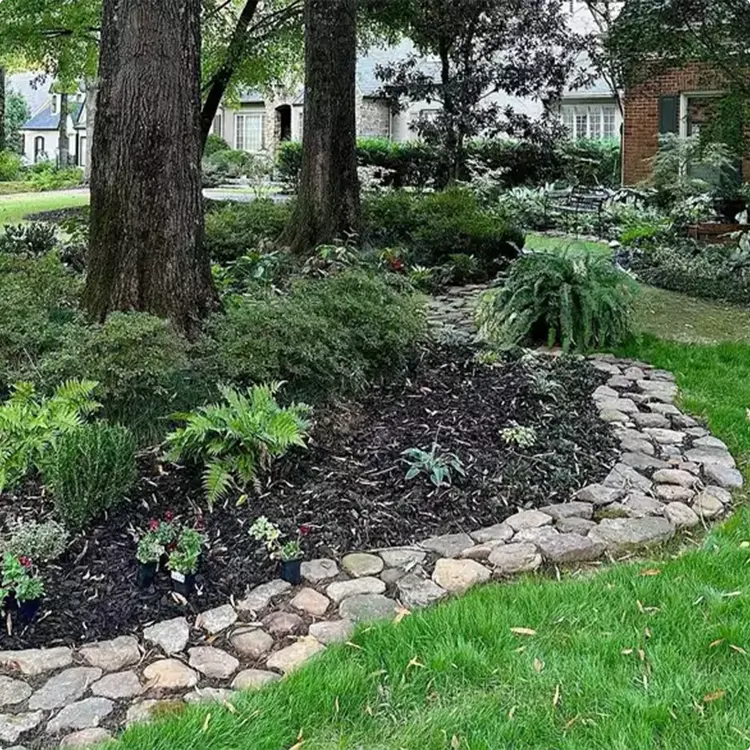
Flat cobblestones are arranged in a single curved layer around a large mulched bed under mature trees.
The stones are close enough together to look intentional but not so perfect that they feel stiff. It’s that in-between zone that’s really hard to get right, and this nails it.
Using a stone edge around tree roots is also just smart — it keeps the lawn mower at a safe distance and protects the roots from getting nicked. (📸 Courtesy thepsychgarden)
Concrete Block Terraced Beds With Gravel Path
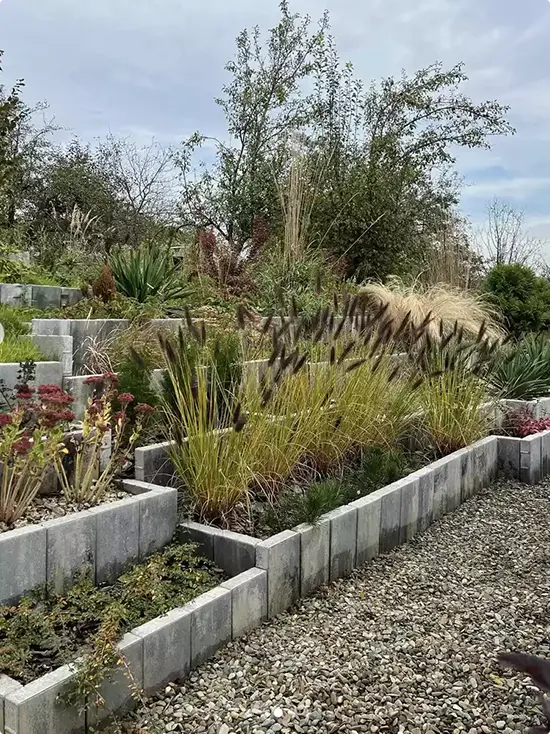
Gray concrete blocks are used to build small raised terraced beds along a gravel path, with ornamental grasses and succulents filling the space.
The blocks are simple and utilitarian, but honestly that’s what makes it work. They let the plants do the talking.
This is a practical choice if you’re on a budget but still want raised beds with defined edges that hold their shape season after season. (📸 Courtesy Fifth Season Landscape)
Rocky Gravel Path Flanked by Lush Evergreens
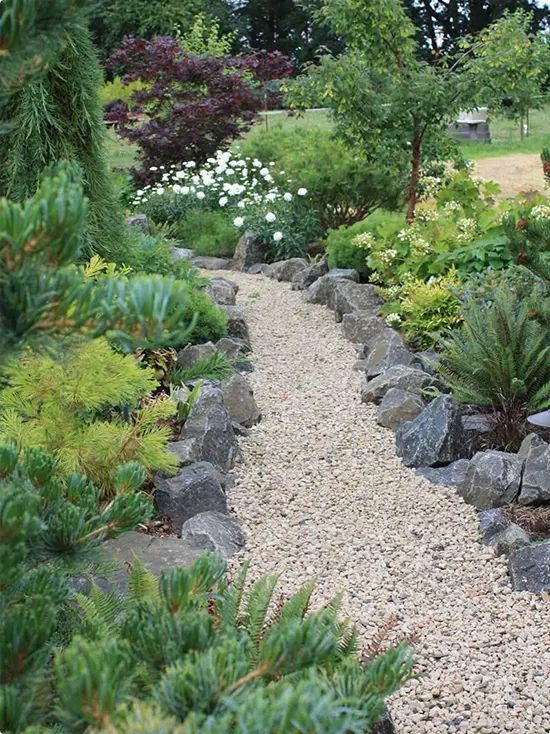
Dark angular rocks line both sides of a gravel path, anchoring the edges while pine trees and flowering shrubs fill in on either side.
The rocks aren’t perfectly placed — some are bigger, some are tilted — and that’s exactly what makes the path feel so natural.
This is great for a garden that has a woodland or Japanese garden vibe. Low effort, high impact, and the gravel path basically takes care of itself. (📸 Courtesy Amyduttonhome)
Bluestone Patio Edge With Wildflower Overflow
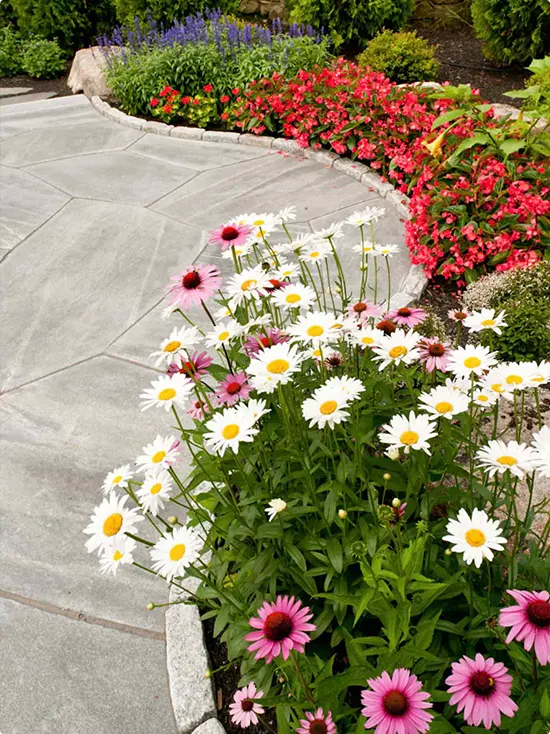
A wide curved bluestone patio border separates the paved area from the garden beds, with white daisies and pink coneflowers spilling right up to the edge.
The stone is smooth and uniform, which creates a nice contrast against all those loose, airy flowers.
If you have a patio with no clear separation from the garden, adding a stone border like this makes the whole space feel much more intentional. (📸 Courtesy Serenityinthegarden)
Dark Pebble Ribbon With Boulder Anchors
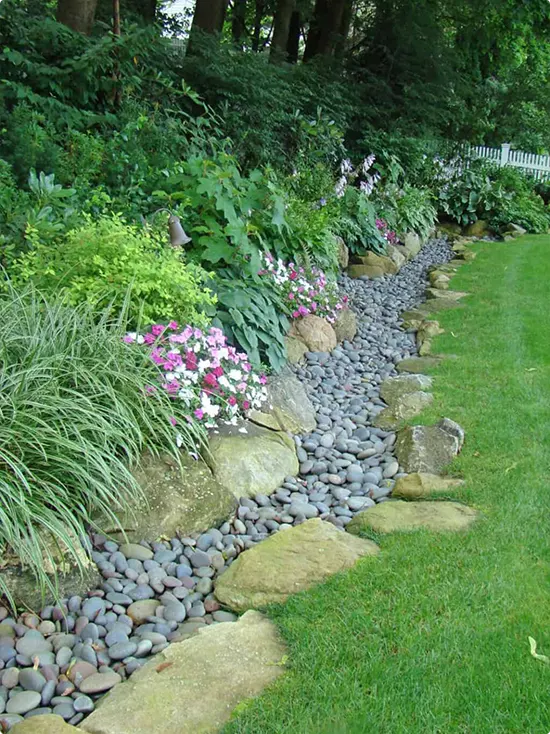
Smooth dark river pebbles fill the space between the garden bed and the lawn, with larger boulders anchoring the line at intervals.
The contrast between the dark pebbles, the green grass, and the colorful plants is really striking. It almost looks like a little dry creek running along the edge.
This style also helps with drainage, which is a bonus if you have a spot in the yard that tends to stay wet after rain. (📸 Courtesy Ellaclaireinspired)
Cream River Rock Border Along a Side Yard
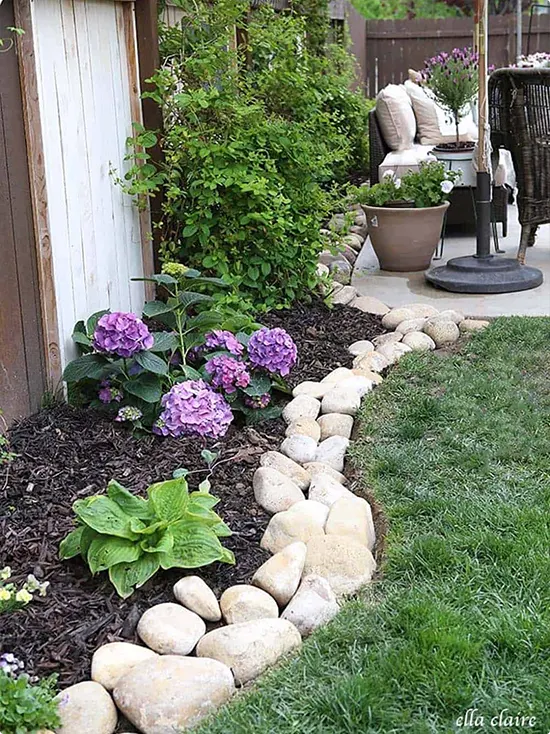
Pale, creamy river rocks are lined up snugly along a narrow side yard garden bed, with purple hydrangeas and hostas growing right behind them.
The light-colored stones make the bed pop, especially against the dark mulch. It’s one of those simple tricks that makes everything look cleaner than it actually is.
Side yard gardens can feel awkward to design, but a clear stone edge like this helps define the space and makes it feel purposeful. (📸 Courtesy Ellaclaireinspired)
Limestone Slab Edging With a Clean Curved Line
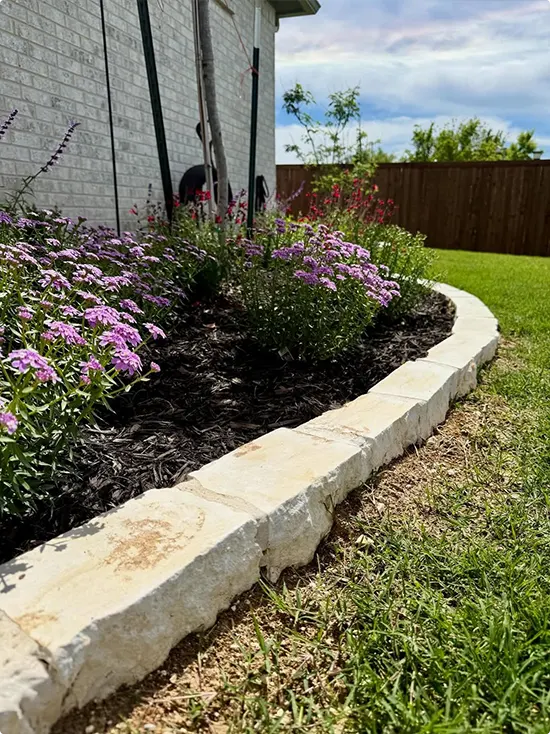
A single row of thick limestone blocks curves smoothly along the edge of this backyard flower bed.
The stones are flat on top, which gives the whole border a finished, almost architectural look. And that warm cream color works with pretty much anything planted behind it.
Limestone is a great choice if you want something that feels sturdy and permanent without looking too formal. (📸 Courtesy lcdicontracting)
Black Mulch Bed With Dual Stone Layers
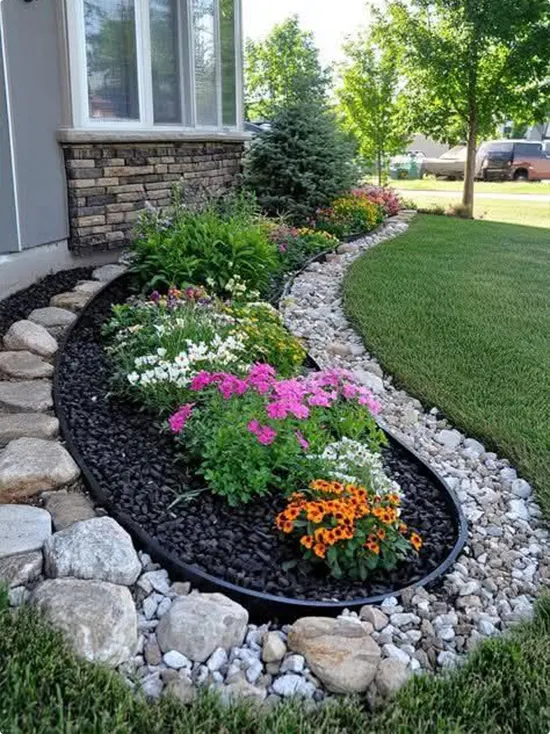
This front yard bed uses two types of stone — large white boulders on the outside and black lava rock as the mulch inside — with a metal border keeping the two separated.
The contrast is bold and very graphic. Pink, orange, and white flowers pop against that dark background in a way that almost looks staged.
If you want your front yard to look like it was designed with intention, this layered approach is hard to beat. (📸 Courtesy Happygarden2020)
Long Backyard Bed With White Boulder Line
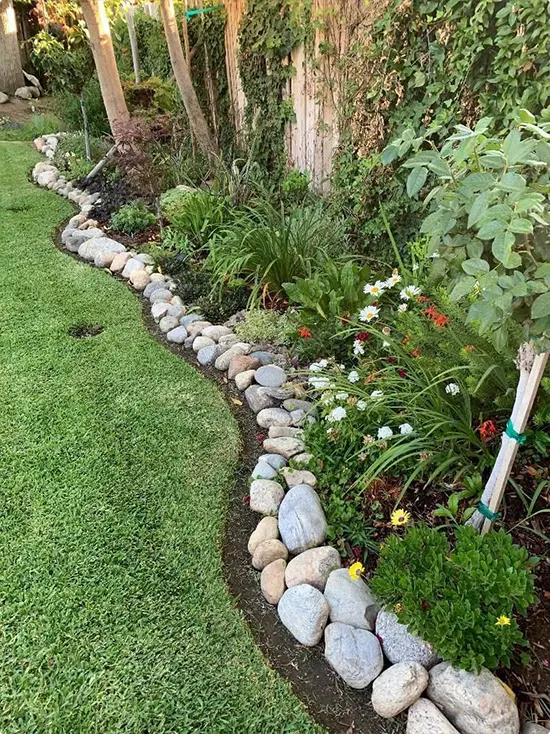
White and cream boulders follow the long edge of this backyard garden bed, all the way from the fence to the open lawn.
The rocks are big enough to really define the space but placed loosely so it still feels like a natural part of the yard.
This kind of edging is perfect if you have a long, narrow bed along a fence. It gives the whole side of the yard a polished look without a lot of ongoing maintenance. (📸 Courtesy Facebook Group)
Chunky Stone Edging With Hostas and Arborvitae
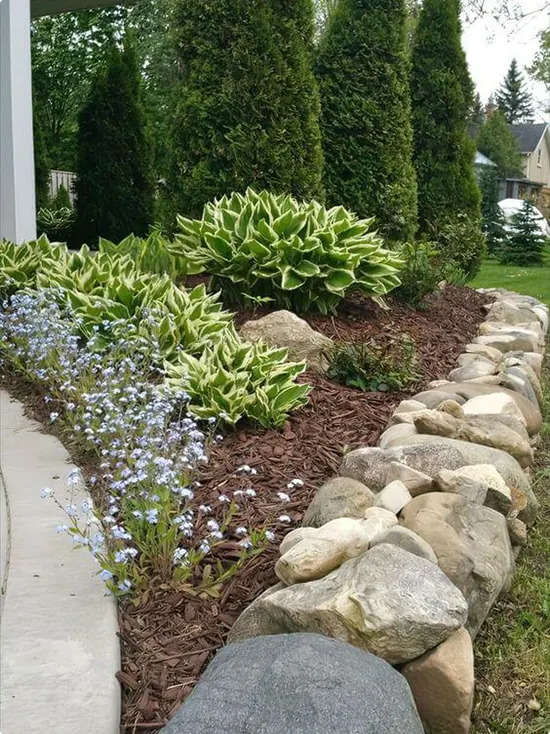
Large cream-colored fieldstones are arranged in a row along a front yard bed filled with variegated hostas and tall arborvitae trees in the back.
The stones are chunky and imperfect, which actually makes them look more natural next to the organic shapes of the hostas.
This combo of bold foliage plants and chunky stone edging is so easy to maintain. Once it’s planted and edged, it basically takes care of itself. (📸 Courtesy Unknown)
FAQs About Stone Garden Edging Ideas
What type of stone is best for garden edging?
It really depends on your style. River rocks are great for a natural, relaxed look. Limestone or bluestone gives you something more polished and structured. Granite cobblestones work well for formal or cottage-style gardens. There’s no wrong answer — just pick one that fits the vibe of your yard.
How do I keep stone edging in place?
For smaller rocks, you can dig a shallow trench and set them partway into the soil. That keeps them from shifting around. Larger boulders tend to stay put on their own. If you’re using cut stones or blocks, setting them in a thin layer of sand helps keep them level and stable.
Can I do stone garden edging myself without hiring someone?
Absolutely. Most river rock and fieldstone edging is very DIY-friendly. You just need to plan your line, maybe dig a small trench, and start laying the stones. It takes an afternoon, not a weekend. The more involved stuff — like stacked stone retaining walls or gabion cages — might need some extra help, but basic edging? Totally doable.
How deep should I set garden edging stones?
For smaller decorative stones, burying them about one-third of the way into the ground is usually enough to keep them steady. For larger boulders, just setting them on flat, firm ground is fine since their weight does the work.
Do I need to use mortar for stone garden edging?
Not for most styles. Dry-stacked stone edging actually looks more natural and is easier to adjust over time. Mortar is usually only needed if you’re building something taller, like a retaining wall that needs to hold back a significant amount of soil.