

I still remember the sinking feeling of pulling my patio umbrella out of storage one spring morning, unrolling it with all the enthusiasm of someone ready to finally enjoy the backyard — only to be hit with that unmistakable musty smell.
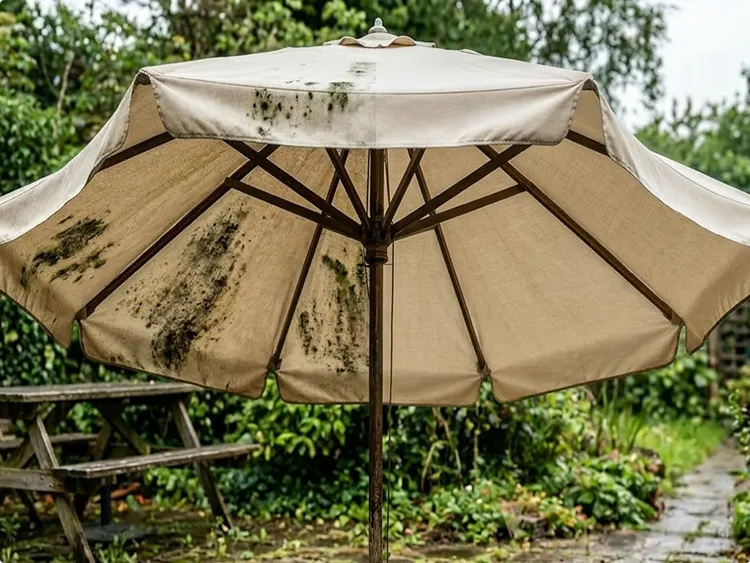
Black-green patches had spread across the canopy like a map of somewhere I definitely didn’t want to visit. Sound familiar?
After dealing with this firsthand — and making almost every mistake in the book — I went deep on understanding exactly why patio umbrellas mold, how to stop it from happening again, and what to do when it already has.
This guide is everything I wished I’d known before ruining two perfectly good umbrellas. Whether you’re already staring at fuzzy green patches or just trying to get ahead of the problem, you’re in the right place.
What Causes Mold on Patio Umbrellas?
Mold doesn’t appear out of nowhere — it needs specific conditions to thrive. Understanding the root causes is the first step to stopping it permanently.
Trapped Moisture After Rain or Dew
This is the single biggest culprit. When rain or morning dew soaks into the fabric and the umbrella is closed before it’s fully dry, moisture becomes trapped in the folds. Fabric layers press against each other, blocking airflow, and that damp environment becomes a perfect incubator for mold spores — which are always present in the air around us, just waiting for the right conditions.
High Humidity Climates
If you live in a humid region — coastal areas, the Southeast, or anywhere that stays muggy through summer — your umbrella faces a constant moisture assault even on days when it doesn’t rain. The fabric never truly dries out between uses, which means mold has a near-permanent invitation to grow.
Organic Debris Sitting on the Canopy
Leaves, pollen, bird droppings, and tree sap that land on the canopy and aren’t cleaned off become food for mold. Mold is a decomposer — it’s literally built to break down organic matter. The more debris sitting on your umbrella, the faster mold colonies will establish themselves, especially when moisture is also present.
Storing the Umbrella While Still Damp
Even a slightly damp umbrella tucked into a storage bag or garage over winter is a mold disaster waiting to happen. The enclosed environment concentrates moisture, and with months to work in darkness, mold can spread extensively before you ever see it. I made this mistake once — came back in spring to a canopy that looked like it had been used as a compost bin.
Poor Air Circulation When Closed
Patio umbrellas are designed to be open. When you close them and the fabric folds in on itself, airflow drops to nearly zero. If any moisture is present in those folds — from the morning’s dew or yesterday’s shower — it sits there with nowhere to go. Over days and weeks, mold spores take advantage of that stagnation.
Using Fabric Not Designed for Outdoor Exposure
Not all umbrella fabrics are created equal. Cheaper umbrellas often use untreated polyester or cotton blends that absorb and hold water readily. Without UV and mold-resistant treatment built into the fibers, even modest rain can set the stage for a significant mold problem. The fabric is quite literally feeding the fungus.
How to Prevent Mold on Patio Umbrellas?
Prevention is dramatically easier than removal. A few consistent habits can keep your umbrella mold-free for years.
Always Dry the Umbrella Before Closing It
This is the single most effective habit you can build. After rain or dew, leave the umbrella open in the sun until it’s completely dry to the touch — including the underside of the canopy. In good sun, this typically takes one to two hours. If you close a still-damp umbrella, you’ve already set mold in motion.
Apply a Fabric Waterproofing Spray
Products like Scotchgard Outdoor Fabric Protector or Star Brite Fabric Guard create a water-repellent barrier that causes rain to bead and roll off rather than soaking into the fabric. Apply a fresh coat at the start of every outdoor season and reapply after deep cleaning. This single step dramatically reduces how much moisture the canopy absorbs in the first place.
Clean the Canopy Regularly
Don’t let organic debris accumulate. A quick weekly wipe-down with a soft brush or damp cloth removes pollen, dust, and plant matter before it can serve as a food source for mold. Monthly, give the canopy a more thorough clean with mild soap and water, then rinse well and dry fully before closing.
Store Properly During Off-Season
When the outdoor season ends, clean the umbrella thoroughly, allow it to dry in the sun for a full day, and only then pack it away. Use a breathable canvas cover or bag — not a sealed plastic bag, which traps moisture. Store it in a dry location with some airflow, ideally elevated off concrete floors which can harbor condensation. Consider adding a silica gel moisture absorber inside the cover.
Use a Ventilated Umbrella Cover When Not in Use
If you use a cover to protect your umbrella when it’s closed during non-use periods, make sure the cover allows some airflow. Solid, sealed covers can trap humidity underneath — especially problematic in humid climates or after rain. A vented or loosely fitted cover is far better than a snug plastic one.
Inspect Frequently for Early Signs
Get in the habit of checking the underside of the canopy, along the seams, and at any fold points at least twice a month. Mold caught early — when it’s just a few small spots — is easy to clean. Mold discovered after a full season of growth may be impossible to remove without damaging the fabric.
How to Remove Mold from a Patio Umbrella
Already dealing with mold? Don’t panic — in most cases it can be cleaned effectively if you act methodically. Before you start, wear rubber gloves and a face mask. Mold spores released during scrubbing can irritate your airways. Always clean outdoors or in a very well-ventilated area.
Step 1: Brush Off Loose Mold Outside
Take the umbrella outside and use a stiff-bristled brush to gently knock off as much loose, dry mold as possible before applying any liquid. Do this away from your clean patio area — ideally on grass or in a driveway — to avoid spreading spores onto furniture or other surfaces. This dry step prevents mold from smearing deeper into the fabric when wet.
Step 2: Prepare Your Cleaning Solution
For most mold situations, mix 1 cup of white vinegar or ¼ cup of oxygen bleach (like OxiClean) into 1 gallon of warm water. For stubborn or extensive mold on white or light-colored umbrellas, a diluted solution of 1 part bleach to 10 parts water can be used — but test on a hidden seam first, as bleach may fade colored fabrics. Never use chlorine bleach on Sunbrella or solution-dyed acrylic fabrics.
Step 3: Apply and Let It Soak
Apply the cleaning solution generously to all affected areas using a spray bottle or sponge. Let it sit for 10 to 15 minutes — this dwell time is crucial and often skipped. The solution needs time to penetrate the fabric fibers and break down the mold at its roots, not just on the surface. Don’t let it dry out; reapply if needed.
Step 4: Scrub Firmly with a Soft Brush
Using a soft-bristled brush or an old toothbrush for seams, scrub the affected areas in circular motions. Pay particular attention to seams, stitching, and any folded edges where mold tends to embed most deeply. Work methodically across the entire canopy — even areas without visible mold may have early-stage spores.
Step 5: Rinse Thoroughly
Rinse the entire canopy with a garden hose using good pressure. Start from the top and work your way down so you’re always rinsing clean water over dirty water. Make sure to rinse out all soap or cleaning solution — residue left in the fabric can itself attract dirt and mold over time. Rinse twice if you used bleach.
Step 6: Dry Completely in the Sun
Open the umbrella fully and let it dry completely in direct sunlight — UV rays are a natural mold killer. Allow at least four to six hours of sun drying on a dry, breezy day. Do not close the umbrella until you’re certain every fold and seam is completely dry. If the day is overcast, wait for a sunny day before closing it.
Step 7: Apply a Fabric Protector
Once fully dry, apply a waterproofing and mold-resistant fabric spray to the entire canopy. This step seals the fabric after the deep clean and dramatically reduces your chances of mold returning. Reapply once a year or after each deep cleaning session going forward.
When to Replace a Moldy Umbrella
Not every mold problem is worth fighting. Knowing when to cut your losses saves wasted effort and repeated frustration.
Signs Your Umbrella Is Worth Cleaning
If the mold is surface-level and recently developed, the fabric is still structurally intact, and the mold covers less than 25% of the surface, you’re likely dealing with a cleanable situation. Umbrellas under three years old with no frame damage and still-vibrant color are generally worth the effort to restore.
Signs It’s Time to Replace
If the musty smell persists after multiple thorough cleanings, the fabric shows signs of dry rot or disintegration, or mold has deeply penetrated the seams and stitching, it’s time to let go. The same applies if the canopy is severely faded — UV protection is almost certainly gone at that point — or if the umbrella is over five to seven years old with recurring mold that keeps coming back no matter what you do.
The Smell Test Is the Most Reliable Indicator
Visual mold can be cleaned — but if the musty, earthy smell persists after a thorough wash and full dry in the sun, mold has colonized deep within the fabric structure. At that point, you’re dealing with something your cleaning brush can’t reach. A fresh-smelling canopy after cleaning means you won. A still-musty one means it’s time to move on.
Consider Replacement Canopies as a Middle Ground
If your umbrella frame is solid but the canopy is beyond saving, many umbrella brands sell replacement canopies separately. This can be a cost-effective option — replacing just the fabric rather than the entire umbrella with its frame and base. Look up your umbrella’s model number and search for compatible replacement canopies before committing to a full replacement.
Best Materials for Mold-Resistant Umbrellas
Your umbrella’s material is its first line of defense. Here’s how the most common options compare.
Sunbrella (Solution-Dyed Acrylic)
The gold standard for outdoor fabric. The fibers are dyed before weaving, making them inherently resistant to UV fade and moisture absorption. Sunbrella breathes well, dries fast, and resists mold growth far better than any alternative. Industry-leading five-year warranties are common. It costs more upfront, but over the life of the umbrella, it’s almost always the better value.
Olefin (Polypropylene)
Naturally hydrophobic — water doesn’t absorb into the fibers, it sits on the surface and runs off. This makes olefin inherently mold-resistant without any special treatment. It’s more affordable than Sunbrella and slightly less UV-stable in very harsh sun climates, but it offers excellent value for most regions and is a strong second choice.
Coated Polyester
Common in mid-range umbrellas. The polyester base can absorb moisture, but a factory-applied polyurethane coating helps repel water. The problem is that this coating wears off with age and UV exposure, and as it does, mold resistance diminishes. Reapplying waterproof spray annually is essential to maintain protection — skip it, and you’ll be dealing with mold within a season or two.
Untreated Polyester or Cotton
Found in budget umbrellas and indoor-focused designs used outdoors. Both materials absorb moisture readily and provide little natural resistance to mold. If you have one of these, diligent drying and frequent waterproof spray applications are non-negotiable — and even then, expect a shorter outdoor lifespan. These fabrics are best suited for covered patios or occasional, supervised use.
Common Mistakes That Cause Mold
Most mold problems are self-inflicted. Here are the mistakes I see — and made myself — most often.
Closing the Umbrella Immediately After Rain
The most common mistake, full stop. It feels natural to close an umbrella after rain — but doing so while the fabric is still wet locks moisture in. Give it at least an hour of open-air drying in sunlight before closing, no matter how inconvenient. This one habit change prevents the vast majority of mold problems.
Packing It Away for Winter Without Cleaning
An umbrella that’s been collecting pollen, bird waste, and organic grime all season, then closed while slightly damp and shoved in a bag for six months, is almost guaranteed to emerge with mold in spring. A single afternoon of cleaning and drying before storage prevents months of mold growth.
Using a Non-Breathable Storage Bag
Sealed plastic bags or tight-fitting synthetic covers trap any residual moisture from the fabric, creating a humid microclimate inside. Use breathable canvas or mesh covers that allow air exchange, or store in a well-ventilated area without a cover at all.
Skimming Over the Seams When Cleaning
Seams and stitching are where mold hides first and hardest. The tightly woven thread and multiple fabric layers trap moisture in ways the flat canopy surface doesn’t. When cleaning, spend extra time on seams with a narrow brush — mold left in the stitching will spread back across the canopy within weeks.
Ignoring Small Spots Thinking They’ll Go Away
They won’t go away. They’ll grow. A few small mold spots cleaned within the first week take five minutes to remove. Those same spots ignored for a month require a two-hour cleaning session. Ignored for a full season, they may be permanent. Early intervention is everything.
Relying Solely on Cleaning Without Waterproofing
Cleaning removes existing mold but doesn’t prevent the next outbreak. Without a waterproofing spray to seal the fabric afterward, the cleaned canopy is as vulnerable as it was before — sometimes more so, if the cleaning stripped away any residual factory treatment. Always finish a mold-removal session with a fabric protector application.
Final Thoughts
Patio umbrella mold is one of those problems that feels inevitable — until you understand it isn’t. Mold needs moisture, darkness, organic material, and poor airflow to thrive. Remove even one of those conditions consistently, and you break its life cycle.
The honest truth is that most mold-infested umbrellas could have been saved with about 30 extra minutes of attention per month: drying before closing, a regular brush-off, and a waterproof spray once a season. That’s it. The cleaning and replacement conversations become necessary when those habits get skipped — but they’re the backup plan, not the strategy.
Invest in a quality Sunbrella or olefin canopy if you’re replacing or upgrading. Stay on top of the simple habits. And remember that every time you leave a damp umbrella open in the afternoon sun, you’re doing the single most effective thing you can do for its longevity. It really is that simple.
FAQs
Can I put my moldy patio umbrella in the washing machine?
Most patio umbrella canopies are not machine washable — the agitation can damage waterproof coatings, loosen seam stitching, and warp the fabric. Even if the fabric survives, machine washing typically voids any manufacturer warranty. Stick with hand washing using a soft brush and cleaning solution. If your canopy is removable and the care label explicitly says machine washing is acceptable, use a gentle cycle with cold water and minimal spin.
Is bleach safe to use on all umbrella fabrics?
No. Bleach should never be used on solution-dyed acrylic fabrics like Sunbrella, as it can permanently damage the fibers and strip the color. For standard polyester umbrellas in light colors, a diluted bleach solution (1 part bleach to 10 parts water) can be used cautiously after a patch test on an inconspicuous area. When in doubt, use white vinegar or an oxygen bleach product — they’re effective and safe on virtually all fabrics.
How do I know if it’s mold or just dirt or staining?
Mold typically has a fuzzy or powdery texture, appears in irregular spotted patterns (often black, green, or gray), and produces a distinctive earthy or musty smell — especially when the fabric is slightly damp. Dirt and general staining tends to be flatter, more uniform in spread, and doesn’t smell musty. If you’re unsure, spray the area with undiluted white vinegar — it will cause mold to react slightly, while plain dirt will not.
How often should I clean my patio umbrella to prevent mold?
A light brush-down to remove loose debris should happen weekly during active use. A moderate clean with soap and water is recommended monthly, or after any particularly heavy rain event. A deep clean with a mold-preventative solution should happen at least twice per outdoor season — once at the start and once before storage. In humid climates or if your umbrella sits under trees, increase the frequency of all of these intervals.
Does leaving the umbrella open all the time prevent mold?
It helps with airflow and drying, but it’s not a complete solution — and it comes with trade-offs. Constantly leaving an umbrella open accelerates UV fading, increases fabric wear, and exposes the frame to more wind stress. A better approach is to open it during and after rain to allow drying, then close it once dry. During extended periods of non-use, closing with a breathable cover is better for overall longevity. The goal isn’t permanent open positioning — it’s ensuring the fabric is always dry when closed.
What’s the best waterproofing spray for patio umbrellas?
For general use, Scotchgard Outdoor Fabric Protector is widely available and effective on most umbrella fabrics. For premium fabrics like Sunbrella, 303 Fabric Guard is a favorite — it’s specifically formulated for high-performance outdoor textiles and restores the original water-repellent finish. Star Brite Waterproofing Spray with Teflon is another solid choice for polyester and olefin fabrics. Always apply according to manufacturer instructions and allow full curing time before exposing the umbrella to rain.
Can mold spread from my umbrella to other patio furniture?
Yes, it can — though it requires the right conditions. Mold spores from your umbrella can land on cushions, fabric chair covers, or other porous outdoor furniture surfaces, particularly during cleaning or when the umbrella sheds spores in wind. The spores only develop into mold if those surfaces also have moisture and organic material present. The practical takeaway: when cleaning a moldy umbrella, move it away from your other patio furniture first. A mold problem on one item is also a signal to inspect and potentially treat all your outdoor fabric pieces.